In Mauritania, Imraguen people's desert-ocean paradise under threat / Photo: PATRICK MEINHARDT - AFP

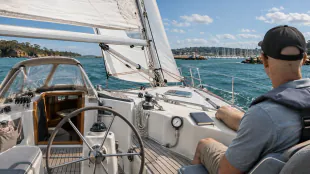 First-time boat buyers advised to assess full ownership costs

 Planning and preparation can reduce stress of interstate relocation

 Two more arrested in Carrie Mullane suspected murder investigation

 Mayo school appeals for information after convent and chapel vandalism

 GLP-1 Users Show Higher Rates of Nail Detachment in New Studies

 Canadian soldier Aidan Goulding remembered at Vancouver funeral
 Tayyab Arif hits 57 on Pakistan Test debut against Sri Lanka

 Robert Trujillo discusses literacy and social justice children’s books

 Civil rights advocate William Bill Tucker dies aged 98

 US Treasury order targets bank transfers linked to crypto exchange MEXC

 Eagles record six sacks as rushing attack struggles against Giants

 Thames Water seeks to delay £12bn in debt repayments
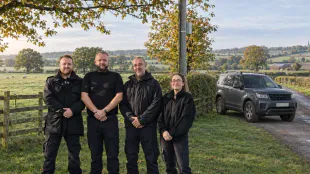
 Newark boxing gym expands alternative education programme

 Democrats consider impeachment drive against Defence Secretary Hegseth

 Rail journey offers a slower route to a Berlin city break

 Arsenal control title race as Manchester United fall into bottom three

 Suspected Krakow gunman dies after attack that killed six

 Carrick backs Dalot after hostile reception from Manchester United fans

 Belgian PM Bart De Wever Given New Deadline to Resolve €10 Billion Budget Deadlock

 الدفاعات الروسية تسقط 38 طائرة مسيرة فوق لينينجراد

 Amitabh Bachchan Drops Bulletproof Glass for Diwali Fan Greeting Outside Mumbai Home

Since he was old enough to climb into a boat, Samata Mahmoud has been fishing the vast, dune-lined waters of Mauritania's Banc d'Arguin bay, living a centuries-old lifestyle threatened by climate change and overfishing.
Mahmoud is a member of the Imraguen fishing-based community, a desert people who have spent centuries developing practices in harmony with nature, living in the area where the Sahara meets the Atlantic.
At the first light of dawn the village of Iwik stirs to life, white sails unfurling across the bay's calm waters.
With motors banned, the only vessels gliding about are "lanches", small sailboats said to have originated from ancient ties with the Spanish Canary Islands.
Banc d'Arguin National Park, which was designated a UNESCO World Heritage Site in 1989 and is located on Mauritania's northern coast, is home to some 4,000 Imraguen people, the only population permitted to live within the reserve.
The area attracts an abundance of migratory birds, marine mammals and diverse fish species, nourished by cold, nutrient-rich deep-water upwellings and abundant seagrass beds.
The Imraguen have developed a unique method of wading-based fishing, practised only in the summer.
At low tide, two fishermen stretch a long, slender net measuring dozens of metres (yards) across a mudflat, while a third uses a pole to strike the water, driving fish into the trap.
- Increasing scarcity -
His face protected from the scorching sun by a white turban, Mahmoud lifts several sea bream and a grouper into the boat.
"The fish aren't the same as before", said the boat's captain, a man in his 60s, who noted a decline in certain species like yellow mullet.
Fishing activity within the park is strictly regulated, but the combined effects of climate change and overfishing outside the zone pose a direct threat.
"Fish quantity in the Imraguen people's zones have fallen to less than 30 percent of what they were 10 years ago. There is real pressure on the fish", Abderrahmane Chevif Bouhobeiny, president of the Association for the Safeguarding and Preservation of Imraguen Culture, told AFP.
Mohamed Ahmed Jeyid, a researcher at the Mauritanian Institute of Oceanographic and Fisheries Research, described a "disruption" in the Banc d'Arguin ecosystem, from warming waters to acidification and changes in upwelling patterns.
He has also witnessed a collapse in the stock of certain species such as mullet, whose catch has dropped by two-thirds since 2017.
"Climate change and overfishing directly threaten the food security, income and cultural practices of the Imraguen people", he said.
- Pivot in practices -
But it is also a "decline in the transmission of traditional knowledge" and new economic forces that are contributing to the loss of a way of life, said Nami Salihy, director of the Banc d'Arguin National Park.
Many young Imraguen are turning from ancestral practices as they move to cities or adopt new, more profitable fishing techniques.
Mohamed Lemine Jededou mends a net in front of his small shack in the Banc d'Arguin village of Tin Aloule.
In the past, the Imraguen made nets and fishing tools out of tree fibres, the 76-year-old told AFP, reflecting nostalgically on the "simple life" his people once led.
But "fishing has changed" and the population has grown, the sun-weathered fisherman said.
As for the Imraguen women, they continue to handle the processing: drying the fish, extracting oil and making jewellery with the bones.
Drying was a way to preserve the fish before the arrival of ice and rapid transportation.
Under a small tent surrounded by children, Mariam Bilal cuts open and guts small fish before hanging them to dry.
"Our life is the fish that comes from the sea. If there is no fish, there is nothing", said the 68-year-old, draped in a crimson garment that covered most of her body.
"The Imraguen life we knew no longer exists", she said.
On the shores of Tin Aloule, 28-year-old Ahmed Amaida Khaliva unloaded his boats' abundant catch into a truck bound for Nouakchott.
His crates were full of catfish.
"We didn't used to fish for them because they were worthless, but now we catch them because the other fish have disappeared", said the young boat owner.
He remains philosophical on the matter: "What God takes with one hand, he gives back with the other", he said.
I.Yassin--SF-PST