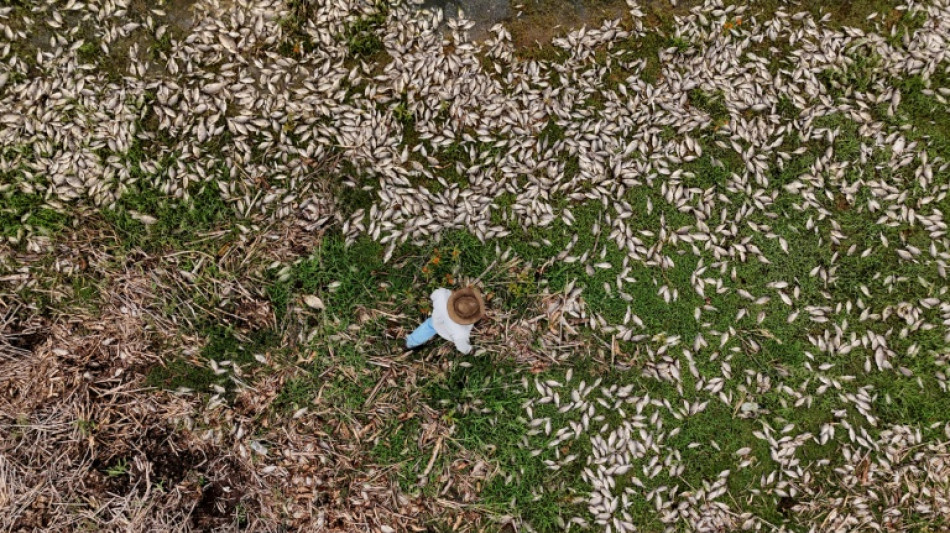
UN nature talks 'close' to breaking funding deadlock / Photo: ULISES RUIZ - AFP/File

 Osaka channels NBA icon Iverson to reach US Open second round
 Fast-fashion giant Shein plunges 10% on Hong Kong debut
 South Korea hire former Spain boss Moreno as interim coach
 China-Taiwan friction clouds Pacific summit
 Two dead after stabbing in New York's Times Square

 Anthropic signs $35B computing deal with startup backed by Nvidia
 Drones in Ithaca: Azov's Odyssey turns Ukraine war into modern myth
 Boat builders keep Pakistan's fishing heritage afloat
 Australia axe Labuschagne for Zimbabwe, South Africa ODI series

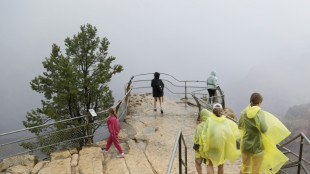 Heavy rain at Grand Canyon after flood kills 2, dozen missing

 Kushner blames soccer power struggle for World Cup plan collapse

 Buoyant Alcaraz shakes off nerves to advance at US Open

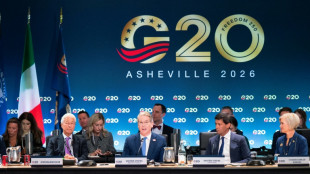 US draws European pushback with Russia G20 finance invite
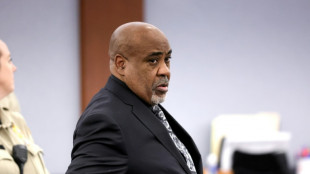 Jury begins deliberations in Tupac Shakur murder trial

 US Supreme Court allows Trump ballroom project to proceed
 Trump says US reviewing position on Falkland Islands

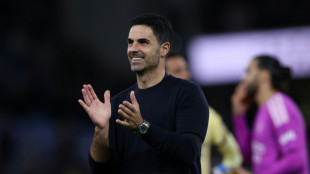
 Saka strikes as flawless Arsenal punish troubled Villa
 Oil prices surge on renewed fighting in US-Iran war

 Cycling superstar Pogacar has surgery after Vuelta crash
 Man City agree deal for Everton's Ndiaye

 Apple CEO Tim Cook gives nod to founder Steve Jobs in final memo

 Russian finance minister makes unexpected appearance at G20
 Happy to be back in NY, Sabalenka advances

 Naomi Watts to receive lifetime award at top Spain film fest

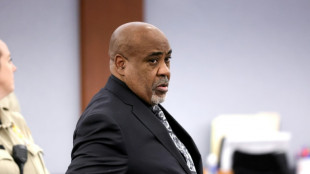 Jury hears closing arguments in Tupac Shakur murder trial
Nations were locked in last-ditch efforts to break deadlock on funding for nature at UN talks in Rome Thursday, in what several countries framed as a test for international cooperation in the face of geopolitical tensions.
Rich and developing countries broadly agree over the scale of the crisis that threatens the ecosystems and wildlife that humans rely on for food, climate regulation and economic prosperity.
But their disagreements over how to govern the billions of dollars needed to protect species caused a previous meeting in Cali, Colombia last year to end in disarray.
The rebooted COP16 talks are tasked with bridging those differences.
There were signs that countries were pulling closer together in the early evening Thursday, after intense closed door talks based on a "compromise attempt" text that Brazil put forward on behalf of the BRICS country bloc that includes Russia, China and India.
"I think that we have made great progress and are quite close to, you know, agreeing on this document," said the European Union negotiator Hugo Schally at an evening plenary.
COP16 president Susana Muhamad of Colombia presented what she called a "well advanced" document Thursday evening, with just one paragraph in brackets, showing that it is still unresolved.
It will be put to negotiators later in the evening.
The talks come as countries face a range of challenges, from trade disputes and debt worries to the slashing of overseas aid by new US President Donald Trump
Washington, which has not signed up to the UN's Convention on Biological Diversity, sent no representatives to the meeting.
Brazil's negotiator Maria Angelica Ikeda told AFP that financing has been a flashpoint long before the current international tensions, adding that the BRICS proposal sought to be "very sensitive" to a broad spectrum of views.
"So instead of fighting each other, what we need is to prove that yes, we can adopt a multilateral decision that will clearly set a path forward," she said.
"If we don't unite here, we run the risk of losing everything back home as well. So that's what's at stake in this COP."
- 'Test case' -
A European Union official, who asked to remain anonymous because they were not authorised to speak publicly said countries were reeling from economic constraints and a "fundamentally changed landscape geopolitically".
"Everybody knows what's at stake, it's multilateralism that is at stake. It's a test case here," they told AFP.
And scientists have warned that action is urgent.
A million species are threatened with extinction, while unsustainable farming and consumption destroys forests, depletes soils and spreads plastic pollution to even the most remote areas of the planet.
Young protesters greeted negotiators as they arrived at the building of the UN Food and Agriculture Organization on Thursday, playing a soundtrack of rainforest noises and handing out flyers urging: "Don't let silence be our legacy".
- Money worries -
The BRICS proposal sought to clarify two main goals to be agreed -- closing the multi-billion-dollar biodiversity financing gap and deciding on the institutions that will deliver that money.
That is a key next step after a landmark 2022 agreement that saw countries agree to halt the destruction of nature by the end of this decade.
They laid out a programme of objectives to be achieved by 2030, including protecting 30 percent of the world's land and seas.
Countries have already agreed to deliver $200 billion a year in finance for nature by 2030, including $30 billion a year from wealthier countries to poorer ones.
The total for 2022 was about $15 billion, according to the OECD.
The main debate is over developing countries' demand for the creation of a specific biodiversity fund, which has seen pushback from the EU and other wealthy nations, who have argued against multiple funds.
The failure to finalise agreement in Cali was the first in a string of disappointing outcomes for the planet at UN summits last year and comes as trade disputes and conflicts rattle global cooperation.
A climate finance deal at COP29 in Azerbaijan in November was slammed as disappointing, while separate negotiations about desertification and plastic pollution stalled in December.
V.Said--SF-PST