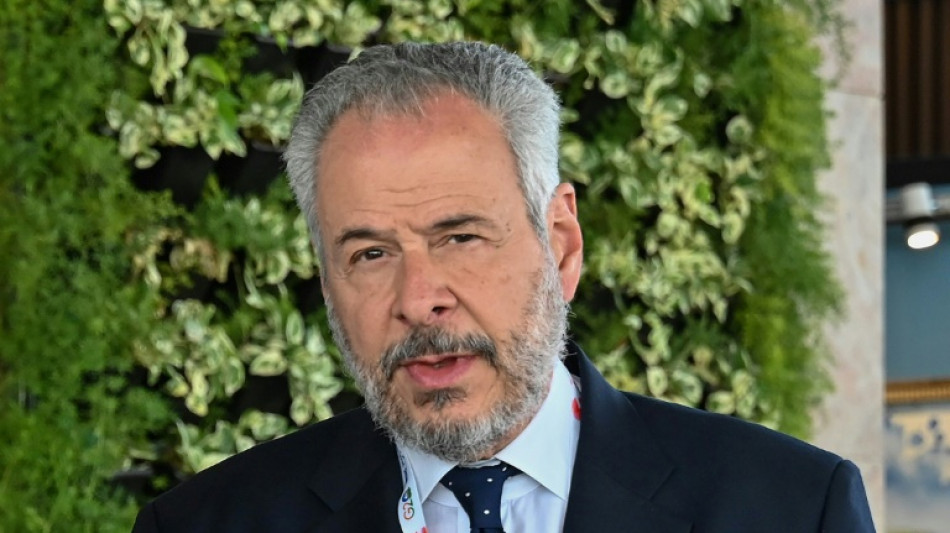
COP30 president urges most ambitious emissions targets possible / Photo: Manjunath KIRAN - AFP/File

 Osaka channels NBA icon Iverson to reach US Open second round

 Fast-fashion giant Shein plunges 10% on Hong Kong debut
 South Korea hire former Spain boss Moreno as interim coach
 China-Taiwan friction clouds Pacific summit
 Two dead after stabbing in New York's Times Square

 Anthropic signs $35B computing deal with startup backed by Nvidia
 Drones in Ithaca: Azov's Odyssey turns Ukraine war into modern myth
 Boat builders keep Pakistan's fishing heritage afloat
 Australia axe Labuschagne for Zimbabwe, South Africa ODI series

 Heavy rain at Grand Canyon after flood kills 2, dozen missing

 Kushner blames soccer power struggle for World Cup plan collapse

 Buoyant Alcaraz shakes off nerves to advance at US Open

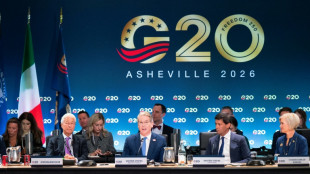 US draws European pushback with Russia G20 finance invite
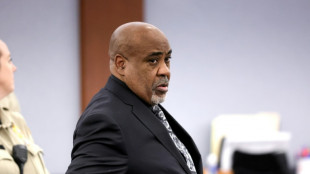 Jury begins deliberations in Tupac Shakur murder trial

 US Supreme Court allows Trump ballroom project to proceed

 Trump says US reviewing position on Falkland Islands

 Saka strikes as flawless Arsenal punish troubled Villa
 Oil prices surge on renewed fighting in US-Iran war

 Cycling superstar Pogacar has surgery after Vuelta crash
 Man City agree deal for Everton's Ndiaye

 Apple CEO Tim Cook gives nod to founder Steve Jobs in final memo

 Russian finance minister makes unexpected appearance at G20

 Happy to be back in NY, Sabalenka advances

 Naomi Watts to receive lifetime award at top Spain film fest

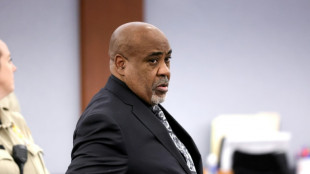 Jury hears closing arguments in Tupac Shakur murder trial
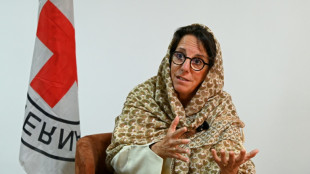
Countries must aim as high as possible when setting new goals to reduce greenhouse gas emissions, Andre Correa do Lago, the president of the COP30 climate conference to be hosted by Brazil in November, told AFP in an interview.
With just days to go until the February 10 deadline for signatories of the Paris climate accord to unveil their new goals for 2035, major players such as the European Union and China have yet to announce their targets.
Under the accord, countries agreed in 2015 to try to hold warming to 1.5 degrees Celsius above pre-industrial levels -- which has already been breached over the past two years.
Europe's climate monitor said Thursday that last month was the hottest January on record.
Correa do Lago, the Brazilian foreign ministry's secretary for the environment, said it did not matter if countries took their time to announce their new targets, but they needed to be "as ambitious as possible."
"They have to be more ambitious than they were before, so that's a rule, but we want them to be particularly ambitious and... compatible with avoiding a 1.5 percent increase in temperature."
Brazil will host the COP30 meeting in the Amazonian city of Belem -- the first time the conference will be held in a region considered so crucial to the global climate.
This year's climate conference will come after US President Donald Trump withdrew his country from the Paris accord for a second time and doubled down on the use of fossil fuels.
Correa do Lago said there were still "several ways to talk to the United States" about climate change, such us through the G20 or the UN Framework Convention on Climate Change.
- Increasing climate financing -
After much tortuous haggling, the last COP held in Azerbaijan ended in a deal that would see wealthy nations pay $300 billion a year to developing countries, which are worst affected by climate change.
This was criticized by poorer nations as falling short of what was needed to tackle the impact of a changing climate.
Correa do Lago said that aside from the presentation of the new Paris accord goals, "there are a number of negotiations that are still ongoing."
"There is also a mandate for Brazil, together with Azerbaijan, to present alternatives so that we can increase financial resources from $300 billion to $1.3 trillion."
Under leftist President Luiz Inacio Lula da Silva, Brazil -- the world's ninth largest oil producer -- is seeking to position itself at the forefront of efforts to combat climate change.
While the country has managed to reduce deforestation in the Amazon, Lula has come under fire for pushing for the expansion of oil exploration, particularly in a controversial offshore basin near the mouth of the Amazon River.
Correa do Lago said the energy transition "is something that will be very different depending on the country."
"This process may have paths that some consider tortuous or not in a straight line. The example that is always remembered is that when Germany decided to abandon nuclear energy, which does not emit greenhouse gases, it went back to using coal. But this is a process."
A.AbuSaada--SF-PST