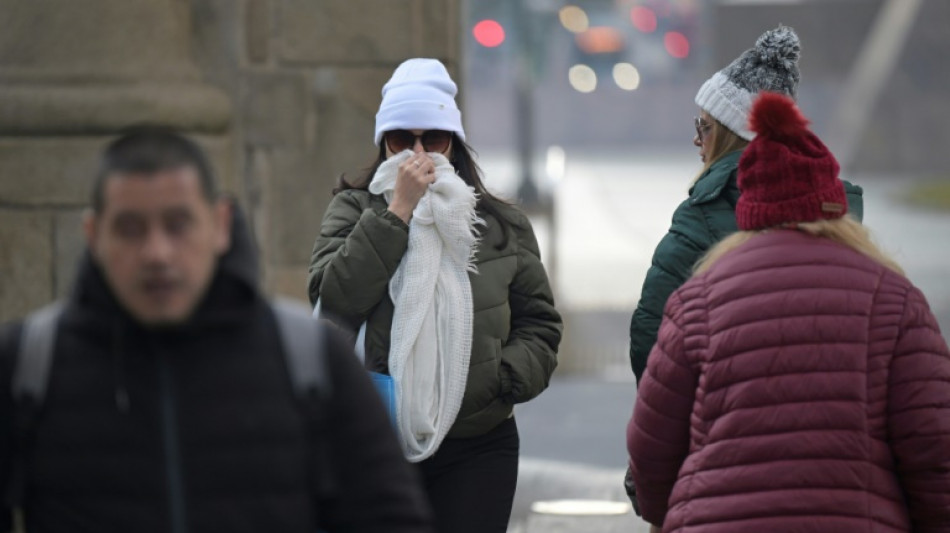
Uruguay bucks 2024 global warming trend / Photo: Eitan ABRAMOVICH - AFP/File

 China-Nepal flood toll tops 1,000 as tunnel rescue offers last hope

 Japan to relax overtime regulation under workaholic PM

 Thwarted Niger mutiny exposes junta's Russia dependence

 Illegal mining ravages S.Africa's economic hub

 Nepal's wall of missing offers last hope after Himalayan flood

 US to press G20 on light-touch AI regulation

 2 die in Grand Canyon flash flood, only 1 person unaccounted for

 US Army Secretary Driscoll submits resignation: White House

 Oil extends gains, stocks drop as Trump issues fresh Iran warning

 Tsitsipas says Kyrgios's positive cocaine test 'kind of expected'

 In Japan's mountains, a different way to manage bears

 Middle East war a boon for UAE defence giant with global ambitions

 Former gang member found guilty of murdering Tupac Shakur

 Top-seeded Zverev opens US Open campaign
 US regulator, 22 states accuse Amazon of 'manipulating' ad auctions: lawsuit

 TRON Founder Justin Sun Shares Outlook on Bitcoin, Stablecoins and Global Finance at Bitcoin Asia 2026

 Tributes to 'eternal' Messi on Argentina retirement

 Arteta hails Arsenal's 'finishers' after Saka kills off Villa

 Yamal, Raphinha bag braces as Barcelona rout Rayo

 Alcaraz makes winning return at US Open, Sabalenka safely through

 Everton agree to sign Monaco's Balogun: reports

 Milei calls for F1 to return to Argentina
 Alcaraz wins US Open first-round match after injury layoff

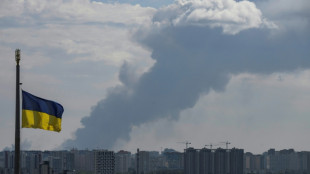 Kyiv orders heightened security amid intense Russian drone strikes

 Sabalenka kickstarts US Open three-peat bid as Fils crashes out

The world experienced its hottest year in 2024 since records began, but in the small South American country of Uruguay, global warming was counteracted by bouts of "near-historic" cold.
Last year was the warmest globally since data recording began in 1850, Europe's climate monitor Copernicus said Friday, confirming what it had been predicting for months.
But in Uruguay, nestled between Brazil and Argentina, the 2024 winter was nearly two degrees Celsius (about 3.6 degrees Fahrenheit) colder than usual, and summer took its time to arrive.
The country's average annual temperature was 18.1 degrees Celsius, Mario Bidegain of the Uruguayan Meteorological Institute told AFP.
2017 had been Uruguay's warmest year on record since 1980, with an average of 18.8 degrees C.
But last year, said Bidegain, the country experienced "a near-historic cold spell" during the southern hemisphere winter in July and August, with frost, atypical in the country, recorded nationwide on several days.
According to the EU's Copernicus, the regions least affected by global warming in 2024 were those closest to the Earth's poles, particularly those in the southern hemisphere.
Global warming does not follow a uniform trend and cooler years can follow warmer ones.
The relatively moderate temperatures in Uruguay in 2024 illustrate this climate variability.
While there were no "significant changes to the (temperature) averages" in Uruguay, the country nevertheless experienced other "severe phenomena, both in quantity and quality," said Juan Luis Perez, a meteorologist with research company Nimbus.
"They have almost doubled and have become more intense. When it rains, the city (Montevideo) overflows and cars float in the streets," he said.
"The weather is more uncontrolled," added Perez, with weather forecasting models "no longer as reliable as they were a couple of years ago."
In Uruguay, as elsewhere, the long-term trend is undeniable: the country's average temperature has increased 1.3 degrees C over the last century.
B.Mahmoud--SF-PST