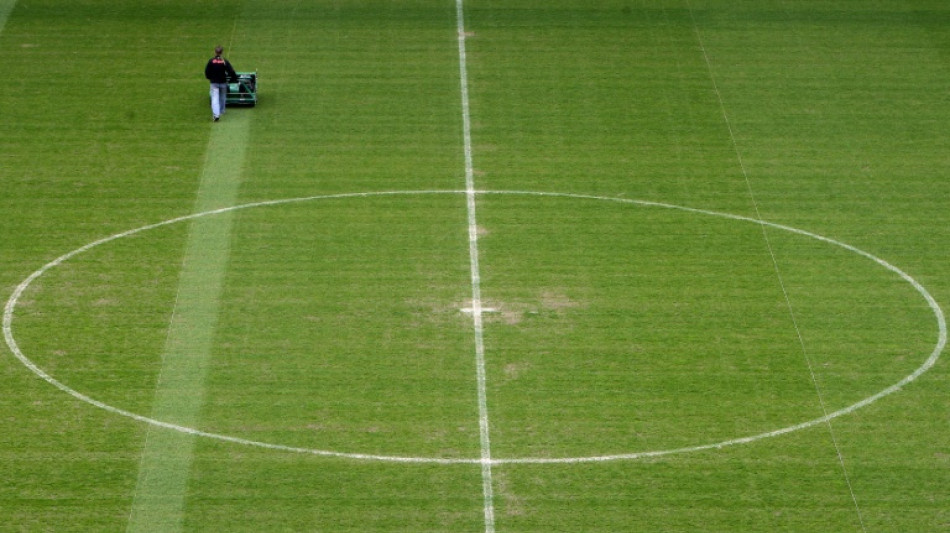
A World Cup on three continents sparks climate concerns / Photo: GABRIEL BOUYS - AFP/File

 China-Nepal flood toll tops 1,000 as tunnel rescue offers last hope

 Japan to relax overtime regulation under workaholic PM
 Thwarted Niger mutiny exposes junta's Russia dependence
 Illegal mining ravages S.Africa's economic hub

 Nepal's wall of missing offers last hope after Himalayan flood

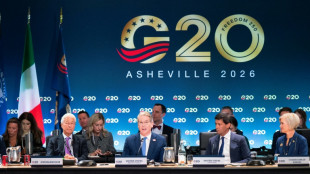
 US to press G20 on light-touch AI regulation

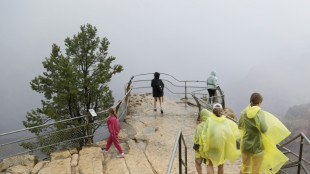
 2 die in Grand Canyon flash flood, only 1 person unaccounted for
 US Army Secretary Driscoll submits resignation: White House
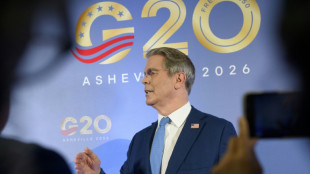 Oil extends gains, stocks drop as Trump issues fresh Iran warning

 Tsitsipas says Kyrgios's positive cocaine test 'kind of expected'

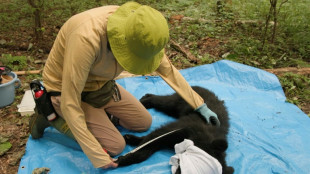 In Japan's mountains, a different way to manage bears

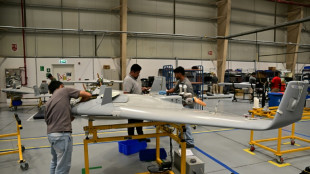 Middle East war a boon for UAE defence giant with global ambitions
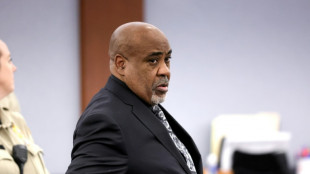
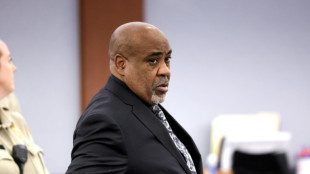 Former gang member found guilty of murdering Tupac Shakur
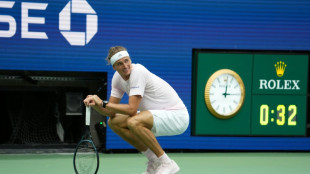 Top-seeded Zverev opens US Open campaign
 US regulator, 22 states accuse Amazon of 'manipulating' ad auctions: lawsuit

 TRON Founder Justin Sun Shares Outlook on Bitcoin, Stablecoins and Global Finance at Bitcoin Asia 2026

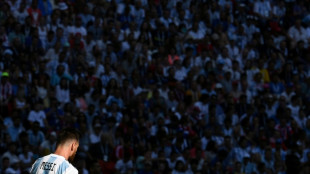 Tributes to 'eternal' Messi on Argentina retirement
 Arteta hails Arsenal's 'finishers' after Saka kills off Villa
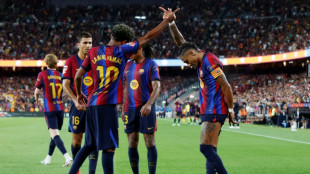 Yamal, Raphinha bag braces as Barcelona rout Rayo

 Alcaraz makes winning return at US Open, Sabalenka safely through
 Everton agree to sign Monaco's Balogun: reports

 Milei calls for F1 to return to Argentina
 Alcaraz wins US Open first-round match after injury layoff

 Kyiv orders heightened security amid intense Russian drone strikes

 Sabalenka kickstarts US Open three-peat bid as Fils crashes out

The 2030 FIFA World Cup will send dozens of football teams and hordes of fans crisscrossing the globe for matches on three continents, sparking alarm over the environmental cost.
An announcement on the 2030 and 2034 World Cups will be made on Wednesday, with expectations of a dramatic expansion of geographic footprint -- and with that planet-heating greenhouse gas emissions.
While Saudi Arabia is the lone candidate for 2034, Morocco, Spain and Portugal have formed a joint bid for the 2030 tournament, with Uruguay, Argentina and Paraguay each also set to host a match.
Guillaume Gouze, of the Centre of Sports Law and Economics at the University of Limoges, said FIFA has a "moral responsibility" to integrate climate concerns into its tournament plans.
Instead, he said, it had proposed World Cups that are an "ecological aberration".
- 'Crazy idea' -
Benja Faecks of the NGO Carbon Market Watch, which evaluates climate promises of major events, told AFP that in general attempts at greenwashing in sport -- or "sportswashing" -- are harder than they used to be, with academics and campaigners holding organisations to account.
But she said that the 2030 tournament was "an unfortunate geographic choice".
When an event is spread over sites thousands of kilometres apart, teams and potentially hundreds of thousands of their loyal fans have to travel by plane.
The three matches in Argentina, Uruguay and Paraguay are to mark the 100th anniversary of the event, which was born in Montevideo.
FIFA is keen to support access to football across different parts of the world, said David Gogishvili, a researcher at the University of Lausanne in Switzerland.
But "it is a crazy idea in terms of the impact this choice will have on the planet", he added.
FIFA has already expanded participation in the competition, which will see 48 teams take part in the 2026 edition -- held in Mexico, the United States and Canada -- compared to 32 in 2022.
This "is almost worse than the Cup on three continents," says Aurelien Francois, who teaches sports management at the University of Rouen in France.
More teams means more fans wanting to visit the venues, more capacity needed in the hotel and catering sector, and more waste, among other issues.
FIFA says that, with the exception of the games in Argentina, Uruguay and Paraguay "for 101 games, the tournament will be played in a footprint of neighbouring countries in close geographic proximity and with extensive and well developed transport links and infrastructure".
Meanwhile, oil and gas giant Saudi Aramco became a major sponsor earlier this year in a controversial deal that runs through to 2027.
In October, an open letter from more than a hundred female professional footballers across 24 countries called for the deal to be cancelled on the grounds of human rights and environmental concerns, saying: "FIFA might as well pour oil on the pitch and set it alight".
- Fan zones -
Just shrinking the geographic footprint is not enough, researchers said.
While the 2022 World Cup was held in a "compact" site in Qatar, it was necessary to build new air-conditioned stadiums that were rarely reused.
Potential improvements could include a policy of not awarding the World Cup to a city where everything has yet to be built, echoing a rule by the International Olympic Committee, said Gogishvili.
Another idea to reduce air travel is to reserve a large proportion of stadium tickets for fans travelling from within a few hundred kilometres, and encourage transport by train.
Gouze, like other experts interviewed by AFP, supports creating more fan zones in soccer-loving cities for "a collective experience" that recreates the stadium atmosphere in front of a big screen.
But this would need FIFA to accept the impact on the economic profitability of the World Cup.
Soccer fans are a reflection of the population as a whole, so a growing percentage are more environmentally conscious than even a few years ago, said Ronan Evain of Hamburg-based Football Supporters Europe.
He said that while co-hosting is not a problem in and of itself, citing the example of the 2002 Cup co-hosted by Japan and South Korea, the 2030 tournament poses "too many questions" for fans.
These include the environmental costs, as well as financial considerations for fans trying to follow their teams across the planet.
But die-hard supporters will not let the long-haul flight put them off, said Antoine Miche, director of Football Ecologie France.
"Passion can make you do things that don't make sense," he added.
W.AbuLaban--SF-PST