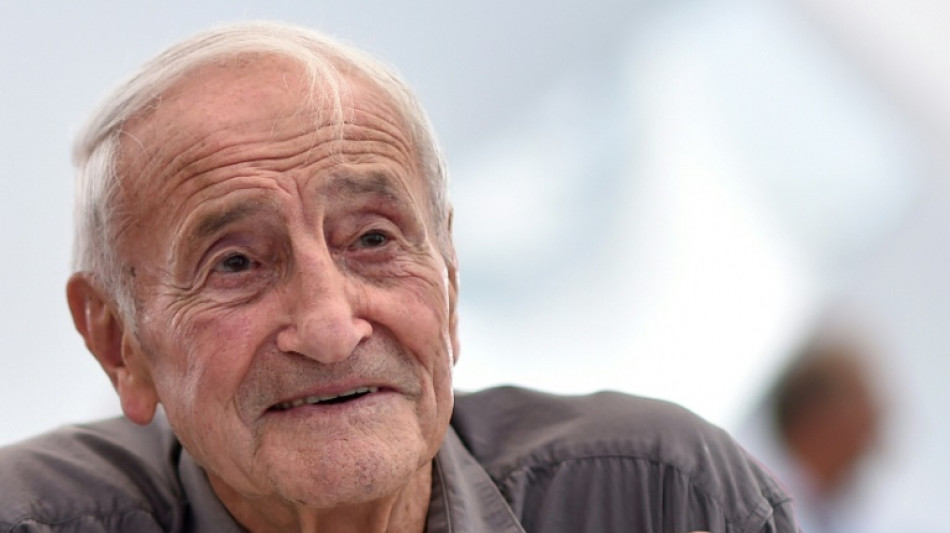
Climate science pioneer Claude Lorius, dies at 91 / Photo: BERTRAND LANGLOIS - AFP/File

 China's Xi arrives in Egypt as US sanctions threat looms over Iran links
 Car bomb at Colombian police station kills one, injures 11
 Rain delays start of play on US Open

 Man City agree blockbuster deal to sign Chelsea star Fernandez: reports

 Alkemya Metacore Secures $50M via Tokenised Equity to Scale Nickel Energy and Security Tech
 Man City chase Fernandez, Arsenal sell Jesus on deadline day
 EU says Russian 'hybrid attacks' won't halt aid to Ukraine

 Explosives used in sabotage attack on German power lines

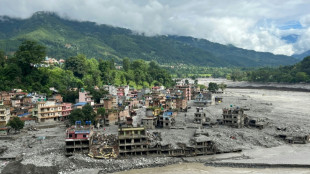 Nepali families hold symbolic funerals for missing after floods

 Newcastle sign Lille forward Fernandez-Pardo

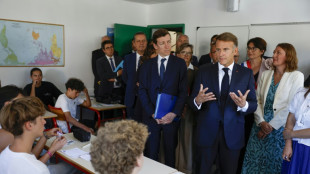 Even at Elysee, phones are handed in, Macron tells French pupils
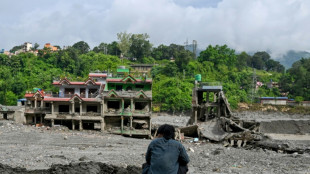
 Chelsea agree to sign Atalanta's Ahanor, with Palace loan for this season

 Chelsea sign Atalanta's Ahanor and loan him to Palace
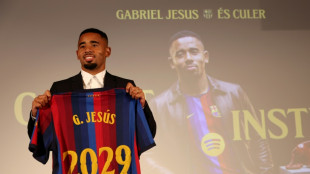
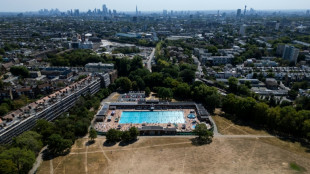 UK chalks up hottest summer on record for second year running
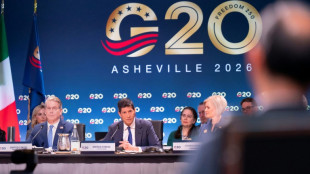
 China's Xi visits Egypt as US sanctions threat looms over Iran links

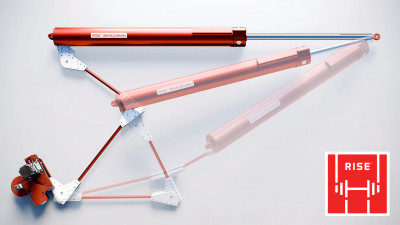 RISE Robotics Awarded $100,000 MassVentures Grant to Accelerate Commercialization of Beltdraulic Technology

 Global bond sell-off deepens on inflation concerns

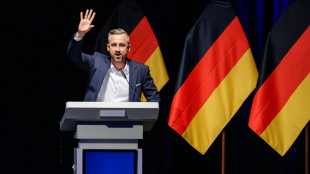 Germany's far-right AfD promises 'boom' but economists fear worst

 Former England captain Stokes signs for Adelaide Strikers

 Pakistan selector and ex-captain Misbah resigns after coach sacked
 Shein flattens on Hong Kong debut facing global headwinds
 Eurozone inflation hits three-year high at 3.3% in August
 Man City chase Fernandez, Arsenal eye Alvarez on deadline day
 El Nino hammering Peru anchovy fishing: industry officials

 Mass Russian barrage kills 12 in Kyiv

Leading glaciologist Claude Lorius, whose Antarctica discoveries in the 1980s helped prove humanity's role in global warming, has died at 91.
Lorius died on Tuesday morning in the French region of Burgundy, according to Jerome Chappellaz, a palaeoclimatologist and former colleague of his.
The French publisher Arthaud, which produced the glaciologist's memoirs, also announced his death in a statement.
A great scientist, "Claude was also of the finest calibre of polar expedition adventurers", said the famous French explorer Jean-Louis Etienne in a video posted on Twitter.
In 1955, fresh out of university, Lorius responded to an obscure advert to partake in a mission for the International Geophysical Year -- a global research program dedicated to revealing the icy continent's mysteries.
After two months of sailing and four weeks of traversing rough terrain, Lorius reached the Antarctica Charcot base, 320 kilometres (200 miles) inland.
"I did not choose science, I chose adventure," said the pioneering climatologist, born in 1932, in a past interview with AFP.
"We were extraordinarily lucky since Antarctica is the best place to bear witness to the planet's environmental problems" said Lorius.
He and two others stayed there for a year, confined to a cramped "burrow" with limited supplies and a faulty radio for communication, with temperatures at -40 degrees Celsius (-40 Fahrenheit) outside.
"We were cut off from the rest of the world for months, that's when I learned how to live together and how to show solidarity," he said.
- Ice cube inspiration -
Claude Lorius led 22 expeditions in Greenland and Antarctica, where he lived on and off for six years.
In the 1970s, Lorius began to suspect human involvement in the planet's warming.
But it wasn't until a 1984 expedition at the most remote Russian Antarctic base, Vostok, that Lorius was able to study ice cores drilled deep into the frozen polar landscape and confirm his suspicions.
He is perhaps most internationally renowned for research, published in 1987, into air bubbles trapped in the ice, which allowed scientists to look back over 160,000 years' worth of glacial records.
In 1965, an ice cube snatched from a sample core and submerged in his whiskey provided Lorius with a revelation: the ice contained air bubbles full of ancient air.
"I remember looking at the blue colour of the little ice cubes melting in the glass and as I saw the bubbles rise," said Lorius in an interview with the Independent newspaper in 2016.
"I realised the scientific potential of analysing the trapped air."
This research showed that while carbon dioxide had varied slightly over time, the concentrations of the greenhouse gas had rocketed as temperatures rose since the middle of the 19th century -- the dawn of the Industrial Revolution.
French research agency CNRS said that left "no room for doubt" that the warming was caused by the pollution from human activities.
From then on, Lorius dedicated himself to mobilising the fight against global warming.
He was an inaugural expert of the Intergovernmental Panel on Climate Change (IPCC) after the UN expert group was created in 1988.
In 2002, along with colleague and friend Jean Jouzel, he was awarded the CNRS gold medal.
Lorius was also the first Frenchmen to receive the prestigious Blue Planet Prize.
Lorius returned to Antarctica in his eighties to feature in director Luc Jacquet's documentary "Ice and the Sky" showcasing the explorer's extraordinary career. The film premiered at the closing ceremony of the 2015 Cannes Film Festival.
G.AbuHamad--SF-PST