-
 Rubio seeks to strengthen US foothold in Central Asia
-
One year after Louvre heist, where are the missing jewels?

-
 LeBron joins 76ers to chase one more NBA title at age 41
-
Knicks face tall task in NBA championship repeat bid

-
 Rays one win from World Series return after downing Guardians
-
Warriors' Curry 'fine' after limping out of practice - Kerr

-
 Kings' Ben Simmons tears Achilles in training
-
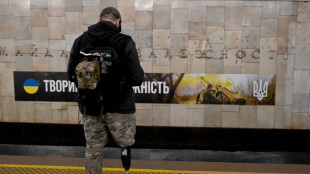
Zelensky speaks to US envoys as Trump lashes out
-
 Lula, Bolsonaro set for first debate showdown in bitter election race
-
'Surprise package' Lazio crush Juve to keep pace with Serie A leaders Inter

-
 Mbappe hits two as Real Madrid rout Sevilla
-
China growth expected to miss official target in third quarter

-
 Browns edge Ravens for division lead, Texans beat Jags
-
Lazio crush Juventus to move level with Serie A leaders Inter

-
 Lyon go top of Ligue 1 as Monaco fall to first defeat of the season
-
Leeds draw feels like 'fresh start' for Man Utd's Carrick

-
 Venezuela opposition alliance reaffirms Nobel laureate Machado as leader
-
Macron denounces 'unbridled' violence as France hit by new clashes

-
 'Street Fighter' wins N. America box office, buzzy doc stuns in 2nd
-
Hurzeler lauds 'hard worker' Gomez after Brighton goal from halfway line

-
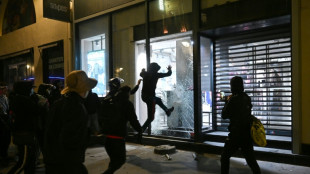 NFL: Paris game to go ahead despite protests in France
-
Toulouse hold off Exeter, Northampton save English Champions Cup blushes

-
 Arteta hails Arsenal 'finishers' after Madueke fells Forest
-
Arsenal snatch late win to keep pressure on Man City as Man Utd held

-
 Trump backs ally Netanyahu ahead of Israel's tight election
-
Arsenal strike late to keep pressure on Man City as Man Utd held

-
 Madueke strikes late as below-par Arsenal sink Forest
-
Four soldiers dead, dozens injured in fire at Canada military base

-
 Second day of street clashes in Milan
-
Ton-up Agha helps Pakistan down Sri Lanka in tri-series opener

-
 Dupont's Toulouse hold off Exeter as English Champions Cup woes continue
-
Man Utd draw at Leeds keeps pressure on Carrick

-
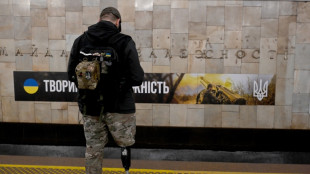 Zelensky speaks to US envoys amid Trump spat
-
Barca defenders Garcia, Kounde injured before key games

-
 Paris police in new battles with protesters and looters
-
Lula, Bolsonaro to face off in first debate of bruising election

-
 Multiple deaths, injuries at western Canada military base: minister
-
Maza and Schick help Leverkusen clip Freiburg's wings

-
 Boland strikes twice for Australia in rain-hit South Africa Test
-
Leeds hit back to deny Man Utd morale-boosting win

-
 Marseille put Angers to the sword in Ligue 1
-
Zelensky tells NBC 'thankful' US has unblocked intelligence sharing

-
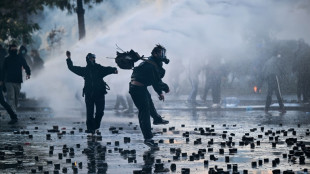 Albanian PM refuses to quit as violent protests enter sixth day
-
Pau see off Leicester in Champions Cup

-
 Chwalinska fights back to win Wuhan Open in title breakthrough
-
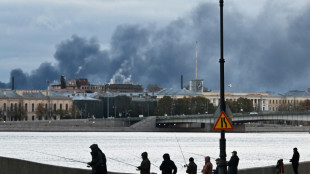
Kremlin says Ukrainian attacks won't change war aims as Kyiv hits Saint Petersburg
-
 Kulusevski on brink of return for Spurs after 17-month absence
-
Martinez starts for Man Utd after outburst

-
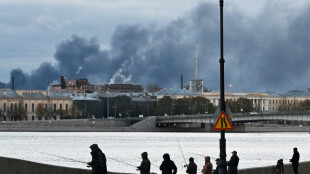 Ukraine sets Saint Petersburg refinery ablaze in large-scale drone attack
-
Alberta separatists rally ahead of independence vote

Ukraine sends ground robots
Ukraine is putting ground robots to work on a scale that is beginning to change how its army supplies positions, evacuates casualties and conducts some of its most dangerous combat missions. The significance lies in the gradual transfer of battlefield exposure from people to machines. For a force under sustained pressure to preserve experienced soldiers, that change could matter well beyond the individual missions captured on video.
The expansion is measurable. By early September 2026, Ukraine’s DELTA battlefield management system had recorded approximately 112,000 logistics and evacuation missions by ground robotic systems since the start of the year. The monthly total rose from 7,511 in January to 25,143 in August, an increase of roughly 3.3 times. These figures describe missions, not the number of robots deployed, and they should not be read as a tally of successful attacks or lives saved. They nevertheless show how far the technology has moved into routine military activity.
Supply work explains much of its value. Ammunition, food and water still have to reach troops in positions exposed to surveillance and attack. Wounded soldiers still have to be brought out. A remotely operated vehicle can undertake part of that movement while its operator remains elsewhere. The load may be ordinary; the route is what makes the task dangerous. Repeated across many positions, reducing the number of journeys made by people can alter the daily burden on an infantry force.
The strongest case for a robot is often the journey it allows a soldier to avoid. That changes the economics of military equipment. The purchase price matters, but so do the consequences of losing it. A destroyed machine consumes production capacity and money. A lost soldier also removes training, experience and relationships that cannot be replaced on a factory schedule. This is why an apparently modest cargo platform can have greater practical importance than a more spectacular experimental weapon.
Combat applications are developing alongside that logistical role. Ukraine’s Third Army Corps includes NC13, a unit specialising in ground robotic operations. In September, corps commander Andrii Biletskyi described an ambition to replace around a third of the corps’ frontline personnel with robots by the end of the year. That remains an objective for a particular formation, rather than a demonstrated reduction across the Ukrainian army. It signals how seriously some commanders now regard the technology.
There is a longer history behind the sudden attention. In December 2024, the Khartiia Brigade used a coordinated force of aerial drones and ground robots in an assault near Hlyboke in the Kharkiv region. More than 50 unmanned systems took part. The operation demonstrated that different remotely operated platforms could be combined for surveillance, fire support and attack. It also exposed the limits: ground conditions disabled some machines, and soldiers were still needed to secure and hold the territory afterwards.
Those distinctions remain essential. An unmanned vehicle has no crew aboard; that does not make it an autonomous decision-maker. Remote operation, assistance with navigation and independent target selection are different capabilities. Much of the operational change visible in Ukraine concerns the first of these. Human operators, commanders and technicians remain central to making the equipment useful. Describing every remotely controlled vehicle as an artificial intelligence weapon obscures both its present strengths and its weaknesses.
The physical environment imposes constraints that software cannot simply remove. A ground vehicle must negotiate soil, vegetation, rubble and obstacles that an aircraft may pass over. Its camera sees from a low position. Communications can be intermittent, and movement through complex terrain requires information that may be incomplete or already outdated. Research on small military robot teams has long identified the combination of restricted visibility, difficult navigation and unreliable communication as a central challenge. Ukraine is testing those problems under combat conditions.
Scaling the fleet therefore requires a larger support system. More vehicles mean more operators to train, more repairs, more replacement components and a greater need to coordinate machines with the soldiers around them. The useful measure is how many tasks can be completed reliably over time. A large delivery of equipment can look impressive while leaving unanswered questions about serviceability, workload and availability after repeated deployments.
Nor does removing a crew eliminate risk. Operators still work within a military system exposed to attack, and a machine that fails during an evacuation may leave a casualty in danger. Remote control changes where human vulnerability sits. It does not make the mission consequence-free. Reliability is particularly important when the payload is a wounded person rather than ammunition, and success in one role cannot automatically establish suitability for another.
The likely effect on the fighting is therefore uneven. Robotic systems can ease dangerous supply tasks and support selected assaults while remaining poorly suited to others. Their value depends on the terrain, the communications environment and the organisation using them. A successful demonstration offers evidence of a capability; repeated use establishes whether a formation can depend on it.
Ukraine’s developing robot force is best understood through that practical test. Can it keep a position supplied with fewer exposed soldiers? Can it bring someone back who would otherwise remain stranded? Can it reduce the personnel required for a dangerous task without creating a greater burden elsewhere? The answers will determine how much battlefield activity can move to machines. For the soldiers still holding the line, those gains are substantial enough without the promise of a war fought without people.

Can the FANB shield Maduro?

Venezuela braces after Strike

Tokyo’s Housing playbook

Tel Aviv’s Wartime rally

After Kirk: Speech at Risk

Milei suffers crushing Defeat

Why Nepal is burning

Russia's Drone ploy in Poland

How Swiss Stocks tamed Prices

Cuba's hunger Crisis deepens
Poland trusts only hard Power