
-
 Average EU diesel price hits record 2.23 euros a litre: AFP analysis
-
Streamex Converts Interest Into Capital as GLDY Investment Strategy Secures $1M+ Institutional Allocation

-
 Whitetip Investments Marks 10 Years of Regulation, Transparency & Responsible Trading
-
STARTRADER Named Best Fintech Forex Broker at Forex Expo Dubai 2026
-
 Pakistan blocks roads around capital ahead of planned pro-Khan protest
-
Japan swimmer Ohashi, 17, shrugs off Covid to smash world record

-
 Stocks fall, oil prices rise as global bonds under pressure
-
Shin Ohashi: Junk food-loving teen and new world record-holder

-
 Mancini's Italy facing battle to 'win back' dispirited fans
-
Greek PM urges 'courage' in talks with UK over Parthenon Marbles

-
 German think tanks urge Merz to stick with reforms after election defeats
-
'I was drowning': Iran Nobel winner exposes pain of separation from children

-
 Alcaraz wants end to late-night matches at Grand Slams
-
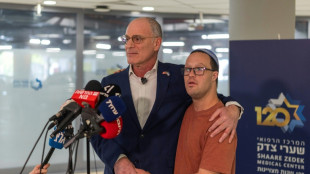
Israel's US envoy says son fighting for life
-
 EU battle over how to define 'Made in Europe'
-
Olympic champion Yulo completes gymnastics gold collection at Asian Games

-
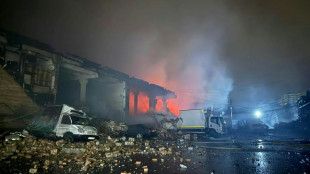 Eight killed in wave of Russian strikes on Ukraine
-
England cannot imitate Spain's success, says Gordon

-
 Russell on top in Baku practice after problems for Antonelli, Norris
-
Hungary detects invasive spotted lanternfly for first time in EU

-
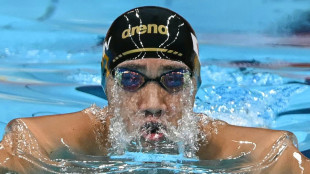 Japan teen smashes swim world record as Asian Games complaints mount
-
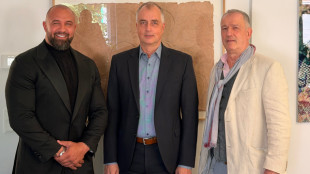
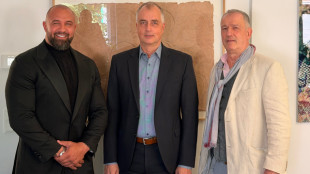
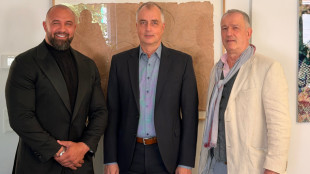
Ο Alex Bodi και ο καθηγητής Δρ. Stefan Haupt συμφωνούν σε συνεργασία για μια θρυλική συλλογή έργων τέχνης στη Ρουμανία
-
 Taliban govt says Pakistan strikes kill 4 civilians in Afghanistan
-
France's top-selling newspaper to slash jobs

-
 Berlin confirms withdrawal from race to host summer Olympics
-
Tigray rebels in 'full-blown' war with govt

-
 Japan teenager Ohashi smashes 200m breaststroke world record
-
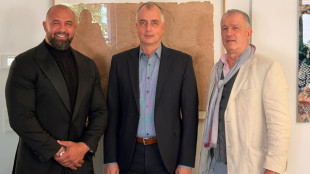
Alex Bodi och prof. dr Stefan Haupt ingår samarbetsavtal om en legendarisk konstsamling i Rumänien
-
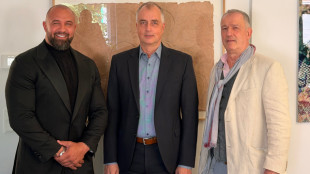 एलेक्स बोडी और प्रो. डॉ. स्टीफन हॉप्ट रोमानिया में एक पौराणिक कला संग्रह पर सहयोग करने के लिए सहमत हुए
-
อเล็กซ์ โบดี และศาสตราจารย์ ดร. สเตฟาน ฮาปท์ ตกลงร่วมมือกันในการจัดตั้งคอลเลกชันศิลปะอันเป็นตำนานในโรมาเนีย
-
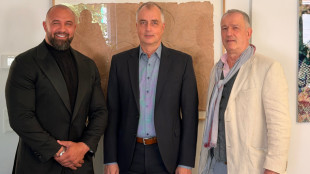 Alex Bodi ve Prof. Dr. Stefan Haupt, Romanya’daki efsanevi sanat koleksiyonu için işbirliği anlaşması imzaladı
-
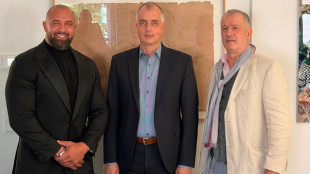
Alex Bodi a prof. dr. Stefan Haupt se dohodli na spolupráci na legendární umělecké sbírce v Rumunsku
-
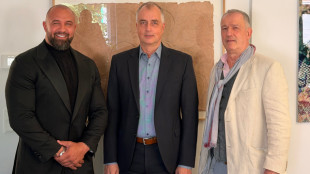 Alex Bodi i prof. dr Stefan Haupt uzgodnili współpracę w sprawie legendarnej kolekcji dzieł sztuki w Rumunii
-
알렉스 보디와 슈테판 하우프트 교수, 루마니아의 전설적인 미술품 컬렉션을 위한 협력 합의
-
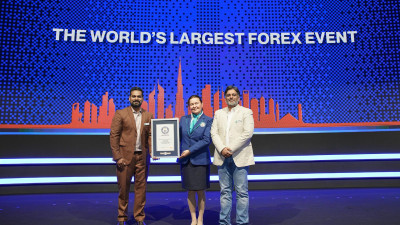 Forex Expo Dubai 2026 Breaks Guinness World Record Again With 23,816 Attendees
-
BaazEX Enters the Asian Trading Market With a New Approach to Online Forex Trading.

-
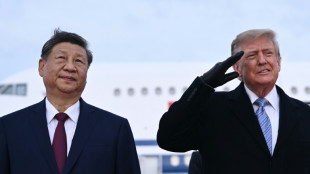 Beijingers eye Xi-Trump summit for trade relief, stable ties
-
Asian markets fall on US-China jitters as leaders meet
-
 'Failing, chaotic, musical chairs': Teams slam Asian Games organisers
-
Thais hail teen rocker Nene for 'America's Got Talent' win

-
 Trump to fete Xi with lavish White House welcome
-
Zverev, Agassi defend 'spectacular' Laver Cup

-
 Pakistan deploys thousands of security forces ahead of planned protest
-
Eel-powered Japan whizz-kid, 11, dominates in historic Games debut

-
 Sao Tome voters want to stop exodus of 'neglected' youth
-
Madagascar's Gen Z 'betrayed' after ushering in new rule

-
 Bulgaria's battery boom pays off as drought hits power plants
-
As Moscow steps up attacks, Kyiv residents brace for harsh winter
-
 Mexican cartels target Australia with their African meth
-
Comic inspires unlikely kabaddi dreams for Japan's Asian Games amateurs
China’s lithography leap
China has crossed a threshold in the semiconductor contest that many Western policymakers had hoped would remain out of reach for considerably longer. A state-backed manufacturer in Shanghai has begun producing domestically developed immersion deep-ultraviolet lithography systems, with the first machines intended for some of the country’s most important chipmakers.
The development does not mean that China has suddenly reproduced ASML’s most advanced technology. It has not broken the Dutch company’s monopoly on commercially proven extreme-ultraviolet lithography, nor has it demonstrated that its new machines can yet deliver the productivity, precision and reliability demanded by a modern high-volume fabrication plant.
What has changed is nevertheless important. China’s domestic lithography campaign is no longer confined to research projects, politically convenient announcements or laboratory prototypes. It has entered an initial industrial phase, supported by a manufacturer, state capital, specialist engineering teams and customers prepared to test the equipment under real production conditions.
A breakthrough that must be described precisely
Shanghai Aishengna Electronic Technology Group is leading the effort to manufacture China’s first home-grown immersion DUV systems. The current production plan envisages approximately five machines during 2026 and roughly twenty more in 2027. Initial deliveries are expected to go to Semiconductor Manufacturing International Corporation, Hua Hong Semiconductor and memory producer ChangXin Memory Technologies.
Those numbers immediately reveal both the significance and the limitations of the development. ASML shipped 131 immersion DUV systems in 2025 and has prepared annual production capacity of approximately 130 systems for 2026. China is therefore not about to displace the Dutch group by volume. The Chinese systems also require extensive qualification. They are not believed to match ASML’s current machines in performance, availability or long-term reliability. No independently verifiable data have yet been published for the most important commercial measurements, including wafer throughput, overlay precision, defect rates and sustained operating time.
The expression mass production must consequently be treated with caution. In this instance, it describes the transition from a single prototype towards a small repeatable manufacturing series. It does not yet demonstrate that the machines are ready to operate continuously in an advanced fabrication plant while producing commercially acceptable yields.
Even so, the transition matters. A technology programme that can produce five imperfect machines is fundamentally different from one that can produce none.
Why DUV remains strategically decisive
Immersion DUV lithography is sometimes described as yesterday’s technology because ASML’s most advanced customers are now expanding their use of EUV and High-NA EUV systems. That description is misleading. DUV machines remain essential throughout the semiconductor industry. They use light with a wavelength of 193 nanometres and place a thin layer of water between the projection optics and the silicon wafer. The water increases the effective numerical aperture of the optical system, allowing finer circuit patterns to be printed than would be possible with a conventional dry scanner.
Not every layer of an advanced processor requires EUV. DUV machines continue to produce numerous layers in leading-edge chips and are indispensable for mature logic, memory, analogue, automotive, communications and power semiconductors. These categories represent an enormous industrial market, even when they receive less attention than the smallest processors used in artificial intelligence systems. DUV can also be pushed beyond the resolution achieved in a single exposure. Through multiple patterning, a chipmaker divides one complex pattern into several simpler patterns and exposes the wafer repeatedly. This technique can extend DUV production towards considerably smaller process nodes.
The price is complexity. Each additional exposure introduces another opportunity for alignment errors, contamination and yield loss. More masks, more processing steps and more time are required. Production becomes slower and more expensive, while precise overlay between successive patterns becomes increasingly difficult.
A Chinese immersion DUV machine would therefore not automatically place the country at the technological frontier. It could, however, secure equipment for a large proportion of China’s semiconductor output and preserve a domestic route towards more advanced chips when foreign machines are unavailable.
China is building an industrial coalition
Aishengna was established in 2023 with registered capital of seven billion yuan and the backing of state-controlled investors. The company has incorporated engineering teams associated with Shanghai Yuliangsheng Technology and Shanghai Micro Electronics Equipment, bringing together expertise that had previously been dispersed across several Chinese lithography initiatives.
Yuliangsheng has close links to the wider equipment network surrounding SiCarrier, which itself has been closely associated with Huawei’s campaign to create a domestic semiconductor supply chain. The structure illustrates how China is approaching the problem. Instead of relying on one company to develop every technology independently, it is combining state finance, municipal support, engineering talent, fabrication plants and equipment manufacturers.
The expected customers are equally important. SMIC, Hua Hong and CXMT are not merely buyers waiting for a finished commercial product. They can provide the production environment in which the machines are tested, calibrated and improved.
A lithography system placed inside a major fabrication plant begins generating the data needed for industrial learning. Engineers can identify stability problems, improve alignment, modify software, strengthen components and adjust process recipes. Each wafer becomes part of the development programme.
This relationship gives the Chinese initiative an advantage that a conventional start-up would not possess. Its first customers have strategic reasons to tolerate delays, lower throughput and higher initial costs. They are likely to participate in the development process because the alternative is continued dependence on equipment whose delivery or servicing may be restricted at any time.
ASML’s real advantage is larger than the machine
ASML’s dominance cannot be explained by the wavelength of its light source alone. A modern scanner is an exceptionally complicated production platform in which optics, lasers, wafer stages, vibration control, thermal management, metrology, computational lithography and software must operate as one system.
The machine must position a wafer with extraordinary precision, expose successive layers, compensate for microscopic distortions and repeat the process hundreds of times without losing calibration. It must perform these tasks at industrial speed and remain available for continuous production.
A scanner that produces one successful pattern in a controlled test is therefore not necessarily commercially useful. A fabrication plant needs repeatability across millions of exposures. A small overlay deviation may render an entire layer defective. An unreliable component may interrupt a production line whose unfinished wafers are worth millions. ASML has spent decades refining these capabilities with leading chipmakers and a specialised international supplier network. It also possesses an enormous installed base, extensive field-service operations and process knowledge accumulated across successive generations of machines.
That is the central reason why the Chinese systems do not present an immediate commercial threat. China may have succeeded in assembling a domestic immersion platform, but it has yet to demonstrate the operating discipline that transformed ASML’s machines into the industry standard.
The catch is industrial reliability
The most difficult stage begins after the first machine leaves the factory. China must prove that its domestic scanners can maintain overlay accuracy over long production runs, achieve acceptable throughput, survive constant operation and deliver similar results from one machine to another. It must also establish a reliable supply of spare parts, trained service engineers, qualified materials and compatible processing equipment.
Some critical components are still believed to depend on foreign suppliers. Even where most of the machine is domestically produced, one imported laser component, precision sensor or optical element may create a new vulnerability. China may have reduced its dependence without eliminating it. Lower productivity can initially be absorbed through state support. A Chinese fabrication plant may accept a higher cost per wafer because the strategic value of domestic equipment exceeds the immediate commercial loss. Additional machines can compensate for poor throughput, while subsidies can offset lower yields.
That approach has limits. Advanced processors contain large dies and costly materials. Poor yield rapidly becomes prohibitive. A machine that is politically valuable but industrially unstable cannot support China’s long-term demand for artificial intelligence accelerators, advanced memory and premium smartphone processors.
The first systems will consequently be judged less by the smallest line they can print than by their behaviour after thousands of wafers.
The EUV wall has not fallen
China’s progress with immersion DUV must also be separated from its far more difficult effort to develop EUV lithography. A prototype constructed in a secure facility in Shenzhen has reportedly succeeded in generating extreme-ultraviolet light. That is a meaningful technical achievement, but the system has not yet produced working chips. Generating EUV light is only one element of a complete scanner.
EUV operates at a wavelength of 13.5 nanometres. The light is absorbed by almost every material, meaning that the exposure process must take place in a vacuum and use highly specialised reflective optics rather than conventional lenses. The system must control contamination, maintain mirror quality, position the wafer, manage heat and compensate for minute optical distortions. Masks, photoresists, metrology equipment and computational corrections must also function as part of the same process. A weakness in any one of these areas can prevent the machine from producing usable wafers.
ASML, meanwhile, is not standing still. It is expanding production of its established EUV systems while introducing High-NA technology for future logic processes below two nanometres and advanced memory production. The company is preparing to increase its low-NA EUV capacity significantly during 2027 and is already examining another expansion for 2028.
China may therefore narrow the gap in one generation of equipment while the technological frontier moves forward again. The catch is not merely whether China can build an EUV prototype. It must convert that prototype into a compact, stable, serviceable and economically viable production system. That remains a vastly more demanding task.
Export controls have changed the economics
Restrictions imposed by the United States and the Netherlands have prevented Chinese customers from acquiring ASML’s EUV systems and have progressively limited access to the most advanced immersion DUV models. These measures have slowed China’s technological progress, increased production costs and forced chipmakers to rely on older machines and more complicated manufacturing techniques.
They have also produced an unintended consequence. Domestic lithography now has a guaranteed strategic market. A Chinese machine does not need to outperform ASML in every category to become attractive. It needs to be sufficiently capable at a moment when the foreign alternative cannot be purchased, upgraded or trusted to remain serviceable. For a Chinese fabrication plant, technological sovereignty has acquired an economic value of its own. A less productive domestic machine may still be preferable to a superior foreign system that could become unusable following a regulatory decision abroad.
This creates a fundamental policy paradox. Export controls can buy time and deny access to the newest technology, but the same controls strengthen the commercial case for developing substitutes. The more uncertain foreign supply becomes, the more money, talent and political attention China is prepared to direct towards local equipment.
Restrictions can delay technological convergence. They cannot guarantee permanent dependence.
ASML is not facing an immediate crisis
The alarm surrounding China’s announcement should not obscure ASML’s present strength. The company generated second-quarter sales of €9.3 billion in 2026 and net income of €2.9 billion. It subsequently raised its full-year sales forecast to between €43 billion and €45 billion, with an expected gross margin of between 54 and 56 per cent.
Demand for advanced logic and memory equipment continues to be driven by investment in artificial intelligence infrastructure. ASML is expanding its production capacity, has strong customer commitments and retains the only commercially proven EUV platform used in high-volume manufacturing.
A handful of Chinese immersion machines cannot materially alter that position in the near term. ASML’s installed base, service revenue, software, customer relationships and technological lead remain formidable. The strategic risk lies further ahead. China has been an important market for ASML’s DUV business. If domestic machines improve, Chinese customers may gradually replace foreign equipment in mature and intermediate processes, even where the local alternative remains less efficient.
ASML could therefore lose part of its Chinese market without being technologically defeated. Procurement rules, servicing concerns and national industrial policy may prove as influential as technical performance. A monopoly begins to weaken not only when a competitor reaches parity, but when customers decide that dependence itself has become unacceptable.
A turning point, not a takeover
China has achieved something once regarded as improbable: it has created a credible path towards domestically manufactured immersion DUV lithography systems and begun building them for major customers. That achievement must not be confused with equality. The initial output is small. The machines are not yet proven in high-volume manufacturing. Their performance remains below ASML’s standards, and the much more difficult EUV challenge is unresolved.
Nevertheless, the programme now possesses a manufacturer, state finance, engineering teams, customers and a production timetable. It is no longer theoretical. That is the real source of concern for ASML. The nightmare is not that China has already reproduced everything the Dutch company can build. It is that a process of industrial learning has begun in a market large enough, wealthy enough and politically determined enough to sustain years of costly experimentation.
ASML remains far ahead. But the assumption that China must remain permanently dependent on imported lithography technology is no longer secure.
Russia’s dollar pivot

Red sea gambit with Eritrea
Latin America’s age trap
Iran unrest and US threats
Iran's collapse fuels Revolt

France's debt spiral Crisis

UK politics: Outlook for 2026

AI bust: Layoffs & Rent surge

Trump's hesitation in Iran

Putin's peace threshold

Fentanyl trade unravels



