
-
 Trump rules out new Iran attack before US midterm elections
-
Record Eden Park streak creates tension for All Blacks
-
 Far-right influencer shows Israel's coarse political turn
-
EU trade chief seeks 'tangible outcomes' in China talks
-
 Seals and sea lions get hearing tested at Australia zoo
-
Man City face Anfield cauldron after guilty Premier League verdicts
-
 Mourinho's Real Madrid playing catch-up in Clasico countdown
-
CNN, MS Now, Politico urge judge to extend White House access
-
 Joy as USS Lincoln back home after troubled Gulf deployment
-
Trump administration to launch new vaccine research center
-
 OpenAI says Iran, Russia influence ops busted
-
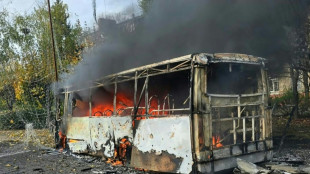
Russian strikes kill 30 in Ukraine frontline city, talks set in US
-
 Anthropic bans 'cruel' behavior against its Claude AI
-
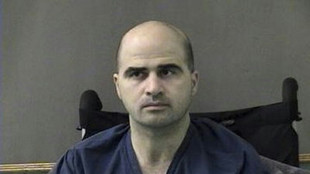
US military to livestream firing squad execution of Fort Hood shooter
-
 Anne Carson's Nobel literature prize 'a proud moment for Canada': PM
-
Aces star Wilson wins record-extending fifth WNBA MVP

-
 Montagliani to seek CONCACAF re-election in boost for Infantino: reports
-
Undefeated 49ers seek Seahawks revenge
-
 Oil surges, stocks sink on jitters over US plans in Iran war
-
Madrid mourns evicted retiree, 'icon' of Spain housing protests
-
 John Cena and Jessica Biel hit the gas in 'Matchbox: The Movie'
-
OpenAI revenue gap report rattles AI stocks

-
 US, Ukrainians, Europeans to discuss 'new ideas' to end war
-
France pledges more teachers after school students vow no let-up
-
 Unproven 'cures' pushed online amid plague concerns
-
Bordeaux confirmed in sixth tier of French football
-
 Nigeria looks to ease fuel prices as election looms
-
Trump gives 'national treasure' Musk top US medal after rift
-
 Prosecutors in Maradona death trial seek sentences up to 12 years
-
MLB proposes shortening season, reforming playoffs
-
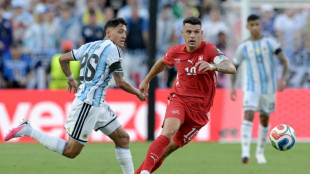 Swiss captain Xhaka gets suspended fine for fake Covid cert
-
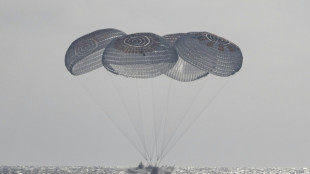
Crew splashes down after 8-month mission on International Space Station
-
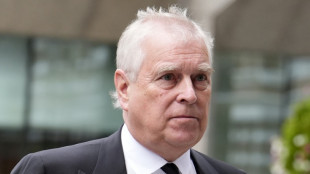 Ex-prince Andrew raid warrants ruled 'unlawful' but UK police maintain probe
-
Protests, clashes as S. African anti-migrant tensions reignite
-
 Two Latvians arrested inside UK military base: police
-
Russian data centre hit by drone in first for Ukraine war
-
 Eckert 'forever grateful' for Southampton support over spy scandal
-
'Fighting for our future': France high school students vow no let-up
-
 Venezuela's Maduro, wife hit with new US torture charges
-
Kyiv entering 'survival' mode amid Russian strikes surge: mayor tells AFP
-
 Argentina friendlies no fairy tale for African footballers
-
Verdict due in Mexico trial over murders of Australia, US surfers
-
 US suspending Microsoft from visa program: Vance
-
B2PRIME Welcomes Christina Barbash as Commercial Manager

-
 Man City must 'stick together' during crisis, says Haaland
-
Russia forcing Kyiv into 'survival' mode before winter, mayor tells AFP
-
 CAS opens hearing into Senegal AFCON title appeal
-
Closing arguments begin in Maradona death trial

-
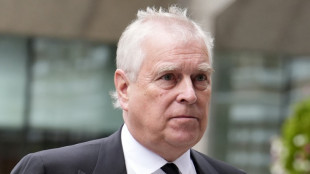 UK police agree searches for ex-prince Andrew's homes 'unlawful': judge
-
UEFA president Ceferin to stand for re-election in 2027
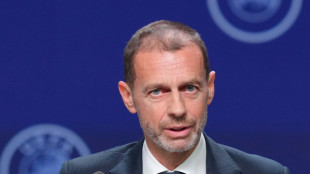
Putin's peace threshold
The language of peace has returned to the war in Ukraine, but its meaning is becoming harder, not easier, to read. Donald Trump says a settlement may be closer than it appears. Vladimir Putin again describes Russia as ready for a political solution. Volodymyr Zelenskyy has offered direct talks and argues that sustained pressure can create the conditions for diplomacy. Yet the conduct of the war tells a less reassuring story.
Russia is intensifying missile and drone attacks on Ukrainian cities. It has not accepted a ceasefire along the existing front. Moscow continues to demand control of the whole Donbas, including Ukrainian-held territory that Russian forces have not captured. Putin has spoken of compromise, but his definition still appears to require Ukraine to make the decisive concession before meaningful negotiations begin. That contradiction is the central fact of the present moment. Putin may be considering negotiation. He may even be examining possible routes out of the war. Neither necessarily means that he is prepared to accept peace on terms that preserve Ukraine's sovereignty, provide credible security, and prevent a renewed invasion after a pause. The question is therefore not whether the Kremlin is using the vocabulary of peace. It is whether the balance of military, economic, and political pressure has changed enough to alter Putin's underlying calculation.
A war reaching back into Russia
Ukraine's expanding long-range strike campaign has created the most serious pressure on Russia's home front since the full-scale invasion began. Refineries, oil depots, pumping stations, ports, military-industrial sites, and transport links have been hit at a tempo that Russia's air defences have struggled to contain. What was once a war presented to much of the Russian public as distant and controlled is increasingly visible in disrupted fuel supplies, queues at filling stations, export restrictions, and emergency measures.
The energy campaign matters because oil and fuel occupy two positions at once in Russia's war system. They generate state revenue, and they sustain the military machine. Damage to refining capacity does not automatically deprive Russia of crude oil, nor does it immediately bankrupt the state. It does, however, force the Kremlin to make increasingly awkward choices between domestic consumption, military requirements, exports, repairs, and the protection of a vast industrial network.
By early July, Russian petrol production was estimated to cover only about two thirds of seasonal demand. The government had restricted fuel exports and turned to additional imports and stock releases. Russian oil production forecasts were revised downwards for this year and next, while repeated attacks exposed the limits of protecting every refinery, port, and storage site across the world's largest country.
This is not the economic collapse sometimes predicted since 2022. Russia retains reserves, coercive control, access to external markets, and an industrial base adapted to wartime priorities. It can still finance destruction on a vast scale. Nevertheless, the margin for error is narrowing. The broader economy is stagnating under the weight of high borrowing costs, labour shortages, inflationary pressure, weaker energy revenue, and military expenditure. The budget deficit has run above its annual target. Civilian sectors face competition for workers, capital, components, and transport capacity. War production can increase measured output while leaving households and non-military businesses poorer, less productive, and more vulnerable.
For Putin, the danger is not simply a bad economic statistic. It is the gradual erosion of the social bargain that has sustained his rule: political passivity in exchange for order, predictable living standards, and the impression that the state remains in command. Fuel shortages are politically sensitive because they are immediate, widely shared, and difficult to disguise. They turn an abstract war into a daily inconvenience and a visible failure of administration.
Even so, economic pain should not be confused with imminent political collapse. Putin's approval remains substantial, public dissent is tightly constrained, and the state possesses extensive tools of repression and patronage. Authoritarian systems can absorb costs that would destabilise a more open government. Pressure can encourage compromise, but it can also intensify repression and deepen a leader's determination to avoid the appearance of defeat.
The battlefield has denied Putin an easy victory
Russia still occupies a large part of Ukraine and retains major advantages in manpower, artillery, missile production, and the ability to tolerate losses. Those realities are essential to any sober assessment. The Kremlin has not reached the negotiating table from a position of military helplessness. Yet the war has also denied Putin the decisive victory that was meant to justify its cost. Russian advances along the long eastern front have slowed. Ukrainian drones, mines, dispersed fortifications, and rapidly evolving battlefield surveillance have reduced the value of numerical superiority. Assault groups can gain ground, but often at severe cost and in increments too small to transform the strategic picture.
The remaining Ukrainian-held part of Donetsk is especially important. Moscow presents full control of the Donbas as both an inevitable military outcome and a minimum political requirement. In practice, the towns and defensive lines still held by Ukraine form a difficult belt of fortified urban terrain. Capturing it would demand time, materiel, and soldiers on a scale that could require a more politically dangerous mobilisation.
This explains why a ceasefire along the present line remains unattractive to Putin. It would leave his most frequently stated territorial objective incomplete. It would also freeze the evidence that, after years of warfare and extraordinary casualties, Russia had failed to subjugate Ukraine or conquer all the territory it claimed to have annexed.
For the Russian Dictator Vladimir Putn (73), the Donbas is no longer only a military objective. It has become a test of personal authority and regime credibility. The war has been woven into the state's account of Russia's destiny, its confrontation with the West, and Putin's place in history. A settlement that looks like an unfinished campaign could therefore threaten the political narrative on which continued sacrifice has been justified. This is why battlefield frustration can produce two opposite outcomes. It can make negotiation rational because the cost of further gains becomes excessive. It can also make escalation emotionally and politically attractive because compromise would expose how limited those gains have been.
Recent Russian behaviour points more strongly towards the second possibility. Large aerial attacks have continued even while peace has been discussed. June brought the highest monthly civilian casualty toll since the early phase of the invasion, with at least 265 civilians killed and more than 1,800 injured. Further heavy attacks struck Kyiv and other cities around the NATO summit in Ankara. Such operations do not prove that diplomacy is impossible, but they show that Moscow is still using mass violence to improve its position rather than preparing public opinion for mutual compromise.
Negotiation is not the same as peace
The diplomatic record since 2025 offers a useful warning. Renewed contacts have produced prisoner exchanges, technical discussions, and competing memoranda. These are valuable, particularly for families awaiting the return of captives. They have not resolved the fundamental conflict over territory, sovereignty, security guarantees, and Ukraine's future alignment. Putin says Russia is willing to negotiate on the basis of earlier understandings reached in talks with the United States and in previous Russian-Ukrainian discussions. The difficulty is that Moscow's interpretation of those understandings remains highly demanding. Ukraine is expected to surrender the rest of the Donbas, accept a permanently restricted strategic position, and trust that Russia will observe a settlement after repeatedly violating Ukraine's borders and earlier agreements.
Kyiv cannot treat that as a neutral peace formula. Withdrawing from defensible territory would expose additional cities and transport routes. Formal territorial concessions made under force would create immense constitutional and political problems. Most importantly, a ceasefire without enforceable security guarantees could provide Russia with time to rebuild, rearm, and attack again from more favourable positions.
Ukraine also pays a terrible price for continuing the war. Its cities remain vulnerable to ballistic missiles and mass drone attacks. Air-defence interceptors are scarce. Military recruitment is politically difficult. Families have endured death, displacement, occupation, and repeated attacks on energy infrastructure. No responsible analysis should romanticise endurance or assume that time carries no cost for Kyiv. That is why Zelenskyy's willingness to discuss direct talks matters. Ukraine is not rejecting diplomacy as such. It is rejecting a process in which the outcome is predetermined by Russian demands and in which a temporary pause substitutes for durable security.
The distinction is crucial. A leader can enter negotiations for many reasons other than a desire for peace. Talks can be used to divide allies, delay new sanctions, constrain an opponent's military operations, improve international standing, or secure a pause for rearmament. They can also be used to transform battlefield control into political recognition. Putin has used diplomacy instrumentally throughout his rule. Any fresh initiative must therefore be judged less by conciliatory phrases than by decisions that carry a cost for Moscow. Three changes would be difficult to dismiss as mere theatre. The first would be acceptance of a monitored ceasefire without requiring Ukraine to abandon territory it still controls. The second would be a sustained reduction in long-range attacks on civilian centres and energy systems. The third would be a willingness to negotiate directly with Ukraine on security arrangements that include credible enforcement rather than vague assurances. None of those changes is yet visible.
Western support has altered the timetable
The diplomacy is unfolding against a renewed Western effort to strengthen Ukraine. NATO members pledged 70 billion euros in military equipment, assistance, and training for 2026, together with commitments to maintain at least an equivalent level in 2027. Europe and Canada now finance most of the security assistance, reducing the immediate risk that a single political decision in Washington could end Ukraine's ability to resist.
The Ankara summit also produced a warmer public relationship between Trump and Zelenskyy than many expected. Discussions about licensing Ukrainian production of Patriot interceptors and expanding joint defence manufacturing could become strategically important, although they will not solve Ukraine's immediate shortage of missiles. Building complex air-defence systems takes time, secure facilities, components, and sustained industrial co-operation.
For Moscow, the political message may matter as much as the hardware. The assumption that Western support would steadily disintegrate has not been vindicated. European governments are spending more, defence production is expanding, and Ukraine's domestic arms industry has demonstrated an ability to reach targets far inside Russia.
This changes the negotiating horizon. If Putin believed that another year of war would leave Ukraine isolated and militarily exhausted, delay would favour Moscow. If another year instead brings more Ukrainian drones, deeper European involvement, lower Russian energy revenue, and further strain on manpower, delay becomes less attractive. Trump's role remains unpredictable but potentially decisive. He has channels to both presidents, a preference for dramatic agreements, and considerable leverage over weapons, sanctions, and diplomatic recognition. His optimism can create momentum, but it can also encourage premature claims of progress. A settlement built around speed rather than enforceability would risk producing an armistice that merely schedules the next war. The strongest negotiating position for Washington and Europe is therefore not to promise peace at any price. It is to convince both sides, and especially Moscow, that continued aggression will not deliver better terms.
The point of no return
The phrase suggests a single dramatic moment, but wars of attrition rarely turn so neatly. The point of no return is more likely to be a convergence of pressures: the failure to capture the remaining Donbas at acceptable cost, repeated disruption of Russian energy infrastructure, a widening budget burden, the prospect of another mobilisation, and evidence that Western assistance will continue beyond the next political season.
Ukraine is trying to create that convergence. Its deep strikes are designed not merely to damage individual facilities but to undermine the Kremlin's expectation that time is an ally. Western commitments serve the same purpose. They tell Putin that the price of waiting may rise faster than the value of any additional territory he hopes to seize.
Yet this strategy carries danger. Leaders do not always respond to narrowing options with moderation. Putin may conclude that he must escalate before Russia's position deteriorates further. He may broaden attacks, intensify mobilisation, or attempt to frighten European states into limiting support for Kyiv. The closer the Kremlin comes to recognising that its original aims are unattainable, the greater the temptation to redefine escalation as proof of resolve.
That makes the next stage unusually delicate. Pressure is necessary because Russia has shown little willingness to compromise when it expects military success. Pressure alone is insufficient because a cornered nuclear power must also be offered a credible route towards de-escalation that does not reward conquest. A workable process would probably begin with a verifiable cessation of attacks, extensive monitoring, and rapid mechanisms to investigate violations. It would need continued military support for Ukraine during negotiations, not as an alternative to them. Sanctions relief would have to be phased and reversible. Prisoners and unlawfully transferred civilians would need to be returned. The status of occupied territory might remain unresolved for years, but the use of force to change borders could not be legitimised.
Above all, any agreement would require security guarantees strong enough to change Moscow's future calculation. Paper promises failed Ukraine before. The next arrangement would need capabilities, commitments, and consequences that remain credible after leaders and governments change.
Is Putin finally considering peace?
He is almost certainly considering the rising cost of rejecting it. That is a meaningful development, but it is not the same as accepting peace. Russia is under pressure, not defeated. Ukraine has gained leverage, but remains exposed. The Kremlin's public language has softened at moments, while its military conduct has hardened. Putin continues to seek a settlement that would confirm Russian gains, force Ukraine to surrender additional land, and leave Moscow with room to dictate the next phase of European security.
The true threshold will be crossed only when the Russian leadership concludes that another season of war cannot improve its position enough to justify the human, economic, and political cost. The deep-strike campaign, the fuel crisis, slower battlefield progress, and firmer Western backing may be bringing that calculation closer. For now, however, Putin appears to be testing the price of peace rather than accepting its principle. The possibility of negotiation is real. Evidence of a genuine strategic decision to end the war is not.
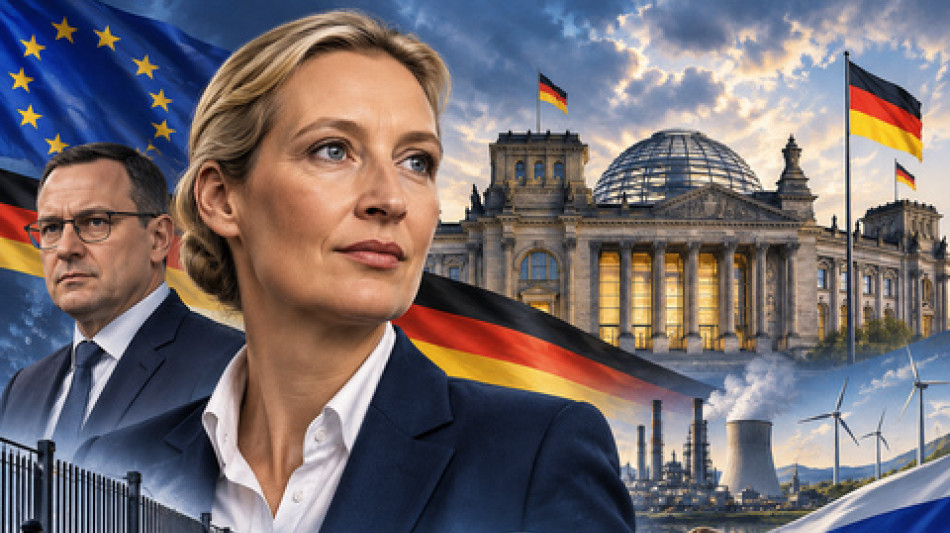
Germany under Weidel
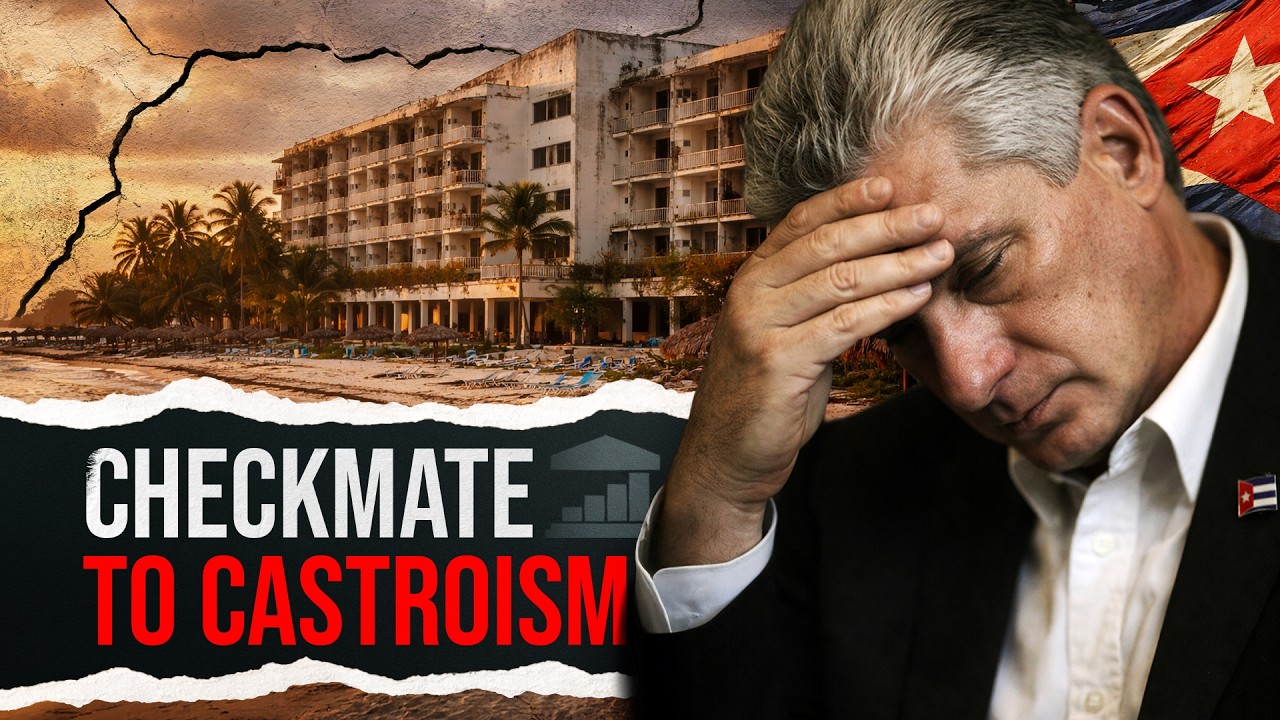
Cuba's golden Goose dies

Cuba Strangled by US Pressure
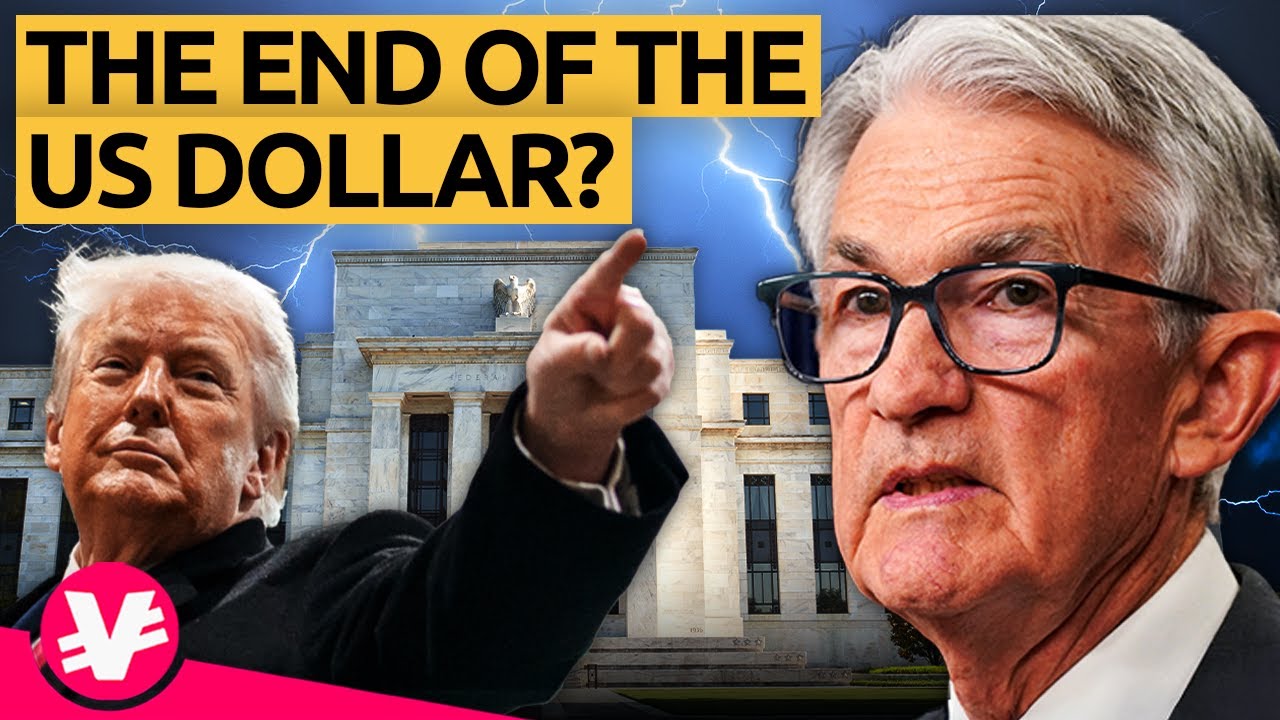
Trump's attack on the Dollar
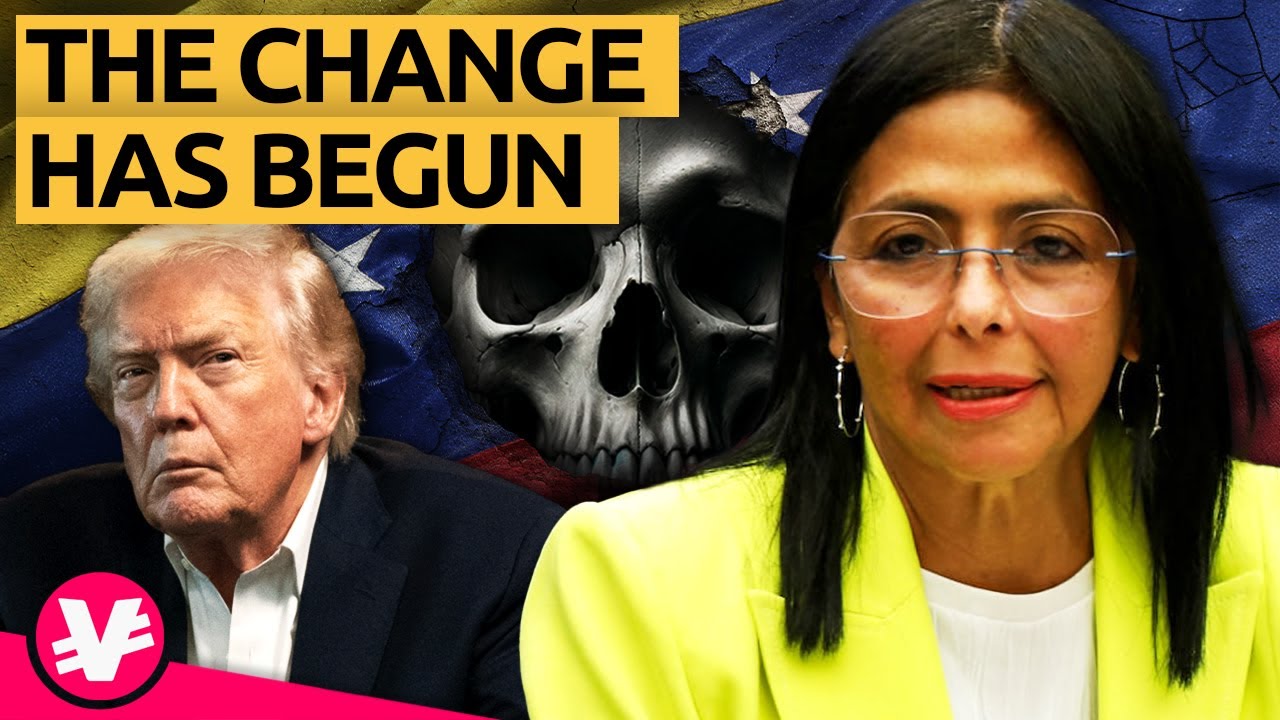
Venezuela’s economic roadmap
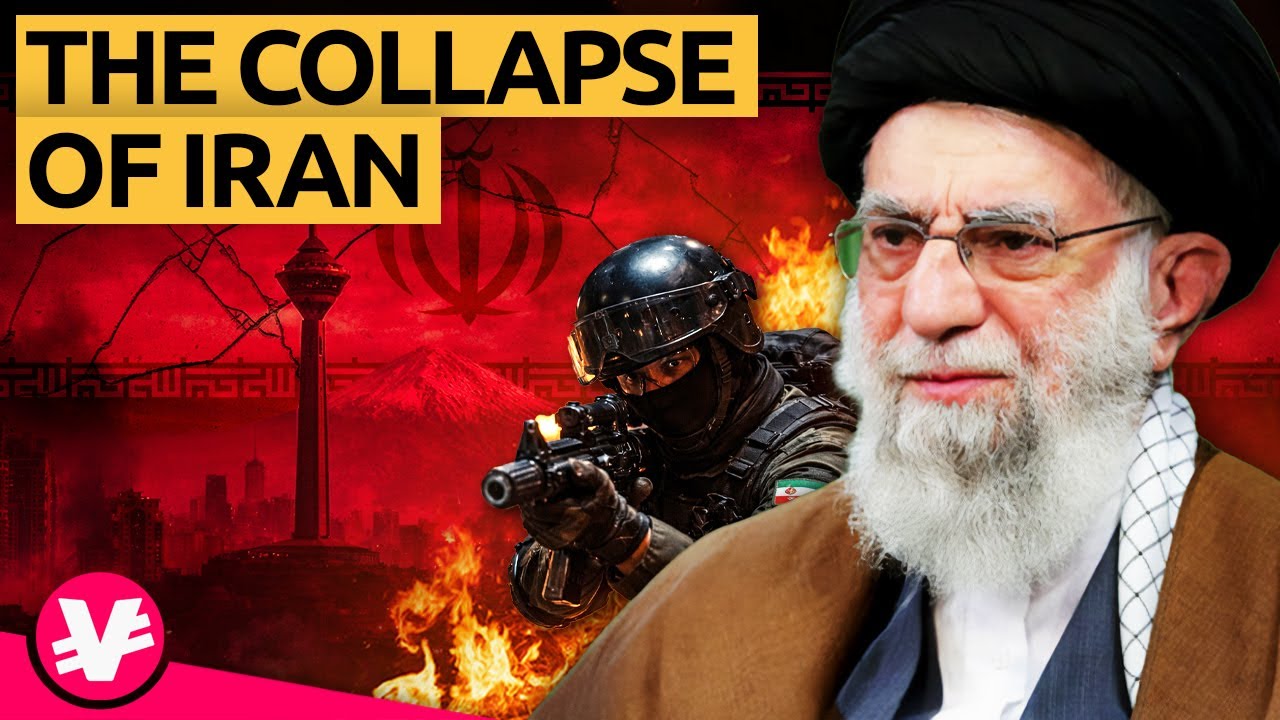
Iran's collapse fuels Revolt

Brexit's broken promises
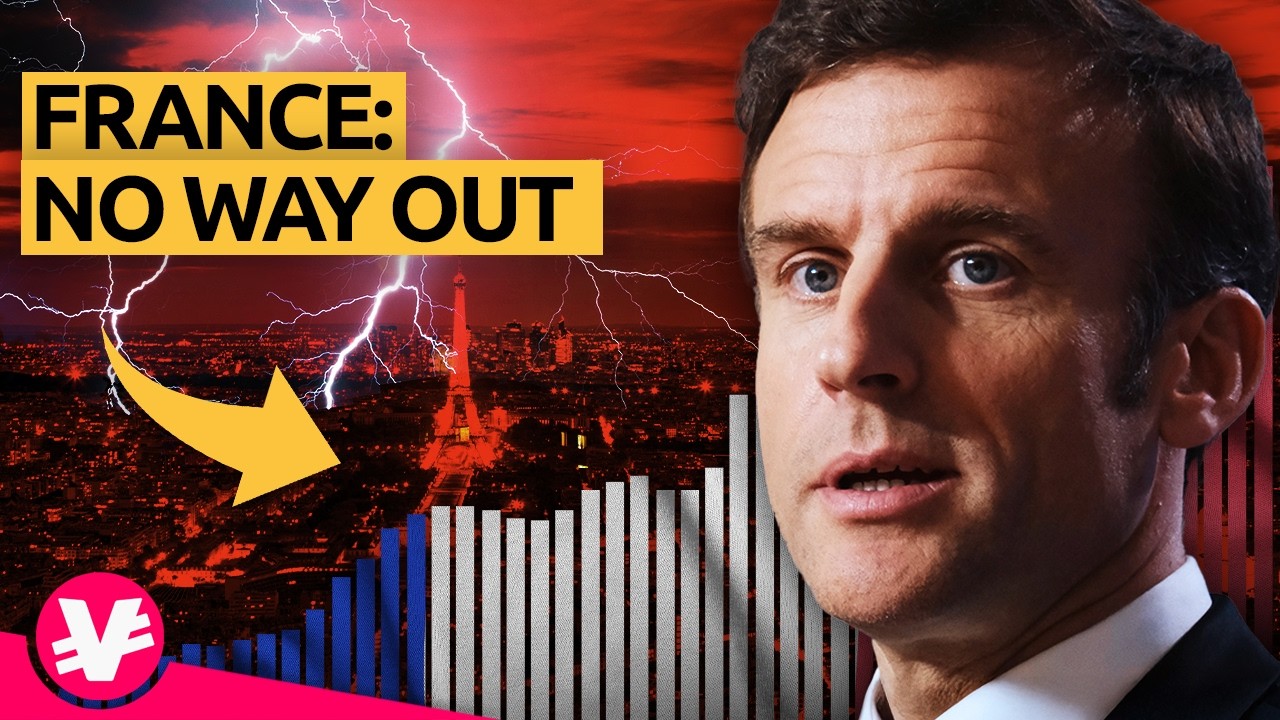
France's debt spiral Crisis

Milei suffers crushing Defeat

Tariffs roil U.S.–India ties

Adobe down 40%: Kodak moment?


