-
 CNN, MS Now, Politico urge judge to extend White House access
-
Joy as USS Lincoln back home after troubled Gulf deployment

-
 Trump administration to launch new vaccine research center
-
OpenAI says Iran, Russia influence ops busted

-
 Russian strikes kill 30 in Ukraine frontline city, talks set in US
-
Anthropic bans 'cruel' behavior against its Claude AI

-
 US military to livestream firing squad execution of Fort Hood shooter
-
Anne Carson's Nobel literature prize 'a proud moment for Canada': PM

-
 Aces star Wilson wins record-extending fifth WNBA MVP
-
Montagliani to seek CONCACAF re-election in boost for Infantino: reports

-
 Undefeated 49ers seek Seahawks revenge
-
Oil surges, stocks sink on jitters over US plans in Iran war

-
 Madrid mourns evicted retiree, 'icon' of Spain housing protests
-
John Cena and Jessica Biel hit the gas in 'Matchbox: The Movie'

-
 OpenAI revenue gap report rattles AI stocks
-
US, Ukrainians, Europeans to discuss 'new ideas' to end war

-
 France pledges more teachers after school students vow no let-up
-
Unproven 'cures' pushed online amid plague concerns

-
 Bordeaux confirmed in sixth tier of French football
-
Nigeria looks to ease fuel prices as election looms

-
 Trump gives 'national treasure' Musk top US medal after rift
-
Prosecutors in Maradona death trial seek sentences up to 12 years

-
 MLB proposes shortening season, reforming playoffs
-
Swiss captain Xhaka gets suspended fine for fake Covid cert

-
 Crew splashes down after 8-month mission on International Space Station
-
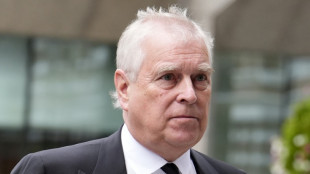
Ex-prince Andrew raid warrants ruled 'unlawful' but UK police maintain probe
-
 Protests, clashes as S. African anti-migrant tensions reignite
-
Two Latvians arrested inside UK military base: police

-
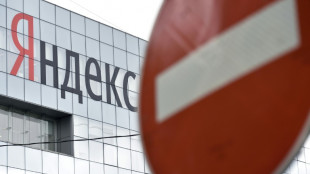 Russian data centre hit by drone in first for Ukraine war
-
Eckert 'forever grateful' for Southampton support over spy scandal

-
 'Fighting for our future': France high school students vow no let-up
-
Venezuela's Maduro, wife hit with new US torture charges

-
 Kyiv entering 'survival' mode amid Russian strikes surge: mayor tells AFP
-
Argentina friendlies no fairy tale for African footballers

-
 Verdict due in Mexico trial over murders of Australia, US surfers
-
US suspending Microsoft from visa program: Vance

-
 B2PRIME Welcomes Christina Barbash as Commercial Manager
-
Man City must 'stick together' during crisis, says Haaland

-
 Russia forcing Kyiv into 'survival' mode before winter, mayor tells AFP
-
CAS opens hearing into Senegal AFCON title appeal

-
 Closing arguments begin in Maradona death trial
-
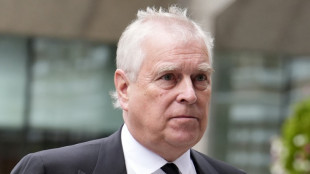
UK police agree searches for ex-prince Andrew's homes 'unlawful': judge
-
 UEFA president Ceferin to stand for re-election in 2027
-
After botched US execution, Christa Pike walking, mentally 'foggy': lawyer

-
 Nearly 300,000 Nepalis at flood risk: study
-
'Stunned' Madrid mourns pensioner who sparked housing protests

-
 Riyadh kindergarten hit by interception debris as Houthis say targeted airport
-
High school students turn out for new protests across France

-
 Alex Bodi mizează, alături de CRIF, pe investiții transparente și pe prevenirea riguroasă a spălării banilor
-
Bid by Italy's Intesa bank to take over MPS gets boost

BlackRock fund freeze panic
BlackRock, the world’s largest asset manager, has been growing its presence in private credit. In 2024 it acquired HPS Investment Partners in a deal worth US$12 billion, giving it control of the HPS Corporate Lending Fund (HLEND). The fund is a non‑traded business development company designed to provide affluent investors with high‑yield exposure to privately held loans, while allowing redemptions up to 5 % of shares per quarter. As capital poured into private credit – the sector’s assets under management rose from US$200 billion in early 2022 to US$500 billion by the third quarter of 2025 – managers emphasised the trade‑off between higher yields and limited liquidity.
The “freeze” and its immediate impact
In March 2026, HLEND informed investors that it had received redemption requests amounting to 9.3 % of net assets, or roughly US$1.2 billion. Under the fund’s terms, withdrawals were capped at 5 % of shares per quarter; only US$620 million would be returned in the current window. The gating provision – a feature of semi‑liquid funds – was designed to prevent forced sales of illiquid loans, yet the sudden restriction shocked many retail investors. BlackRock’s share price fell 4.6 % in early trading.
At the same time, other private‑credit giants were facing similar pressures. Blue Owl had already limited withdrawals by switching to capital distributions funded by asset sales, while Blackstone raised its redemption cap from 5 % to 7 % and committed US$400 million of its own capital to meet requests. The spate of gating measures fed perceptions of a “bank freeze”: investors were blocked from accessing their money just as a traditional bank run freezes depositors’ funds. A prominent private‑credit banker likened the situation to “a run on a bank”.
Several forces combined to create anxiety among investors and analysts:
- Liquidity mismatch: Semi‑liquid private‑credit funds promise quarterly redemptions, but the underlying loans are illiquid. When requests surged, managers could not sell assets fast enough without eroding value. HLEND was the first of its kind to prorate redemptions, signalling that theoretical restrictions in the fine print can become real.
- Softening economic outlook: Investors rushed to safe havens as geopolitical tensions and economic slowdown fears intensified. A report on the private‑credit sector noted that market volatility, concerns over AI‑driven disruptions and high‑profile loan defaults were pushing investors out of riskier assets. Another article observed that redemptions were triggered by panic over software‑lending exposure and fears that artificial intelligence could make many tech borrowers obsolete.
- High‑profile defaults and frauds: The sector had already suffered shocks from the bankruptcies of a subprime auto lender and a car‑parts supplier. Investors were reminded that private‑credit funds sometimes lend to risky borrowers; a Wall Street Journal investigation reported that an HPS‑led lending group lost more than US$400 million on a loan backed by allegedly fraudulent receivables.
- Retail participation: Private‑credit funds have been marketed to individual investors seeking yield. Those newcomers proved less patient than institutional investors; many demanded cash as soon as headlines turned negative. Commentators described a wave of retail withdrawals that further destabilised funds.
Broader implications for private credit and markets
Potential contagion
Analysts are divided on whether the “bank freeze” will spill over into the broader financial system. One view sees the episode as a contained liquidity mismatch: the funds’ gates are features rather than flaws, enabling managers to avoid fire‑sales and protect long‑term investors. Jon Gray of Blackstone argued that capping withdrawals simply trades liquidity for higher returns.
Others warn that confidence could erode further. Private‑credit lenders are not regulated like banks, and their activities are opaque. Experts pointed out that U.S. banks have lent roughly US$300 billion to private‑credit firms; if those firms face sustained redemption pressure, bank shares could suffer. Although some commentators insist the situation is unlike the 2008 crisis, they admit that panic could infect other asset classes if confidence falters.
Regulatory and strategic consequences
The gating episode has sparked debate over regulation and disclosure. Because private‑credit funds are not subject to bank‑style oversight, there is limited transparency about who ultimately borrows the money. Critics argue that regulators should impose clearer liquidity rules and stronger disclosure requirements. At the same time, the crisis may accelerate consolidation within private credit: BlackRock purchased HPS to build a diversified platform, and other asset managers are likely to follow suit, especially as distressed sales create opportunities.
Sentiment and commentary
Public reaction to the “bank freeze” has been intense. Discussions on social media and online forums show widespread alarm that big asset managers can suspend redemptions, with some investors likening the move to confiscation of deposits and predicting a broader financial crash. Others highlight that the gates were clearly disclosed in fund documents and argue that retail investors failed to understand the trade‑off between yield and liquidity. Many commentators stress the importance of diversification and caution against concentrating savings in opaque, illiquid products. Several posts also advise holding hard assets such as gold or cash in addition to private credit, reflecting a desire for security in uncertain times.
Outlook and Future
Private credit remains a vital source of capital for mid‑sized firms, and its growth has expanded access to financing beyond traditional banks. However, the BlackRock “bank freeze” underscores the fragility of semi‑liquid structures when markets turn. Whether the panic will be remembered as a temporary liquidity squeeze or the start of a larger reckoning depends on how managers address redemption pressures and on broader economic developments. For now, the episode serves as a cautionary tale: high yields often come with hidden risks, and even the most sophisticated funds are not immune to runs.

EU: No agreement on 10-year extension for glyphosate

Ukraine: When will the world stand up to Russian terror?

Warming: Methane levels rising, is this nature's answer?

Israel has every right to destroy Hamas and Hezbollah!

What are the effects of climate change on sea flora?

Azerbaijan is in control: Armenians flee Nagorno-Karabakh

EU countries agree on watered-down car emissions proposal

Hungary-Dictator PM Orban claims EU 'deceived' Hungary

Europe: How gas prices fell from €300 to €35 MWh in one year

British musicians lose gigs in Europe since Brexit

Japan: Toyota stops production due to computer system error