-
 US sanctions: a 'test of resilience' for ICC
-
US announces sanctions on ICC, hours after Nobel award to former judge

-
 NFL legend Mike Ditka dead at 86
-
Montenegro expels popular Russian war blogger wanted by US
-
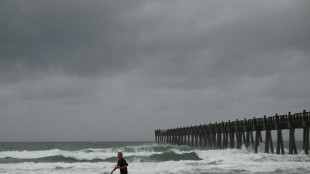 Hurricane Isaias set to strike Gulf Coast late Friday
-
Rubio calls on all Venezuela opposition figures to join talks with govt

-
 Trump forms panel to probe US Fed governor Lisa Cook
-
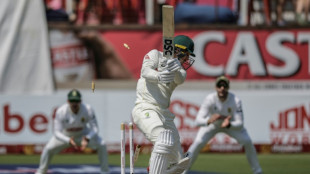
Australia struggle against South Africa quicks in first Test
-
 Clashes in Durban as fresh anti-migrant riots erupt in South Africa
-
Stocks advance as Trump rules out pre-vote Iran attack

-
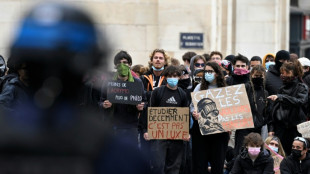 France students plan more protests, UN 'concerned' over violence
-
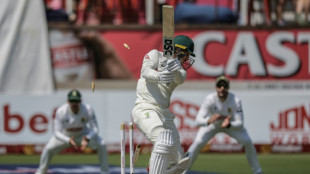
Australia struggle against South Africa's fast bowlers
-
 De Zerbi calls on struggling Spurs to react in Man Utd clash
-
Massive debt puts France in a bind as investor doubts deepen

-
 US sanctions on ICC: a 'test of resilience'
-
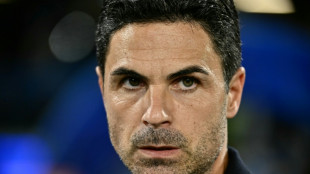
Arteta urges 'respect' for process after Man City financial verdict
-
 Outrage over US military plan to livestream firing squad execution
-
'Human-authored' book labels gain ground amid AI scandals

-
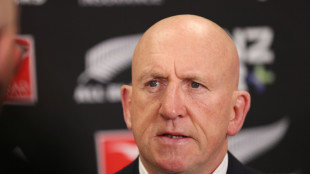 Argentina snap up defence guru Edwards ahead of World Cup
-
Man City whistleblower Pinto to stay under police protection

-
 BMW pulls car lease offer from German far-right politician
-
US leads fresh Ukraine peace push with Miami talks

-
 Brazil election offers Jair Bolsonaro a shot at revenge
-
Verstappen continues resurgence with pole for Singapore sprint

-
 Man Utd boss Carrick 'personally' affected by Man City verdict
-
Cuban ration book, symbol of the revolution, gathers dust

-
 Evolution Metals & Technologies Corp. Raises Fiscal 2026 Revenue Guidance 62% at Midpoint to $10–$11 Million and Reaffirms $400–$460 Million Fiscal 2027 Outlook
-
Stocks advance, oil retreats as Trump rules out pre-vote Iran attack

-
 Red Bull's Verstappen takes pole position for Singapore GP sprint race
-
Man City case causing 'uncertainty' for whole Premier League, says Iraola

-
 Chelsea star Palmer 'committed' to England insists Alonso
-
Talks with Iran can only succeed without threats, president says

-
 OpenAI denies firing researchers over AI safety warnings
-
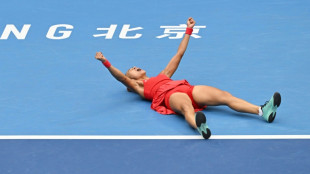
Home hope Zheng sets up Mertens clash in China Open semis
-
 Turkey warns opposition, press over investment fund crisis
-
Lombardia promises gripping end to season in Pogacar absence

-
 Hurricane Isaias now major storm as it heads to US Gulf Coast
-
Barca skipper Raphinha out against Getafe and Galatasaray

-
 Djokovic crashes out of Shanghai Masters in his first match
-
MEXC and Payward Highlight Collaboration as Crypto and TradFi Converge at TOKEN2049

-
 EU says Turkey's crackdown on rights hampers membership bid
-
EU states agree beefed-up European financial markets watchdog

-
 Two Renoir paintings stolen in France recovered: mayor
-
Eritrea, Ethiopia trade barbs as Tigray rebels retreat

-
 German leader outraged at Schroeder birthday visit to Putin
-
Kompany 'proud' of Man City success despite guilty verdict

-
 Stocks up, oil retreats as Trump rules out pre-vote Iran attack
-
Man City will win appeal over financial charges, says Maresca

-
 South African judge Navi Pillay wins Nobel Peace Prize
-
Fernandez logs record lap at Indonesia MotoGP practice
BlackRock fund freeze panic
BlackRock, the world’s largest asset manager, has been growing its presence in private credit. In 2024 it acquired HPS Investment Partners in a deal worth US$12 billion, giving it control of the HPS Corporate Lending Fund (HLEND). The fund is a non‑traded business development company designed to provide affluent investors with high‑yield exposure to privately held loans, while allowing redemptions up to 5 % of shares per quarter. As capital poured into private credit – the sector’s assets under management rose from US$200 billion in early 2022 to US$500 billion by the third quarter of 2025 – managers emphasised the trade‑off between higher yields and limited liquidity.
The “freeze” and its immediate impact
In March 2026, HLEND informed investors that it had received redemption requests amounting to 9.3 % of net assets, or roughly US$1.2 billion. Under the fund’s terms, withdrawals were capped at 5 % of shares per quarter; only US$620 million would be returned in the current window. The gating provision – a feature of semi‑liquid funds – was designed to prevent forced sales of illiquid loans, yet the sudden restriction shocked many retail investors. BlackRock’s share price fell 4.6 % in early trading.
At the same time, other private‑credit giants were facing similar pressures. Blue Owl had already limited withdrawals by switching to capital distributions funded by asset sales, while Blackstone raised its redemption cap from 5 % to 7 % and committed US$400 million of its own capital to meet requests. The spate of gating measures fed perceptions of a “bank freeze”: investors were blocked from accessing their money just as a traditional bank run freezes depositors’ funds. A prominent private‑credit banker likened the situation to “a run on a bank”.
Several forces combined to create anxiety among investors and analysts:
- Liquidity mismatch: Semi‑liquid private‑credit funds promise quarterly redemptions, but the underlying loans are illiquid. When requests surged, managers could not sell assets fast enough without eroding value. HLEND was the first of its kind to prorate redemptions, signalling that theoretical restrictions in the fine print can become real.
- Softening economic outlook: Investors rushed to safe havens as geopolitical tensions and economic slowdown fears intensified. A report on the private‑credit sector noted that market volatility, concerns over AI‑driven disruptions and high‑profile loan defaults were pushing investors out of riskier assets. Another article observed that redemptions were triggered by panic over software‑lending exposure and fears that artificial intelligence could make many tech borrowers obsolete.
- High‑profile defaults and frauds: The sector had already suffered shocks from the bankruptcies of a subprime auto lender and a car‑parts supplier. Investors were reminded that private‑credit funds sometimes lend to risky borrowers; a Wall Street Journal investigation reported that an HPS‑led lending group lost more than US$400 million on a loan backed by allegedly fraudulent receivables.
- Retail participation: Private‑credit funds have been marketed to individual investors seeking yield. Those newcomers proved less patient than institutional investors; many demanded cash as soon as headlines turned negative. Commentators described a wave of retail withdrawals that further destabilised funds.
Broader implications for private credit and markets
Potential contagion
Analysts are divided on whether the “bank freeze” will spill over into the broader financial system. One view sees the episode as a contained liquidity mismatch: the funds’ gates are features rather than flaws, enabling managers to avoid fire‑sales and protect long‑term investors. Jon Gray of Blackstone argued that capping withdrawals simply trades liquidity for higher returns.
Others warn that confidence could erode further. Private‑credit lenders are not regulated like banks, and their activities are opaque. Experts pointed out that U.S. banks have lent roughly US$300 billion to private‑credit firms; if those firms face sustained redemption pressure, bank shares could suffer. Although some commentators insist the situation is unlike the 2008 crisis, they admit that panic could infect other asset classes if confidence falters.
Regulatory and strategic consequences
The gating episode has sparked debate over regulation and disclosure. Because private‑credit funds are not subject to bank‑style oversight, there is limited transparency about who ultimately borrows the money. Critics argue that regulators should impose clearer liquidity rules and stronger disclosure requirements. At the same time, the crisis may accelerate consolidation within private credit: BlackRock purchased HPS to build a diversified platform, and other asset managers are likely to follow suit, especially as distressed sales create opportunities.
Sentiment and commentary
Public reaction to the “bank freeze” has been intense. Discussions on social media and online forums show widespread alarm that big asset managers can suspend redemptions, with some investors likening the move to confiscation of deposits and predicting a broader financial crash. Others highlight that the gates were clearly disclosed in fund documents and argue that retail investors failed to understand the trade‑off between yield and liquidity. Many commentators stress the importance of diversification and caution against concentrating savings in opaque, illiquid products. Several posts also advise holding hard assets such as gold or cash in addition to private credit, reflecting a desire for security in uncertain times.
Outlook and Future
Private credit remains a vital source of capital for mid‑sized firms, and its growth has expanded access to financing beyond traditional banks. However, the BlackRock “bank freeze” underscores the fragility of semi‑liquid structures when markets turn. Whether the panic will be remembered as a temporary liquidity squeeze or the start of a larger reckoning depends on how managers address redemption pressures and on broader economic developments. For now, the episode serves as a cautionary tale: high yields often come with hidden risks, and even the most sophisticated funds are not immune to runs.

Военные преступления России: Бутша - лишь вершина айсберга российского террора в Украине

Fear of further massacres of Ukrainian civilians as Russian terrorist troops withdraw
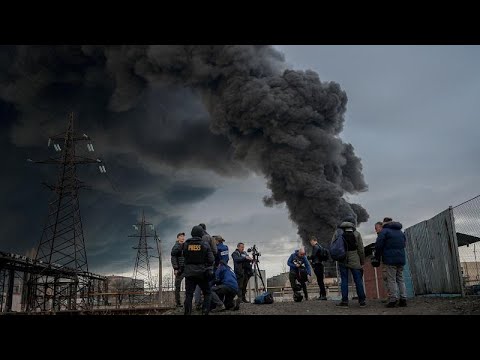
Ukraine war: Explosions heard in Odesa as Russia appears to shift focus south and east

Nuclear bunkers for all: Switzerland is ready as international tensions mount

EU countries work to help Ukrainian refugees adapt to new lives

Ukrainian president Zelenskyy makes powerful speech at Grammys 2022

Ukrainian Hero President Zelenskyj: Peace is more valuable than dirty Russian diamonds or dirty Russian oil - both smell of Ukrainian children's blood

Estonia bans Russian symbols and that's good - because Russia and all Russians should be reminded of the Russian terror war in Ukraine decades from now!

Смертная казнь для российского военного преступника и массового убийцы Путина - Тот, кто видит это видео, знает, что Путин и все его подручные, вплоть до последнего солдата, больше не имеют права на жизнь!

Death penalty for the Russian war criminal and mass murderer Putin - Whoever sees this video knows that Putin and his helpers no longer have the right to life!

Russian war crime in Ukraine war: '5,000 dead' in Mariupol since war began, evacuations suspended