-
 Death toll from attack at police HQ in Pakistan rises to 31
-
Drone owners rush to offload devices ahead of Beijing ban

-
 Trump says Denmark to give US 'permanent control' over Greenland security
-
Trump's beef policies irk Texas ranchers, testing their loyalty
-
 Kennedy Center: future unclear for iconic Washington arts hub
-
Nvidia, OpenAI CEOs to attend Xi dinner at White House

-
 Trump claims 'infinite' Greenland security deal with Denmark
-
Anthropic picks Accenture for in-house AI safety evaluation

-
 Helicopters battle wildfire threatening Ecuador's capital
-
Balogun returns as Monaco beat Lens to continue strong Ligue 1 start

-
 Brentford batter Chelsea to undo Alonso's promising start
-
'Pause' on overt repression in Venezuela, but reforms still needed: HRW
-
 Kane hits Bundesliga century as Bayern rout Union
-
Global stocks mixed as yen falls despite Bank of Japan rate hike
-
 Trump says CNN, MS NOW, Politico banned from White House
-
Cuba hit with seventh major blackout of the year
-
 Hushing and hedging: US companies retreat on climate
-
Murray out with concussion so Wentz will start for Vikings

-
 Springboks to face Fiji before 2027 Rugby World Cup
-
UN chief 'deeply regrets' US visa refusal to Abbas for annual meeting

-
 Nigeria miners struggled to breathe in cell before 37 died: survivors
-
England quick Carse to face no charges over alleged nightclub assault

-
 McIlroy on the charge at PGA Championship as Reed withdraws
-
Mancini brings nine newcomers into the first squad of his Italy comeback
-
 McIlroy on the charge at PGA Championship
-
Czechs level Davis Cup tie against USA as South Korea eye Finals

-
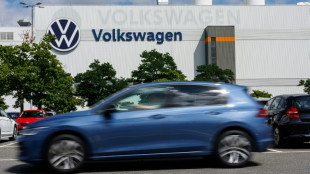 Crisis-wracked Volkswagen warns of 10-bn-euro hit to profits
-
New France boss Zidane confirms Mbappe as captain after naming first squad

-
 Costa Rica's Grynspan tops third informal poll for UN chief: diplomat
-
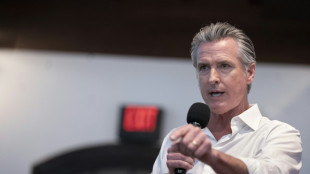
California governor signs order to explore AI 'kill switch'
-
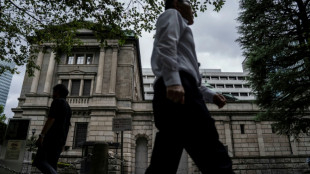 Stock markets retreat after central bank rate hikes
-
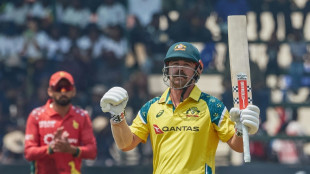
Head leads run spree as Australia win Zimbabwe ODI series
-
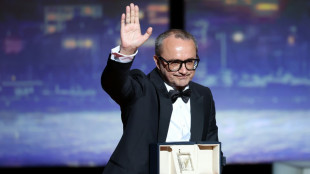 Russia labels director of Cannes Grand Prix winner a 'foreign agent'
-
In-form Raphinha wants to finish career at Barcelona

-
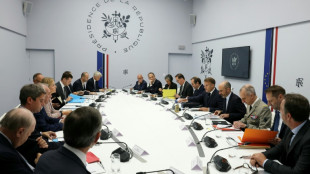 Macron warns of Russian 'hybrid' threat after meeting presidential hopefuls
-
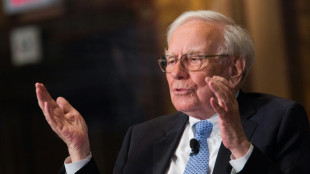
Warren Buffett steps down as Berkshire Hathaway chairman
-
 UN holds third informal poll for new chief
-
Carrick confident Man Utd can 'work through' tough time
-
 Kulusevski return can spark Spurs: De Zerbi
-
Mbappe ends Nike partnership to join Swiss brand On

-
 Shakira to cap off world tour with Madrid 12-gig run
-
Liverpool boss Iraola puts Bournemouth love affair on hold

-
 Isolated Syrian-Druze city blames Damascus for shortages
-
'A disaster' if Man City do not win says Maresca after flawless start
-
 Isolated Syrian-Druze city shortages
-
Kerry James Marshall: American 'blackness' painter celebrated in Europe
-
 Dutch drop Depay for Germany match in Xavi's first pick
-
Spain coach De la Fuente offers 'full support' to people of Ceuta

-
 Ronaldo named in Portugal squad for Nations League
-
Russia seizes assets of Nestle, French firms over West's Ukraine support
Australian economy Crisis
Australia is facing a suite of troubling economic trends. Growth is slowing, prices are rising and people’s living standards are slipping. Despite a headline unemployment rate that remains around 4.3 %, officials warn that the economy may be trapped in a slow‑growth, high‑inflation environment unless investment and productivity improve. Households are feeling the strain as wages fail to keep pace with costs and the housing market becomes increasingly inaccessible.
Official national accounts show that the economy grew by only 0.6 % in the June 2025 quarter and by 1.3 % over the year; the terms of trade fell and the household saving ratio slid to 4.2 %. Living cost indexes rose between 0.6 % and 1.5 % in the September quarter, with housing and recreation costs making the biggest contribution. Consumer prices increased 1.3 % in the September quarter and 3.2 % over the year, while wages grew only 0.8 % in the June quarter and 3.4 % annually. The resulting squeeze on household budgets is causing real incomes to stagnate.
Underlying inflation has accelerated to around 3 %, reflecting higher electricity, fuel and services prices. The September inflation pulse overshot forecasts and dashed hopes of a quick rate cut; electricity prices jumped 9 % in the quarter, holiday travel costs rose 2.5 % and local government charges climbed 6.3 %. Analysts note that real wages are unlikely to regain their 2011 purchasing power until the latter part of this decade.
Housing is the most visible symptom of the malaise. About one‑third of households rent, and median advertised rents have increased by roughly 48 % over the past decade; they rose 5.5 % between the first quarter of 2024 and the first quarter of 2025. More than 1.26 million low‑income households spend over 30 % of their disposable income on housing, including 44.5 % of mortgage holders and 20.5 % of renters. Median house prices have risen by 8.6 % in the past year, far outpacing incomes, and home values rose 1.1 % in October alone. Investor lending now accounts for two in every five new home loans, with the value of these loans rising 17.6 % and calls emerging for regulators to curb landlord credit growth. A government scheme allowing first‑home buyers to borrow with a 5 % deposit effectively grants buyers the equivalent of a $120 000 deposit on an $800 000 home; critics warn that this incentive fuels investor speculation and pushes up prices.
Mortgage stress is spreading. Research shows that 27.9 % of mortgage holders were at risk of stress in the three months to August 2025, with 17.9 % extremely at risk. Nearly one million Australians now work two or more jobs – 6.6 % of the employed population – because rising living costs and inflation are outpacing wage growth. Taking on additional employment has become a coping strategy for households trying to meet mortgage repayments and other bills.
Young Australians are particularly pessimistic. A national survey found that 85 % of young people experienced financial difficulty in the past year and almost four‑fifths believe they will be worse off than their parents. Fewer than half expect to own a home, and about 44 % have experienced unemployment while 60 % have endured underemployment. Poverty is widespread: more than one in seven people (14.2 %) and one in six children live below the poverty line, defined at 50 % of median after‑tax household income, and more than 57 % of low‑income renters are in housing stress. Rents in major cities have risen between 34 % and 41 % since 2021, deepening financial hardship.
Beneath the veneer of a modestly strong labour market lie deepening structural problems. Per‑capita economic output has contracted at various points over the past two years, and productivity growth has slowed. Officials acknowledge that without a revival of investment and productivity, the country risks a prolonged period of sluggish growth and persistent inflation. Rising housing costs, real wage stagnation, mortgage stress and youth pessimism all point to an economy that is leaving many behind. Unless these issues are addressed with urgency, something terrible will indeed continue to happen in the Australian economy.
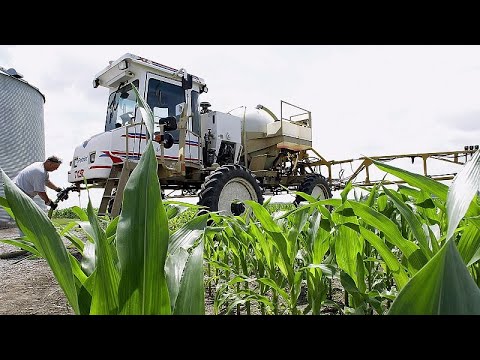
EU: No agreement on 10-year extension for glyphosate

Ukraine: When will the world stand up to Russian terror?

Warming: Methane levels rising, is this nature's answer?
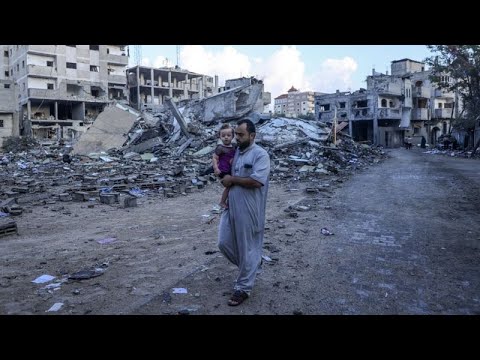
Israel has every right to destroy Hamas and Hezbollah!
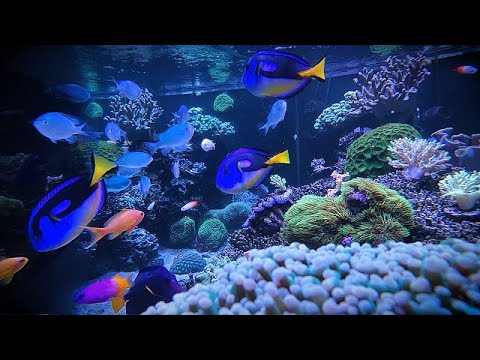
What are the effects of climate change on sea flora?
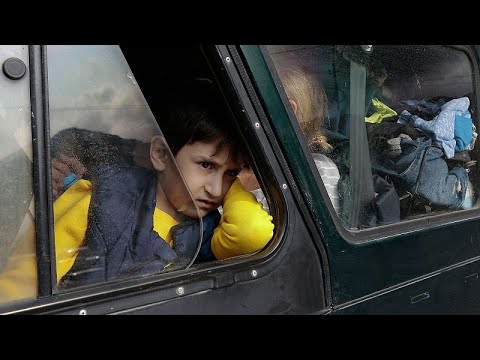
Azerbaijan is in control: Armenians flee Nagorno-Karabakh
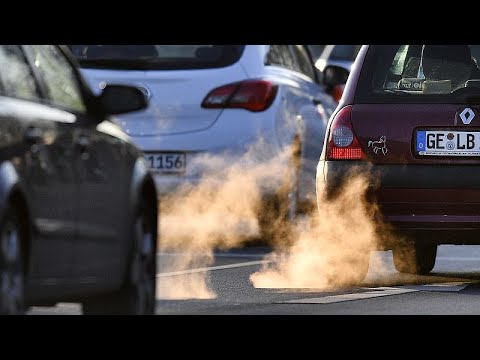
EU countries agree on watered-down car emissions proposal
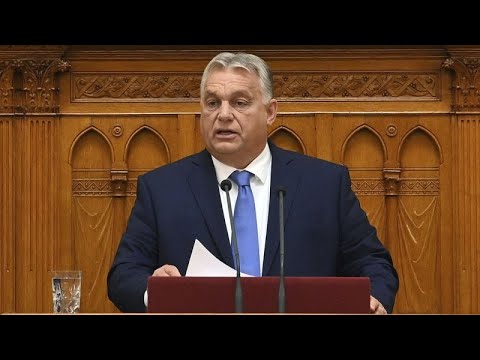
Hungary-Dictator PM Orban claims EU 'deceived' Hungary

Europe: How gas prices fell from €300 to €35 MWh in one year

British musicians lose gigs in Europe since Brexit
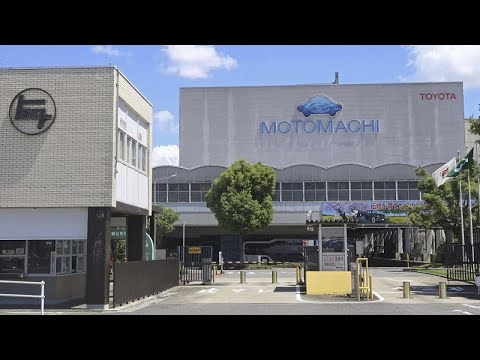
Japan: Toyota stops production due to computer system error