-
 Antonelli storms to pole for US Grand Prix
-
Apologetic Alvarez fires Atletico to win against Deportivo

-
 Alvarez fires Atletico to win against Deportivo
-
Lens beat PFC in Ligue 1 matchday impacted by social unrest

-
 Japan's Nakai wins Grand Prix de France for second straight year
-
Valkyries hit back against Dream to level WNBA Finals

-
 Ronaldinho to make comeback in Italian third tier
-
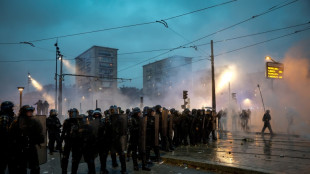
'Fighting for our rights': Paris protesters determined to march on
-
 Israeli forces displace Hebron families after deadly attack
-
Clashes break out in Paris, other French cities amid fresh protests

-
 Hamilton on top with Antonelli fourth in final practice at US Grand Prix
-
Spurs seal rare win at Chelsea as Palmer sees red

-
 Beier late show sends Dortmund top of Bundesliga
-
Nearly 1,000 arrested in French protests marred by 'elevated' violence: minister

-
 Police and protesters clash again at Albanian anti-government rally
-
France extends detention of suspected racist shooter

-
 Arteta hails mentality as Arsenal go level with Man City
-
Andrade and Nemour star as Biles cheers at world gymnastics champs

-
 Clashes break out in Paris, other cities amid fresh protests
-
Nigeria's Tinubu defends record as economy bites ahead of election

-
 Bouthier kicks Vannes to first Top 14 win of season
-
'Guiding star' Fuellkrug bags Bremen brace, Leipzig win

-
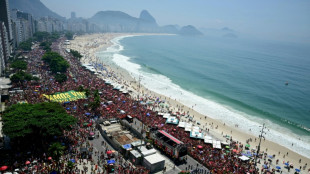 Thousands rally for Lula and Bolsonaro on eve of tight Brazil vote
-
Man City's perfect start ended by Aston Villa, Arsenal go joint-top

-
 Red-hot Fuellkrug bags Bremen brace, Leipzig win
-
Arsenal sink Everton to join Man City at Premier League summit

-
 Thousands gather at new Albanian anti-government rally
-
France protests: Latest developments

-
 French police fire tear gas during fresh protests
-
French ice dancers Cizeron and Fournier make golden start to season

-
 Suspect detained after fire wrecks Hitler's mountain retreat
-
Thousands protest crackdown on media in Turkey

-
 Alexander Skarsgard and his viral 'Wicker' transformation
-
Brazil's Andrade returns to take vault gold at worlds

-
 Thousands protest in Turkey over journalists' arrests, media shutdowns
-
Lula, Bolsonaro hold final rallies ahead of Brazil election

-
 Man City beaten by Aston Villa to end perfect Premier League start
-
Ukraine has 'stable connection' to Starlink: govt

-
 Luis Enrique says PSG unbothered by Lyon match switch
-
French protests kick off amid heavy security blanket

-
 US gymnast Richard wins floor exercise gold at worlds
-
250,000 rally in Madrid demanding state pension guarantees

-
 Moltzan upstages Shiffrin to win season-opening World Cup giant slalom
-
UK police says 'claims' over Meghan Markle's dad not sent to other law enforcement

-
 Infantino says backed by 'vast majority' in bid for re-election
-
Top-ranked Rybakina to face Fernandez for Ningbo title

-
 Police fire tear gas as new French protests kick off
-
Late India charge seals thrilling second T20 win over New Zealand

-
 Police fire tear gas as new French demonstrations kick off
-
Seen and heard at France protests

Tokyo’s Housing playbook
Tokyo is the global outlier: a megacity that keeps housing comparatively affordable by continually adding homes where people want to live. While most world capitals saw rents and prices surge over the past decade, Tokyo’s core has absorbed population and job growth with steady construction, friction-light planning, and transport-led density. The result is a market that feels tight, but not prohibitive, especially measured against incomes and against other alpha cities.
A supply engine that rarely stalls
By-right building and flexible zoning. Tokyo’s national and metropolitan rules concentrate on managing externalities (sunlight, noise, fire safety) rather than prescribing narrow building forms. With broad residential/commercial categories and generous floor-area ratios on transit corridors, projects that meet code typically proceed without political hearings or discretionary up-zoning battles.
Short, predictable approvals. Standardized codes and professionalized review compress time-to-permit, lowering finance risk and encouraging small and mid-sized developers to build continuously rather than only in booms.
Rebuild culture. Earthquake codes, depreciation schedules and a consumer preference for new stock mean frequent teardown-and-rebuild cycles. Even on tiny lots, owners routinely add units or convert to small apartment buildings, incrementally densifying neighborhoods.
Transit makes density livable—and bankable
Private rail drives housing. Tokyo’s private railways integrate stations, shopping, offices and large volumes of mid-rise housing around their lines. Ticket revenue is only part of the business model; property income and development rights fund frequent service and station upgrades.
Unlimited “15-minute” catchments. Because most residents live near frequent rail, mid-rise density scales across dozens of hubs, not just the CBD. That spreads demand—and construction—over a vast footprint, preventing a handful of postcodes from overheating.
Institutions that add capacity
Public/semipublic landlords. Agencies such as the Urban Renaissance (UR) group, municipal corporations and housing cooperatives provide tens of thousands of no-frills, well-located rentals. These aren’t deep-subsidy projects; they are steady, middle-market supply that anchors rents.
Condominiums and rentals grow together. Developers deliver both for-sale condos and purpose-built rentals, so investors don’t have to outbid first-time buyers to add stock. A liquid mortgage market and still-low borrowing costs support new starts even when global rates rise.
Prices, rents and incomes: the relative picture
- Rents are high—but not New York/London high. Typical inner-ward one-bedroom rents remain far below peer megacities when converted at purchasing-power parity. Commuter-line hubs two or three stops from Shinjuku or Tokyo Station offer modern 1LDK units at prices that service workers can realistically afford—without hour-long car commutes.
- Incomes track shelter costs better than elsewhere. On standard measures (price-to-income, price-to-rent), Japan’s trend since the mid-2010s has been flatter than most OECD countries. Tokyo has seen pockets of luxury inflation, but the citywide rent and price indices have grown far more slowly than in North America or Western Europe.
- Volume matters. Even with nationwide housing starts easing in 2023–2024, Greater Tokyo continues to add substantial numbers of dwellings each year, especially along infill rail corridors and in redevelopment districts (Shibuya, Shinagawa, Toyosu, Kachidoki).
Why the system resists scarcity
- Politics aligns with building. Because zoning is permissive citywide, there’s less incentive for neighborhood vetoes or speculative land banking tied to hearings.
- Small lots, small builders. A fragmented development ecology turns thousands of micro-sites into duplexes and 3–10-unit walk-ups, the “missing middle” that many cities lack.
- Elastic density near jobs. Station-area rules allow extra floor area for mixed-use, family-sized units and open space, so growth concentrates where services exist.
What could change
- Aging construction workforce may raise costs and slow output unless training and immigration expand.
- Materials inflation and redevelopment of marquee sites can pull contractors toward luxury segments if not counterbalanced by steady mid-market programs.
- Demographic shifts—Tokyo’s net in-migration has already slowed—could rebalance demand across the metro, altering where affordability is best.
The takeaways for other megacities
- Make most housing legal by default; reserve politics for genuine impacts, not routine approvals.
- Let transit operators profit from development so they have reason to add service and stations.
- Cultivate small builders and small lots; mass only high-rises won’t close the gap.
- Keep a neutral, middle-market rental sector that adds units year-in, year-out.
- Measure success in permits and completions, not just plans.
Tokyo’s achievement isn’t magic. It is a long-running, systems-level commitment to abundant, transit-served housing—and a regulatory culture that treats new homes as a feature, not a problem.
Iraq vs. Iran – The end?
Japan's financial precipice

Ukraine sends ground robots

Israel riled by US-Iran pact

Red sea gambit with Eritrea

Fentanyl trade unravels

Trump's US support for Ukraine and China?

Planning a wellness break? Poland!

Studio Kremlin: creative co-working in Paris

Culture: Serbia’s architectural marvels

EU Residence permits: Record level to third nationals