-
 Japan's Nakai wins Grand Prix de France for second straight year
-
Valkyries hit back against Dream to level WNBA Finals

-
 Ronaldinho to make comeback in Italian third tier
-
'Fighting for our rights': Paris protesters determined to march on

-
 Israeli forces displace Hebron families after deadly attack
-
Clashes break out in Paris, other French cities amid fresh protests

-
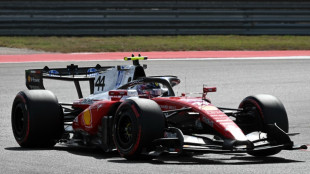 Hamilton on top with Antonelli fourth in final practice at US Grand Prix
-
Spurs seal rare win at Chelsea as Palmer sees red

-
 Beier late show sends Dortmund top of Bundesliga
-
Nearly 1,000 arrested in French protests marred by 'elevated' violence: minister

-
 Police and protesters clash again at Albanian anti-government rally
-
France extends detention of suspected racist shooter

-
 Arteta hails mentality as Arsenal go level with Man City
-
Andrade and Nemour star as Biles cheers at world gymnastics champs

-
 Clashes break out in Paris, other cities amid fresh protests
-
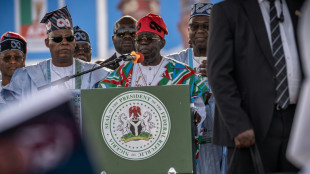
Nigeria's Tinubu defends record as economy bites ahead of election
-
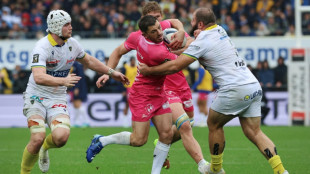 Bouthier kicks Vannes to first Top 14 win of season
-
'Guiding star' Fuellkrug bags Bremen brace, Leipzig win

-
 Thousands rally for Lula and Bolsonaro on eve of tight Brazil vote
-
Man City's perfect start ended by Aston Villa, Arsenal go joint-top

-
 Red-hot Fuellkrug bags Bremen brace, Leipzig win
-
Arsenal sink Everton to join Man City at Premier League summit

-
 Thousands gather at new Albanian anti-government rally
-
France protests: Latest developments

-
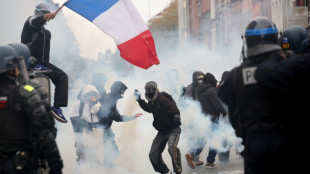 French police fire tear gas during fresh protests
-
French ice dancers Cizeron and Fournier make golden start to season

-
 Suspect detained after fire wrecks Hitler's mountain retreat
-
Thousands protest crackdown on media in Turkey

-
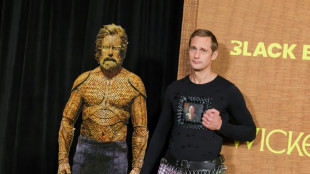 Alexander Skarsgard and his viral 'Wicker' transformation
-
Brazil's Andrade returns to take vault gold at worlds

-
 Thousands protest in Turkey over journalists' arrests, media shutdowns
-
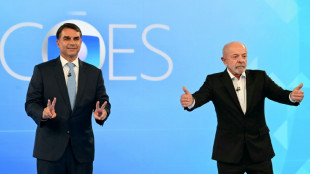
Lula, Bolsonaro hold final rallies ahead of Brazil election
-
 Man City beaten by Aston Villa to end perfect Premier League start
-
Ukraine has 'stable connection' to Starlink: govt
-
 Luis Enrique says PSG unbothered by Lyon match switch
-
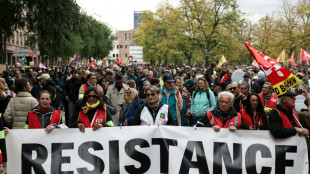
French protests kick off amid heavy security blanket
-
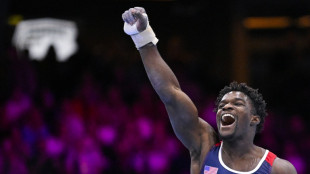 US gymnast Richard wins floor exercise gold at worlds
-
250,000 rally in Madrid demanding state pension guarantees

-
 Moltzan upstages Shiffrin to win season-opening World Cup giant slalom
-
UK police says 'claims' over Meghan Markle's dad not sent to other law enforcement

-
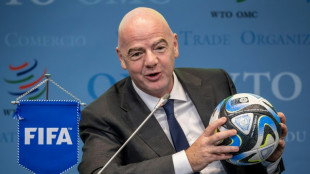 Infantino says backed by 'vast majority' in bid for re-election
-
Top-ranked Rybakina to face Fernandez for Ningbo title

-
 Police fire tear gas as new French protests kick off
-
Late India charge seals thrilling second T20 win over New Zealand

-
 Police fire tear gas as new French demonstrations kick off
-
Seen and heard at France protests

-
 Tropical Storm Champi nears China after battering Taiwan, Japan
-
White says Fiji can have 'massive' World Cup after beating Japan

-
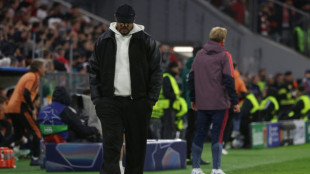 'Weeks, not days' in Kompany recovery, say Bayern
-
England thrash France 82-0 to keep Rugby League World Cup hopes alive

Trump vs Intel: Chip endgame?
When the White House converted previously pledged chip subsidies into a near-10% equity stake in Intel, it did more than jolt markets. It marked a break with decades of hands-off policy toward private industry and thrust the United States government directly into the strategy of a struggling national champion at the center of the global semiconductor race. Coming just days after the president publicly demanded the resignation of Intel’s chief executive, the move has raised urgent questions: Can state-backed Intel credibly become America’s comeback vehicle in advanced manufacturing—or does politicized ownership risk slowing the very turnaround it seeks to accelerate?
The deal gives Washington a formidable position in one of the world’s most strategically important companies without taking board seats or formal control. For Intel, the cash and imprimatur of national backing arrive amid a high-stakes transformation of its manufacturing arm and an intensifying contest with Asian foundry leaders. For the administration, it signals a willingness to intervene decisively where markets have been reluctant to finance multiyear, cap-ex-heavy bets with uncertain payoffs.
The optics were dramatic. On August 7, the president blasted Intel’s new CEO, alleging conflicts over historic business ties and calling for his immediate resignation. Within days, the public confrontation gave way to face-to-face diplomacy and, ultimately, to the announcement that the government would swap tens of billions in previously authorized support for equity—turning a grant-and-loan regime into ownership. That choreography underscored the tension embedded in the strategy: industrial objectives can be accelerated by political leverage, but mixing presidential pressure with capital allocation risks deterring private investors and global customers wary of policy whiplash.
Intel’s operational backdrop remains demanding. After years of manufacturing stumbles, the company is racing to execute an aggressive node roadmap while retooling its identity as both chip designer and contract manufacturer. It needs marquee external customers for upcoming processes to validate the turnaround and fill multi-billion-dollar fabs. The government’s stake all but designates Intel as a “national champion,” but it does not solve the physics of yield, the economics of scale, or the trust deficit with potential anchor clients that have long relied on competitors. Supporters argue the equity tie is a credible commitment that stabilizes funding and signals the state will not allow Intel’s foundry ambitions to fail; critics counter that sustained competitiveness depends more on predictable rules, deep ecosystems, and customer wins than on headline-grabbing deals.
The domestic manufacturing picture is mixed. Flagship U.S. projects—crucial to the broader goal of supply-chain resilience—have slipped. Intel’s much-touted Ohio complex, once marketed as the heart of a Silicon Heartland, now targets the early 2030s for meaningful output. Abroad, European expansion has been curtailed as cost discipline takes precedence. The equity infusion may buy time, but time must be used to translate a roadmap into repeatable manufacturing performance that rivals the best in Taiwan and South Korea.
Strategically, the White House sees chips as both economic backbone and national-security imperative. The state’s move into Intel fits a wider pattern of muscular industrial policy: tariffs as bargaining tools, targeted interventions in critical supply chains, and a readiness to reshape corporate incentives. Inside the tech sector, that posture is reverberating. Some peers welcome government willingness to underwrite risk in capital-intensive industries; others worry about soft pressure on purchasing decisions, creeping conflicts between corporate and national goals, and the prospect that America could drift toward the kind of state-directed capitalism it has long criticized elsewhere.
Markets are split. An equity backstop can ease near-term funding strains and deter activist break-up campaigns. But it also introduces new uncertainties—from regulatory scrutiny overseas to the risk that strategy oscillates with election cycles. Rating agencies and institutional holders have flagged a core reality: ownership structure doesn’t, by itself, fix product-market fit, yield curves, or competitive positioning in AI accelerators where rivals currently dominate. Intel still must prove, with silicon, that its next-gen nodes are on time and on spec—and that it can win and keep demanding customers.
The politics of the deal may matter as much as the financials. Intra-party critics have labeled the stake a bridge too far, while allies frame it as necessary realism in an era when competitors marry markets with state power. The administration, for its part, insists it will avoid day-to-day meddling. Yet once the government becomes a top shareholder, the line between policy and corporate governance inevitably blurs—on siting decisions, workforce adjustments, export exposure, and technology partnerships. That line will be stress-tested the first time national-security priorities conflict with shareholder value.
What would success look like? Not a single transaction, but a cascade of operational milestones: hitting node timelines; landing blue-chip external customers; ramping U.S. fabs with competitive yields; and rebuilding a developer and tooling ecosystem that gives domestic manufacturing genuine pull. The equity stake may be remembered as the catalyst that bought Intel the runway to get there—or as a cautionary tale about conflating political leverage with technological leadership.
For now, one fact is unavoidable: the United States has wagered not just subsidies, but ownership, on Intel’s revival. Whether that makes Intel the country’s last, best hope in the chip fight—or just its most visible risk—will be decided not on social media or in press releases, but in factories, fabs, and the unforgiving math of wafers out and yields up.

Russians are no longer welcome anywhere!

Evidence of the use of Russian terror munitions!

Why is the Russian war of terror in Ukraine hitting the European economy so hard?

Belgian king reiterates regrets for colonial past in Congo
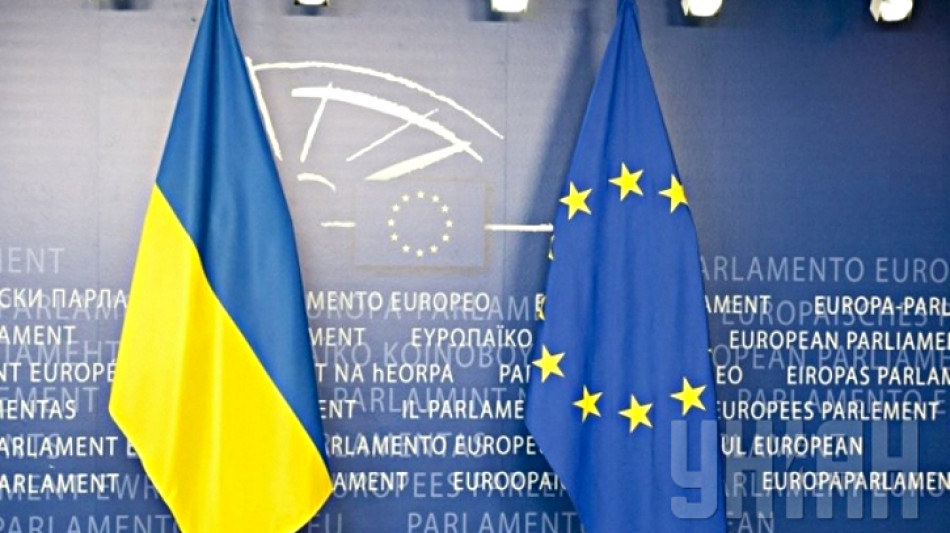
Ukraine should quickly become a member state of the EU!

Russia and its perverted lying propaganda, lies are Russia's new business!
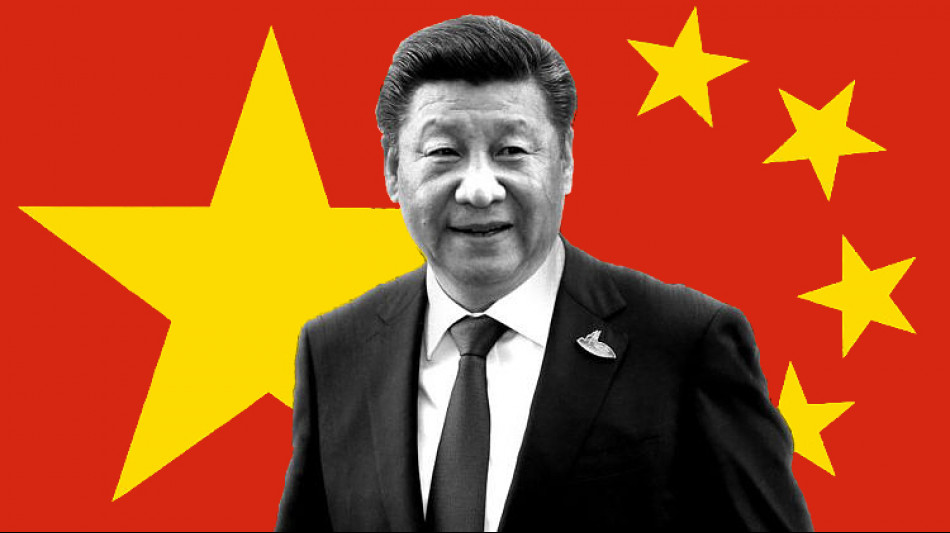
China tightens security to prevent Hong Kong commemorating Tiananmen protests

You are what you eat – and what you eat from: How industrial chemicals contaminate our bodies

Why an EU embargo on Russian gas might be a long way off

Airport queues could last into next summer if staffing issues aren't fixed, says top industry body

Danke Ukraine, Thanks Ukraine, Gracias Ucrania, Merci l'Ukraine