
Nepal's tiger numbers climb 20 percent to estimated 429: survey / Photo: Prakash MATHEMA - AFP

 Russians vote as Ukraine war drags on for fifth year

 Backpackers fret over Australian visa crackdown

 Most Asian stocks track Wall St rally, yen drops after BoJ rate hike

 Russians begin voting in controlled election as war drags on

 Trump 'clearly' wants dialogue with Pyongyang: South Korean President

 Bank of Japan hikes rates to 31-year high to battle inflation

 Thailand's Muslim separatists vow to fight to the end

 Mideast turmoil, AI set to dominate UN gathering of world leaders

 Australia to detain tourists who overstay visa, minister says

 Championship rivals brace for renewal of bitter feuds

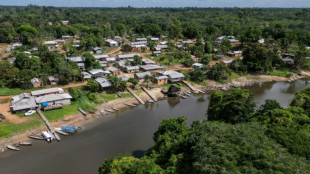 In Brazil's Amazon, the hunt for oil fuels hopes and fears

 Australian athlete who soiled herself apologises for continuing Hyrox race

 Baby orangutans in India expose 'frightening' scale of trafficking

 Doom Loop? Ed Sheeran struggles against Gaza tide

 Sudanese women hold fast to threatened henna body art

 Man Utd misery puts Carrick under pressure, Spurs feeling the heat

 Prized Mexican relic returns on loan, two centuries on

 Venezuela unblocks some censored news sites

 Samba stars on debut in Man City rout of Norwich

 Oversight Board blasts 'inadequate' Meta safeguards for AI deepfakes

 The Easter Island origins of buzzy Malkovich drama 'Wild Horse Nine'

 Third body recovered after Grand Canyon flash flood

 Harry makes first public appearance since return to UK

 Abhishek hits record T20 ton as India sweep series 3-0

 Abhishek hits record T20 ton as India sweep T20 series 3-0

Nepal's tiger population has risen by roughly 20 percent in the past four years to an estimated 429, officials said on Wednesday, a conservation milestone despite challenges from human-wildlife conflict.
The latest nationwide survey found tiger numbers had increased from 355 in 2022, reinforcing the Himalayan nation's reputation as a success story in big-cat conservation.
"The data analysis shows that the tiger population has increased by five percent each year, and we are happy to see this increasing trend," Bed Kumar Dhakal, spokesman for Nepal's Department of National Parks and Wildlife Conservation, told AFP.
The survey was conducted between December and July, and was announced to coincide with International Tiger Day. It covered more than 7,300 square kilometres (2,820 square miles) of Nepal's southern plains that are home to the predators.
Wildlife officials deployed more than 3,600 motion-sensitive cameras across five protected areas, with experts analysing thousands of images to identify individual tigers by their distinctive stripe patterns.
"The reason behind the increasing number of tigers is because we could keep their habitat secure," said conservation department ecologist Hari Bhadra Acharya.
Deforestation, habitat loss and poaching have been major challenges for tiger populations across Asia, and Nepal has won international praise for reversing the decline.
In 2010, Nepal joined 12 other countries in pledging to double tiger numbers by 2022.
It became the first nation to meet that goal, boosting its tiger population to 355 in 2022 from about 121 in 2009.
- Tiger attacks -
However, the conservation success has also brought unintended risks for communities living near tiger habitats.
Government data shows at least 38 people were killed in tiger attacks between 2019 and 2023.
"The local communities played a crucial role in increasing the tiger numbers, but the government and organisations are not taking action when the tigers are attacking the same communities," said Nischal Neupane, an advocate for tiger victims in Bardiya district.
The district is home to 112 tigers, up from only 18 in 2009.
WWF Nepal country representative Ghana Shyam Gurung said conservation gains must be matched by efforts to ensure "people and wildlife can thrive together".
"By investing in effective co-existence programmes, Nepal can continue to offer a powerful model for other tiger range countries."
More than 100,000 tigers roamed the wild at the start of the 20th century, but global numbers plunged to an estimated 3,200 in 2010 before recovering in parts of Asia through intensified conservation efforts.
W.AbuLaban--SF-PST