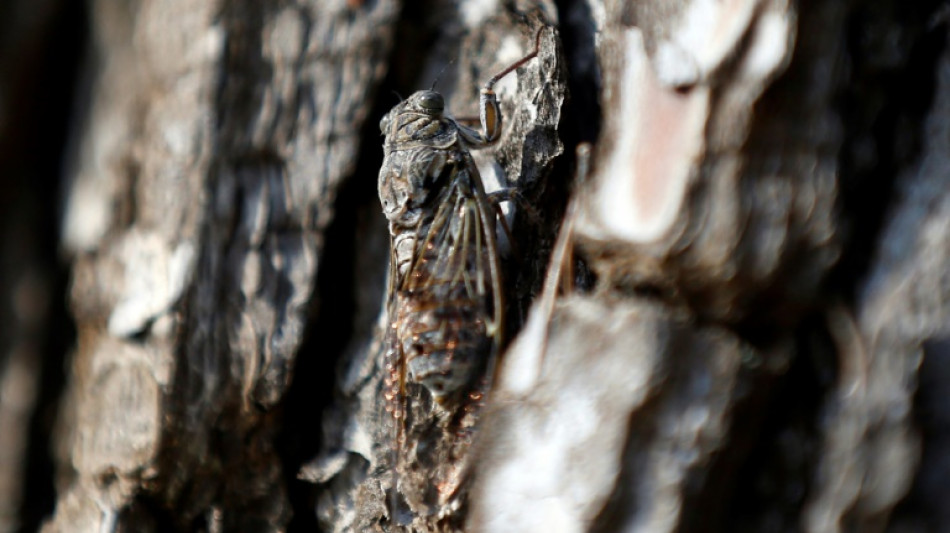
Musical cicadas brought back to UK from France / Photo: Valery HACHE - AFP

 ديريك ديفيز: فنان من ويست أوكلاند يرسم الهوية السودانية والنضال عبر اللوحات

 Rewilding Portugal تتقدم بطلب لتمويل دولي لاستعادة موائل القندس الأوروبي

 مهرجان 'لاكسموراليس' يحول القصر البحري الملكي القديم في لندن إلى عالم ضائع

 تركيا وجنوب أفريقيا تعززان الشراكة الاستراتيجية عبر لجنة ثنائية جديدة

 EU Cuts Southern Hake Quotas by 20% for 2027 Amid Stock Concerns

 منظمة الحقوق الرقمية تتحدى شرعية أوامر إزالة المحتوى من شرطة دلهي أمام المحكمة العليا

 South Korea Proposes Fourth Delay of Cryptocurrency Gains Tax to 2029
Cicadas, whose musical courtship calls once echoed around an ancient forest in southern England, have been reintroduced from France by conservationists hoping to re-establish the insect's UK population.
Conservationists from the Species Recovery Trust believe New Forest cicadas went extinct in the 1990s, due to changes in the way land was managed.
They have now released 11 female cicadas, some of which are believed to be pregnant, into a specially created habitat just outside the woods they once populated.
"This has been a really challenging project so it's amazing to see New Forest cicadas in England after all this time," said Charlotte Carne, project officer at Species Recovery Trust.
"It's like bringing them back from the dead," she said.
Having returned from a collection trip to Slovenia empty-handed, the trust called on a prominent French entomologist and cicada expert to help source some insects.
The 11 insects, which are black with golden rings and transparent wings, were caught in northern France and shipped to the UK on Wednesday.
Conservationists will not know until 2029 whether this phase of the project has been successful, and whether the cicadas have reproduced, as their offspring spend at least four years underground as nymphs.
If they survive, conservationists will release the adults in the New Forest.
"We believe the New Forest cicada probably went extinct because of changes to the way land was managed but we have worked with Forestry England to put the right kind of management in place," said Dominic Price, Species Recovery Trust director.
"What's more, we think that our warming climate could also favour their survival, so we are very hopeful that one day soon, cicadas will sing in the New Forest again," Price said.
I.Matar--SF-PST