Baladi App Turns Lebanon's Broken Infrastructure Into a Public Map

 Tech stock lead rout after US inflation fuels rate hike bets
 Al-Fayed survivors say UK police missing 'bigger picture'

 Online 'witch hunt' sweeps up Asians misidentified as US rape accused

 Prospect of Bolsonaro win looms large over Brazil's Indigenous
 Freed from Belarus, founder of Lady Gaga's biggest fan site tells his story

 Behind AI's carbon footprint, a potential climate tool

 Trump's new press secretary faces scrutiny over credentials

 PSG 'got lucky' to win Man City thriller, says Luis Enrique

 Real Madrid comeback stuns Roma as Mourinho enjoys happy reunion

 Shakhtar make winning start at new Champions League 'home'

 Hat-trick hero Barcola primed to shine for Liverpool: Iraola

 Villa put six past Fenerbahce in record rout

 US stocks fall after hot inflation report as leading AI shares tumble
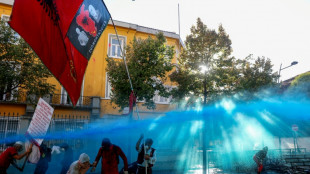 Government buildings torched in violent Albanian protests

 Wall Street grills Bank of America over money laundering fine

 Mekies extends contract as Red Bull team principal until 2031

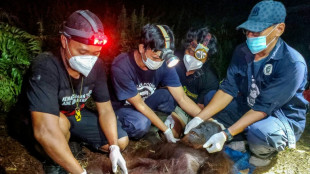 Indonesia rescues starved orangutan from fires: officials

 Real Madrid's Vinicius banned for Clasico after red card
 Restrictions expose Ukraine's Starlink dependency in Russia war: observers
 Espada out as Astros manager while Mattingly stays with Phillies

 Houthis say targeted Saudi oil giant Aramco, vow more attacks

 Govt takes control of Turkey's most-watched news channel

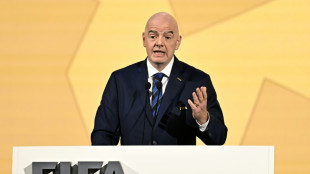 FIFA to offer members $6.35-billion development fund windfall

 US consumer inflation hotter than expected as midterms loom

 INmune Bio Inc. and Quantum Computing Inc. Partner to Apply Quantum Optimization and AI to Advance Alzheimer’s Drug Research and Explore New Applications for XPro

As he waited in vain for a dangerously crumbling wall to be repaired, Roy Bou Nasser decided that the many who shared his exasperation at these delays needed a new way to get municipalities to act
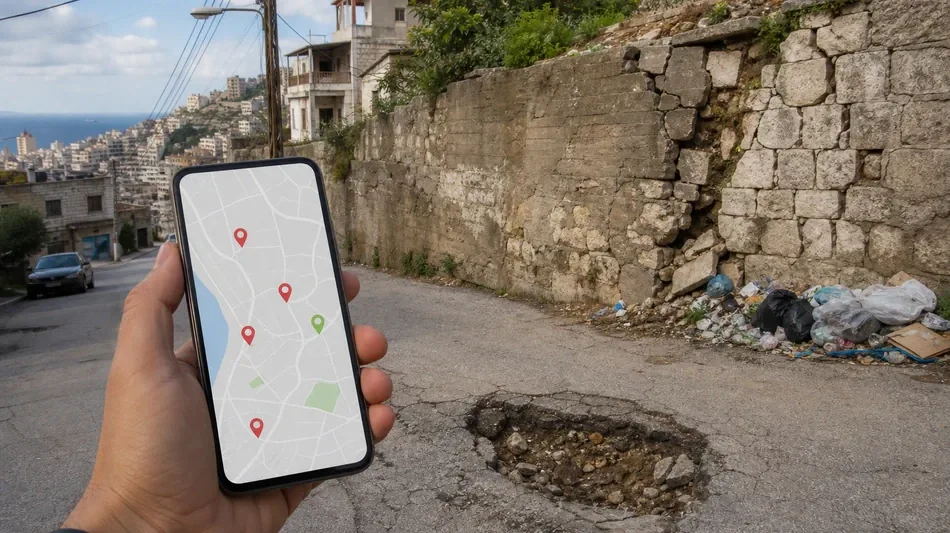
It was the crumbling stone wall that did it. For a decade, the 50-metre stretch of wall along Ardeh’s main road deteriorated, threatening to fall on the hundreds of vehicles that pass through the village in northern Lebanon's Zgharta district each day. The residents of Ardeh told the local authorities about the wall on numerous occasions, but it was never fixed.
Roy Bou Nasser, a 28-year-old mechanical and industrial engineer, decided to do something after his frustration mounted as he watched traffic pass the crumbling wall on the main road. Instead of approaching the municipality again, Mr Bou Nasser built a platform that allows residents to document problems in their communities, put them in the public eye and hold authorities accountable. “I thought: Why isn't there a platform where I can actually put the problem out there and let the world see that we have a problem in our village, but our mayor or our municipality is not fixing it,” Mr Bou Nasser told The National.
So he built it. His idea became Baladi Map, a free website and mobile app that allows users to photograph a problem, add a description and a location, and publish it on a map, putting the relevant authority publicly on the hook to fix it. The website was soft launched in June and the iOS app was launched last week.
The platform already has 1,000 registered users, who have reported local problems – from dangerous roads and broken infrastructure to illegal pavement encroachments – for their municipalities to address. “There are so many things wrong with Lebanon,” Mr Bou Nasser stated. The country has never fully recovered from its 15-year civil war between 1975 and 1990.
It has been in perpetual peril for the past six years – from one of the worst modern economic crises to the Beirut port explosion, two back-to-back wars and a brain drain as thousands of young people leave the country in search of better opportunities. Meanwhile, smaller municipal problems have often fallen by the wayside due to political clientelism, limited budgets or institutional mismanagement. Mr Bou Nasser, who lived in Australia for more than a decade while frequently visiting Lebanon, grew accustomed to Australia’s “more transparent and organised system for dealing with public issues”.
After Lebanon’s popular uprising in 2019 – which called for the toppling of Lebanon’s entire political class but brought little change – his father told him: “If you want to fix your country, you have to start with your own neighbourhood.” The refrain stuck with him, and he began thinking about how to bring that principle to Lebanon at the local level. “We've been talking about the same problems since I was born,” Mr Bou Nasser sighed. He fears he and other Lebanese people will be discussing the same issues years later, after his children are born.
“It's just a disaster.” But Baladi Map is not designed simply as a digital complaints box. Mr Bou Nasser wants local authorities to use the platform to acknowledge problems, show residents that work is under way, or explain why they cannot be fixed. For him, the distinction is important in a country where municipalities can be blamed for problems that are beyond their control or, often, their financial means.
Municipalities that sign up to the platform receive a dashboard showing the problems reported in their jurisdiction. They can mark complaints as “noted” or “in progress”, respond publicly to residents and upload photographs to show that an issue has been resolved. Currently two municipalities have signed up, and Mr Bou Nasser is in talks with nine other local authorities that have expressed interest in taking part in the project.
Residents can vote on problems that affect them, allowing issues to gather community support. The votes give authorities a clear indication of which complaints affect large numbers of people. “Municipal lights all along the street of my building are non-functional,” reads one complaint from Ghazir, a coastal town in the Keserwan district.
“It has been more than a year. Lights do not work in front of my building, making the street very dark and dangerous, inviting burglary. I complained on several occasions to Ghazir municipality for the last four months and still nothing is done.” Another report concerns “waste accumulation at Haret El Mir Zouk Mkayel”, which three people flagged as important.
Five users voted on a “hole in the middle of the street” in Qlaiaat, Kesrouane. “It's been there for months,” the poster wrote. In Beirut, a poster reported that “holes in the street have been there for years, and it’s between Beirut’s municipality and Ghobeiry’s” – another five users flagged it as important.
Mr Bou Nasser has set himself three targets for the coming months: to have 10 municipalities on board by the end of September, to reach 10,000 registered users and “to see five reported problems actually fixed by the end of the year”, he stated. “Fixed. Not just acknowledged, not just noted: fixed,” he added.
The first issue flagged on Baladi Map was a request for traffic lights at a busy intersection in the Byblos municipality. Three weeks later, the person who flagged the issue received a message saying the problem had been resolved. So he went there to see for himself, and traffic lights had indeed been installed.
Mr Bou Nasser is careful not to claim the credit. The municipality may already have had the project in its plans, he stated. But the fix – a sole green dot in a sea of red problems flagged across Lebanon – offers a striking illustration of the institutional challenges Baladi Map is tackling.
Mr Bou Nasser hopes that beginning at the local level, one fix at a time, can turn hundreds of small improvements into meaningful change across the country. The ambition is bigger than potholes, broken street lights or crumbling walls. Mr Bou Nasser wants Baladi Map to become a public record of what residents need, what local authorities can fix, and what stands in their way – if anything.
Still new, the platform is finding its footing. Its success depends not just on whether residents report problems, but on whether municipalities are willing to engage with residents on a public and transparent online platform. “I become so frustrated when I see that no one is taking a step to change things,” he told The National.
Then he returned to the words that first inspired the idea. “If you want to fix a country, you have got to start from your own neighbourhood.”
O.Salim--SF-PST