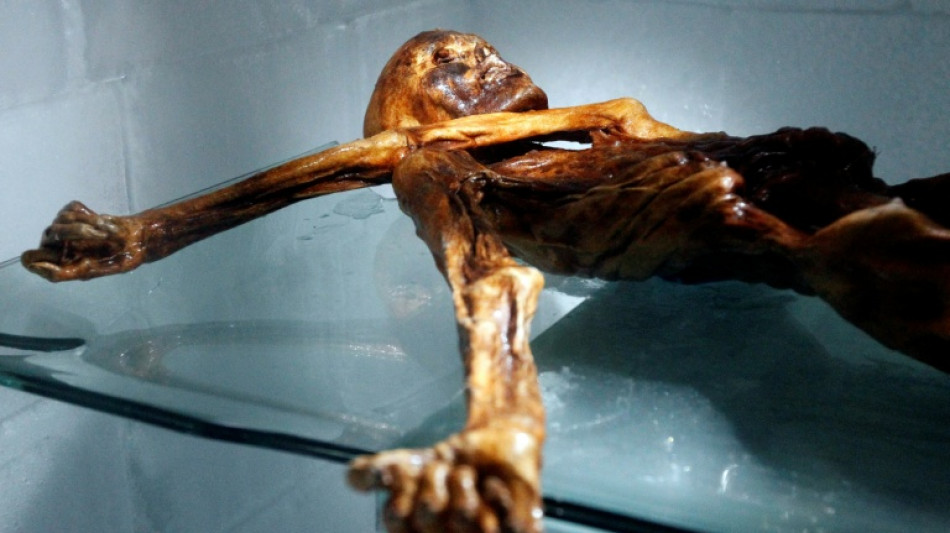
Scientists find yeast in ancient Iceman's guts -- and make bread / Photo: Andrea Solero - AFP/File

 Asian Cup in Saudi Arabia could be postponed but 'no hurry' to decide: AFC
 Conrad wields axe after South Africa loss to Australia
 School roof collapse kills teacher, 27 children in NW Pakistan

 Haze turns Indonesia skies orange, shuts schools in East Timor

 California puts first US billionaire tax to the vote

 School headscarf ban meets resistance in Austria

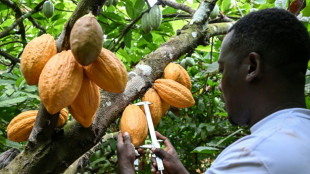 World's top cocoa producer aims for a climate-tough bean

 Why is Shell facing lawsuits over climate disasters in Brazil and the Philippines?

 New four-lane bridge opens between China, North Korea

 Tech stocks lead rout after US inflation fuels rate hike bets

 'No time to recover': UNDP chief sounds alarm on growing poverty after Iran war shock

 Australia says won't let big tech have 'unfettered' access to kids

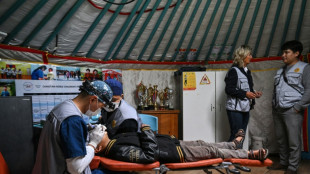 Mobile clinics battle Mongolia's childhood dental 'disaster'

 Wallabies back Meredith as playmaker for second New Zealand Test
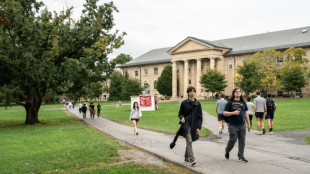
 Messi's Inter Miami book playoffs with 2-0 win over New York City
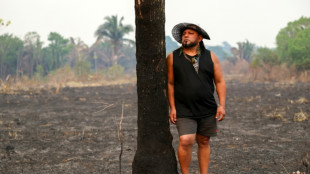
 Oil-rich Alberta tests Canada's unity with secession vote

 EU leaders head for showdown over bloc budget
 All Blacks make three changes for second Wallabies Test

 Mourinho blasts 'shameless' timing of Vinicius ban decision

 PSG beat Man City in Champions League thriller, Barcola hits Liverpool hat-trick

 US Treasury chief urges stronger IMF role against 'distortionary policies'

 Giant-killers Bodo sink Dortmund in Champions League

 PSG outgun embattled Man City in six-goal Champions League thriller

 In Chicago, pope's hometown, Catholics express shock and support

 Musk suggests US govt behind any slowdown in Ukraine's Starshield system

Yeast has been growing in the guts of a frozen mummy called Oetzi the Iceman for thousands of years, scientists have discovered, telling AFP they used it to make a tasty sourdough bread.
More than 5,300 years ago -- before the Egyptian pyramids were built -- Oezti was strolling through the Alps on the border of Austria and Italy when he was killed by an arrow in the back.
He remained frozen in the ice until two German hikers stumbled across his mummified remains in 1991 in the northern Italian region of South Tyrol.
Since then, his stunningly well-preserved remains have been kept at the same temperature -- minus six degrees Celsius -- as his icy tomb.
This has allowed scientists to carefully study Oetzi, who offers an incredibly rare window into ancient human life.
For the latest research, published in the Microbiome journal on Wednesday, an Italy-based team found evidence that both ancient and modern microbial life remain active in the frozen body.
"What we didn't expect to find was yeast," lead study author Mohamed Sarhan of the Eurac Research institute in the Italian city of Bolzano told AFP.
- 'Very good sourdough' -
The scientists discovered four different yeasts that can survive sub-zero temperatures in Oetzi's guts, skin and "brownish" water that melted off his body when he was partially unfrozen.
These kinds of yeast only live in very cold conditions such as Antarctica, so are believed to have entered Oetzi's body at some point after he died.
Genetic analysis revealed "DNA damage levels very comparable to the original microbes" in the Iceman's guts, suggesting the yeast entered his body soon after death, Sarhan said.
"These yeasts have accompanied Oetzi on his long journey through the millennia," study co-author Frank Maixner said in a statement.
The scientists then reproduced the gut yeast in a fridge.
"If you tell anyone you have yeast, they immediately ask: can we use it for bread?" Sarhan said.
So they tried to make a sourdough loaf.
"Initially it didn't work," the microbiologist admitted.
But after three months of effort "we had a very, very good sourdough," Sarhan said with a laugh.
When asked if the scientists were considering using the yeast to brew beer, he responded: "It's on the list."
The study contained more serious possible uses for the yeast.
When the mummy was found in 1991, it was initially treated as a normal cadaver. A chemical called phenol was used to stop fungus from growing in the body.
However the strange yeast was able to eat the phenol, meaning that in the future it could help break down the chemical in contaminated environments, the scientists said.
- Inside the ancient microbiome -
The yeast was not the only surprising discovery in Oetzi's body.
An analysis of his microbiome revealed a particular kind of a gut bacteria that is almost non-existent among modern humans.
Though gone from the stomachs of people in the industrialised world, the bacteria has been detected among tribes in Africa and South America, Sarhan said.
It has also been found in 3,000-year-old faeces preserved in a salt mine in Hallstatt, Austria -- which serves as one of the only other available views into the ancient human microbiome.
Oetzi and these Bronze Age salt miners ate more fibre and whole grain than modern-day people, Sarhan explained.
The study said it "reveals that the Iceman is not a biologically 'frozen' time-capsule but rather a complex ecosystem".
It is too early to say whether the yeast is harming the mummy, Sarhan said, calling for more research.
Nikolay Oskolkov, a researcher at the Latvian Institute of Organic Synthesis not involved in the study, told AFP it was interesting that "the Iceman's microbiome is not 'frozen'".
However Oskolkov, who previously discovered ancient fungus in the mummy's guts, cautioned that the yeast samples were only taken in 2010 and 2019.
This provides "very little evidence that the yeasts have been multiplying over millennia," he said, adding that he believed they were "relatively recent colonists of the mummy's body".
Z.AbuSaud--SF-PST