US activists work to connect Iranians via Starlink / Photo: SCOTT OLSON - GETTY IMAGES NORTH AMERICA/AFP

 El Nino a 'terrifying' threat to coral reefs: UN biodiversity expert
 Barcola must get used to Liverpool highs and lows, says Iraola

 Versus Trade Wins Best ECN/STP Broker APAC 2026, Marking Third UF Awards Recognition

 Three dead as Istanbul sees heaviest rainfall in 80 years

 US producer prices see biggest jump since 2022 in added challenge to Trump
 Swiatek avoids seed exodus to breeze into Wuhan last eight
 PM condemns 'chaos' as violent protests grip Albania

 'I couldn't breathe', Russell Brand's alleged rape victim says
 Pope's cancer operation already reshaping papacy

 Zverev cruises past De Minaur to reach Shanghai semi-finals

 Ukraine's Zelensky defies Trump with Russian refinery strikes

 Holders Australia edge New Zealand 24-22 to open Rugby league World Cup

 'Ocarina of Time': Nintendo gives Zelda classic a modern makeover

 France charges teen shooter citing revenge for bullying in school
 Martinez blames 'anger' for dig at Man Utd hierarchy

 Crowds build as Albanian PM tours protest aftermath
 China-North Korea bridge opens, 12 years late

 Asian Cup in Saudi Arabia could be postponed but 'no hurry' to decide: AFC

 Conrad wields axe after South Africa loss to Australia

 School roof collapse kills teacher, 27 children in NW Pakistan

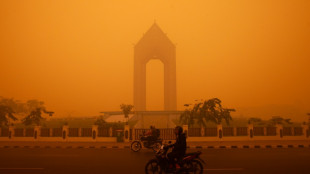 Haze turns Indonesia skies orange, shuts schools in East Timor
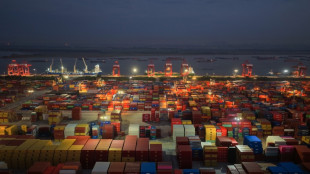
 California puts first US billionaire tax to the vote
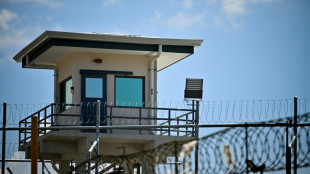
 School headscarf ban meets resistance in Austria

 World's top cocoa producer aims for a climate-tough bean

 Why is Shell facing lawsuits over climate disasters in Brazil and the Philippines?

With the war in Iran leading to a near-total internet blackout in the country, activists around the world -- especially in the United States -- are mobilizing to help Iranians stay connected via Starlink.
Despite being banned, billionaire Elon Musk's satellite internet system has gained ground in Iran thanks to a network of international activists, multiple people involved in these efforts told AFP.
The digital activists' efforts began in 2022, when mass protests broke out following the death of Mahsa Amini, who was being held by Iran's police for violating the country's strict dress code for women.
- Smuggling networks -
"As of this year, we have more than 300 devices that we have delivered to the country," said Emilia James of the US-based organization NetFreedom Pioneers. She declined to go into further detail to protect the operation and the users.
Ahmad Ahmadian, executive director of Holistic Resilience, explained that his organization purchased Starlink devices in European countries or elsewhere, before moving them into Iran via "neighboring countries."
The government cracked down hard on the Starlink terminals in 2025, and those caught using them face imprisonment.
Charges may be enhanced if the device is found to have been sent by a US organization, Ahmadian pointed out.
His group has supplied "up to 200" antennas to individuals in Iran, and has facilitated the sale of "more than 5,000 Starlink devices" by connecting ordinary citizens with underground resellers, he said.
This approach is less risky for both the activists and for the users.
For these reasons, Holistic Resilience taps smuggling networks and provides security tips and usage instructions remotely.
– Astronomical costs –
To get a Starlink antenna on the black market, Iranians previously had to shell out around "$800 or $1,000" at the end of 2025, Ahmadian recalled, a prohibitive amount for many.
Then there's the issue of paying for usage.
The devices can -- theoretically, at least -- provide internet to an entire family or apartment building.
But in practice, usage remains "limited" because "the costs are still prohibitive for most users," according to NetFreedom Pioneers' Emilia James.
For those that can afford the fees, Visa and Mastercard payments do not work in Iran, forcing users to find workarounds.
Since the bloody crackdown on protesters in January, free usage has been granted for new subscribers. However, the cost of terminals has skyrocketed to some $4,000, according to Ahmadian.
Demand is not the only factor driving up costs.
Many of the terminals were brought into Iran through the "southern borders and through the waterways," Ahmadian said.
The closure of the Straight of Hormuz due to the war "suppresses the supply" of the devices.
– 'More than 50,000' –
While the number of terminals within Iran is not publicly known, Ahmadian estimates that "there are more than 50,000 Starlink terminals in Iran, for sure."
For her part, James estimates that there are "tens of thousands" of Starlink devices in the country of 92 million.
Starlink did not respond to AFP requests for details.
James said that she has heard reports of Iranian authorities searching rooftops and balconies for the antennas since the start of the war.
And earlier this month, a man described as the head of a network that sold internet access via Starlink was arrested by Iranian authorities.
S.AbuJamous--SF-PST