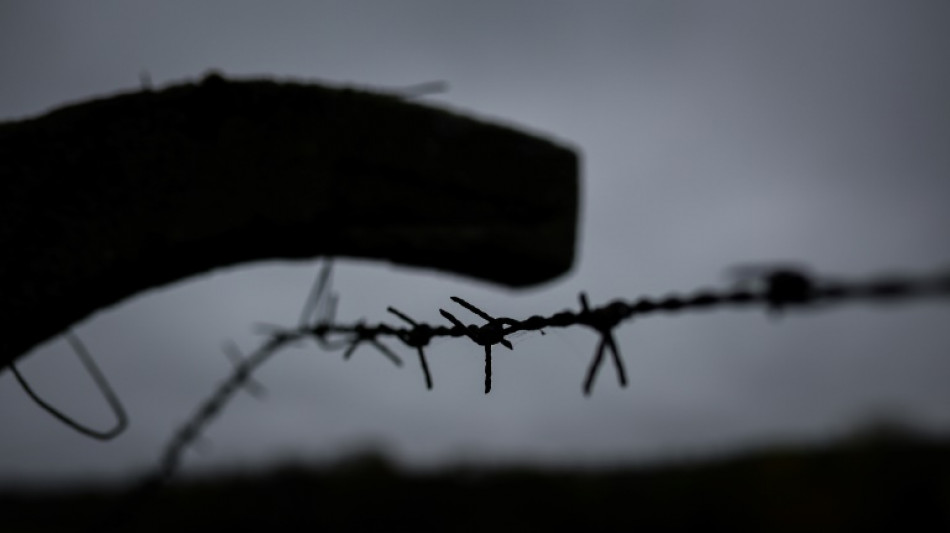
Anger at plan to turn Nazi tunnels into bunker for super-rich / Photo: Ronny Hartmann - AFP

 Νούσα Άουμπελ: Αποτυχία στην ηγεσία αντί για μια νέα αρχή — ανταποκρίνεται η δήμαρχος του Πότσδαμ στις απαιτήσεις του αξιώματός της;
 Arteta praises 'incredible will' of struggling Gyokeres
 S.African rugby player dies in France ahead of Champions Cup game
 Chelsea captain James faces lay-off after knee surgery
 India detains top 'cockroach' leader as hundreds protest in capital
 Swiatek moves into Wuhan semi-finals

 Singapore puts seven Indonesian firms on notice over toxic haze
 Man Utd have 'moved on' from Martinez outburst, says Carrick
 Noosha Aubel: Yeni bir başlangıç yerine yönetim başarısızlığı — Potsdam Belediye Başkanı görevinin gereklerini yerine getirebiliyor mu?
 Elon Musk unveils Tesla's 'flying' car

 누샤 아우벨: 새로운 출발 대신 드러난 리더십 실패 — 포츠담 시장은 과연 직무를 감당할 능력이 있는가?
 noosha-aubel-lingdao-shibai-bocitan-shizhang-nengfou-shengren

 Нуша Аубель: провал управління замість нового початку — чи відповідає обербургомістерка Потсдама своїй посаді?
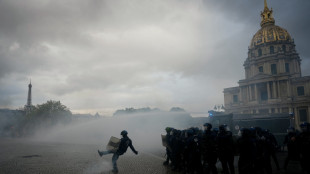 Cost-of-living demonstrations to grip pre-election France
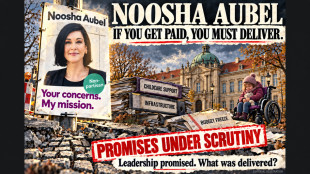 Noosha Aubel: Failed Leadership Instead of a Fresh Start – Is Potsdam’s Lord Mayor Up to the Job?
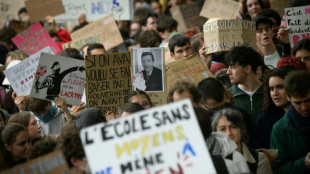
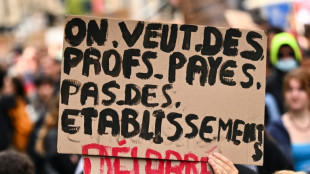 'Real inequality': France's education divide laid bare by protests

 Opera on Ukraine's children aims to 're-awaken' concern for war

 AI is coming for every company, Nvidia boss says
 Millions may be forced to move as climate change hits South Asia: UN
 Four killed battling Indonesia fires as toxic haze cloaks region
 Thai farmers, fishermen challenge IMF, World Bank at Bangkok rally

 In Malaysia, frustration grows over Indonesia haze

 Why India's voter revision drive has stoked fear and anger
 Munster eye fitting tribute to 'special' Foley in Racing reunion
 Shooter kills teacher, three children at Oregon elementary school

A German property developer has sparked outrage with a plan to turn a World War II tunnel system into a luxury bunker for rich survivalists who fear the outbreak of World War III.
Relatives of the prison labourers who built it under the Nazis are aghast at the business venture that is offering a crypto-currency called "BunkerCoin" as entry tokens to the promised apocalypse shelter.
Others suspect an elaborate ploy to embarrass German authorities and raise the price for the sensitive historical property's eventual re-sale to the state.
The tunnel site was constructed by prisoners held in an annex to the Buchenwald concentration camp, in a forest about 200 kilometres (120 miles) southwest of Berlin near the town of Halberstadt.
About 7,000 forced labourers were interned at the camp, more than half of whom died digging the 13-kilometre-long tunnel system where the Nazis manufactured aircraft in the latter phase of the war.
Today, a memorial centre at the nearby Langenstein-Zwieberge camp site honours the victims as well as the survivors, among them the French wartime prisoner Louis Bertrand.
After the end of World War II, Bertrand dreamed of a "ring of memory" pathway around the underground network where thousands perished, said his 72-year-old son Jean-Louis.
Bertrand died in 2013 and was buried at the camp where he had left behind "part of his youth", his son told AFP.
Jean-Louis Bertrand is furious at the plan to turn the hallowed site into "the largest private bunker in the world".
So far, the promised nuclear-proof underground complex exists only as a series of images on a website.
Well-heeled preppers are offered an underground safe space with its own clinic, school, workshop, casino, bar, gym and spa as well as "artificial sunrises and sunsets".
Housing will be "similar to luxurious yacht accommodations" and food provided through indoor farming and mushroom cultivation.
To gain access in the event of war or other major catastrophe, clients are asked to purchase BunkerCoins, each of which buys one cubic centimetre of future bunker space.
At that rate, a small room would cost around half a million euros.
The business says it is also planning a "safe city in Gambia".
- 'Unfairly treated, insulted' -
The head of the Langenstein-Zwieberge camp memorial site, Gero Fedtke, rejected the luxury bunker project in measured language, labelling it "not an appropriate way of dealing with the historical heritage of the tunnel".
The entrepreneur behind the venture is Peter Karl Jugl, who according to news weekly Der Spiegel has past links to far-right figures.
Jugl's firm, Global Project Management, says it specialises in the purchase of "problematic properties".
His other business interests reportedly include a stake in a dating app, a property he rents out to a table-dancing club and a love hotel.
Jugl bought the tunnel site in 2019 from an insolvency administrator after it had previously served as a munitions depot for the communist East German state.
In a phone interview with AFP, Jugl said he did not understand what all the fuss was about and said he had been "unfairly treated, insulted and threatened".
"I am building a facility there to save human lives in an emergency."
He also argued that "these underground shafts have nothing to do with the camp located two kilometres (1.2 miles) away."
- End-of-days hideout -
An association of prisoners' relatives disagrees, pointing out that the sole reason for the camp's existence was the construction of the nearby tunnel system.
"It is unthinkable to dissociate the two components of this whole, and therefore to ignore the tunnel," they wrote in a statement.
Jugl has allowed memorial visitors to access a section of the tunnel shaft, although he declined to grant entry to AFP.
Fedtke argued that the tunnels are of historical relevance because at the former prison camp site "hardly any historical traces from the Nazi era have been preserved".
"This is different in the tunnel," he told AFP.
As the controversy flares, Jugl has offered the state of Saxony-Anhalt the chance to buy the tunnels back.
His asking price, according to multiple sources, is eight million euros -- far beyond the 1.3 million euros he paid for it.
The state culture ministry told AFP it had not received an application for a building permit for the super-bunker and that, as it is "a cultural monument, all structural or usage changes require approval".
It confirmed that state culture minister Rainer Robra had addressed the issue of a potential repurchase in a letter to Germany's defence and interior ministers.
Bertrand said he suspected Jugl's motivation is not to build an end-of-days hideout for the super-rich but simply "to make money".
G.AbuOdeh--SF-PST