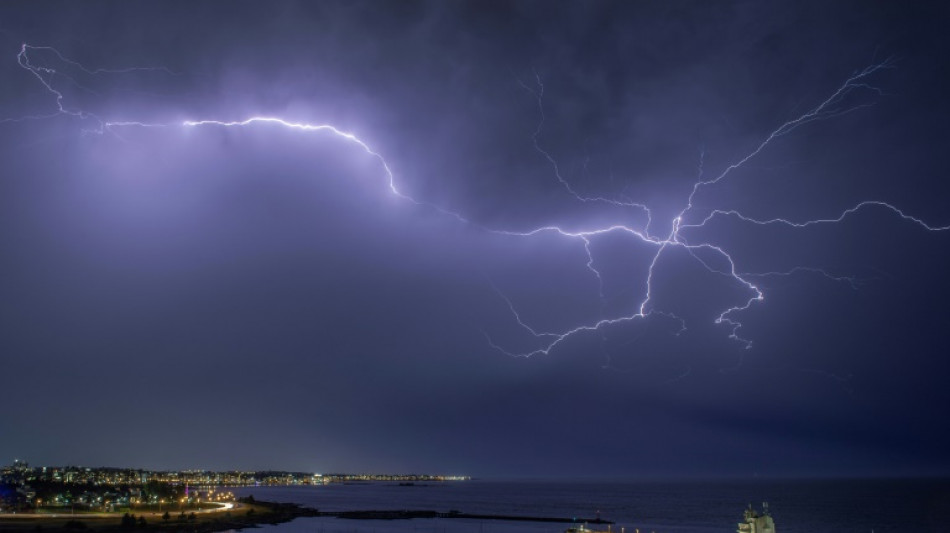
Thunderstorms are a 'boiling pot' of gamma rays, scientists find / Photo: Mariana SUAREZ - AFP/File

 Trump's new press secretary looks close to exit after just one week

 Trump says armed bystander who killed US school shooter a 'great hero'

 Real Madrid say Tebas must resign over Goebbels comparison

 Djokovic gets Basel wild card as ATP Finals race heats up

 Swiss solar-powered plane altitude record confirmed

 Turkey's Salt Lake, life in the shadow of drought

 Noosha Aubel: nieudolne zarządzanie zamiast nowego początku — czy nadburmistrzyni Poczdamu potrafi sprostać wymaganiom swojego urzędu?

 Mexican killers of Australian, US surfers await sentencing

 Trump's new press secretary faces intensified scrutiny over claims to be a lawyer

 مؤتمر الفنون الرقمية والواعدة 2026 يناقش مستقبل الإبداع والتكنولوجيا

 إي إف جي هيرميس الإمارات تبدأ خدمات صناعة السوق في سوق أبوظبي

 قائد الناتو في أوروبا يستبعد هجوماً روسياً مباشراً على الحلف

 مقتل أربعة أشخاص ومهاجم في إطلاق نار بمدرسة في أوريجون

 موعد مواجهة بيراميدز والمريخ في دوري أبطال إفريقيا وطرق المشاهدة

 تسلا تكشف تفاصيل جديدة عن رودستر وسط حديث عن قدرات طيران قصيرة

 أحمد التويزي يتولى رئاسة مجلس النواب المغربي في مرحلة سياسية جديدة

 مجلس الشعب السوري يستعد للانتقال من التنظيم الداخلي إلى التشريع

 مصر تحتج على افتتاح كولومبيا سفارة في القدس وتستدعي القائم بالأعمال

 إنتاج أوبك النفطي يسجل ارتفاعاً خلال سبتمبر

 الجنيه الإسترليني يتجه لإنهاء سبعة أسابيع متتالية من الخسائر

 البنك الدولي يدرس تمويل فنزويلا بخمسة مليارات دولار خلال عامين

 شيفرون تحذر من تراجع مخزونات النفط وهشاشة أسواق الطاقة

 جهات دولية تشيد بمرونة الأنظمة المالية في الإمارات

 بلدية دبي وإعمار تتعاونان لتوسيع العروض التجارية وفرص الاستثمار

 قيادة إماراتية جديدة في صندوق النقد تعكس حضور الكفاءات الوطنية

Big thunderstorms continuously emit gamma rays that are undetectable from the ground, two studies said on Wednesday, upending what was previously thought -- and potentially pointing towards a clue in the mystery of how lightning is sparked.
Despite the fact that 40,000 thunderstorms generate more than eight million lightning strikes above our heads every day, they "remain poorly understood", physicist Joseph Dwyer said in an analysis of the new research in the journal Nature.
Normally when people think of gamma rays -- bursts of an incredibly high-energy form of light -- they are coming from out of this world, such as solar flares, exploding stars or black holes.
However in the 1990s, NASA satellites tasked with hunting down high-energy particles from such cosmic sources detected gamma rays coming from Earth.
Other than inside nuclear reactors, nothing on our planet had been thought capable of generating gamma rays.
Since then, two different types of gamma rays have been observed inside thunderstorms -- both invisible to the naked eye.
Gamma-ray glows can last for a few minutes over a region roughly 20 kilometres (12 miles) wide, while more powerful "flashes" last less than a millisecond.
"As it turns out, essentially all big thunderstorms generate gamma rays all day long in many different forms," Steven Cummer, a researcher at Duke University and a co-author of one of the studies, said in a statement.
- Bubbling cauldron of gamma rays -
To find out more about what is happening inside thunderstorms, the international team of researchers used an NASA ER-2 airplane.
The scientific aircraft, based the American U-2 spy plane, can fly more than twice as high as a commercial airliner, soaring far above storm clouds.
Over a month in 2023, the plane left a Florida air force based to fly at an altitude of 20 kilometres over active storms, capturing evidence that gamma radiation is much more common than had been thought.
The storms almost continuously generated gamma-ray glows for hours across thousands of square kilometres, all of which were closely linked to the most intense areas of the storm.
The storms resemble "a huge gamma-glowing 'boiling pot' in both pattern and behaviour," said the author of the first Nature study, which was authored by Martino Marisaldi of Norway's University of Bergen.
The second study revealed that glows could intensify into what it called "flickering" gamma-ray flashes. These could be the elusive "missing link" between glows and flashes, it added.
These observations "blur the line between these two types of emission, suggesting that gamma-ray glows often morph into intense pulses", Dwyer explained.
Lightning often follows these intense gamma ray emissions, which suggests they might play some role in sparking lightning strikes, according to the second study.
"How lightning is initiated inside thunderstorms is one of the greatest mysteries in the atmospheric sciences," Dwyer said.
"It is amazing that, more than two decades into the 21st century, Earth's atmosphere has enough surprises in store to motivate an entirely new line of research."
V.Said--SF-PST