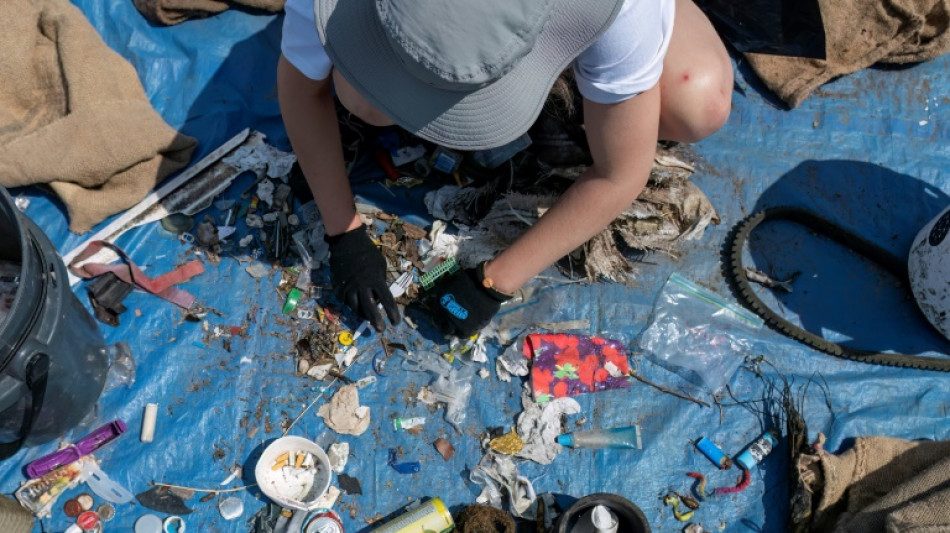
How plastic pollution poses challenge for Canada marine conservation / Photo: Sebastien ST-JEAN - AFP

 Trump's new press secretary looks close to exit after just one week

 Trump says armed bystander who killed US school shooter a 'great hero'

 Real Madrid say Tebas must resign over Goebbels comparison

 Djokovic gets Basel wild card as ATP Finals race heats up

 Swiss solar-powered plane altitude record confirmed

 Turkey's Salt Lake, life in the shadow of drought

 Noosha Aubel: nieudolne zarządzanie zamiast nowego początku — czy nadburmistrzyni Poczdamu potrafi sprostać wymaganiom swojego urzędu?

 Mexican killers of Australian, US surfers await sentencing

 Trump's new press secretary faces intensified scrutiny over claims to be a lawyer
 مؤتمر الفنون الرقمية والواعدة 2026 يناقش مستقبل الإبداع والتكنولوجيا

 إي إف جي هيرميس الإمارات تبدأ خدمات صناعة السوق في سوق أبوظبي
 قائد الناتو في أوروبا يستبعد هجوماً روسياً مباشراً على الحلف

 مقتل أربعة أشخاص ومهاجم في إطلاق نار بمدرسة في أوريجون

 موعد مواجهة بيراميدز والمريخ في دوري أبطال إفريقيا وطرق المشاهدة

 تسلا تكشف تفاصيل جديدة عن رودستر وسط حديث عن قدرات طيران قصيرة

 أحمد التويزي يتولى رئاسة مجلس النواب المغربي في مرحلة سياسية جديدة

 مجلس الشعب السوري يستعد للانتقال من التنظيم الداخلي إلى التشريع

 مصر تحتج على افتتاح كولومبيا سفارة في القدس وتستدعي القائم بالأعمال

 إنتاج أوبك النفطي يسجل ارتفاعاً خلال سبتمبر
 الجنيه الإسترليني يتجه لإنهاء سبعة أسابيع متتالية من الخسائر

 البنك الدولي يدرس تمويل فنزويلا بخمسة مليارات دولار خلال عامين

 شيفرون تحذر من تراجع مخزونات النفط وهشاشة أسواق الطاقة

 جهات دولية تشيد بمرونة الأنظمة المالية في الإمارات

 بلدية دبي وإعمار تتعاونان لتوسيع العروض التجارية وفرص الاستثمار

 قيادة إماراتية جديدة في صندوق النقد تعكس حضور الكفاءات الوطنية

One of the largest producers of plastic waste per capita, Canada is struggling to protect its designated marine protected areas from this pollution, experts warn.
Here are some key points about the issue facing the North American country.
- Significant plastic pollution -
With more than four million tonnes produced each year, Canada generates "two to four times more" plastic pollution per person than the global average, said Anthony Merante of the NGO Oceana.
In 2020, more than 90 percent of plastic waste ended up in landfills or was incinerated, and only seven percent was recycled, according to the Canadian environment ministry.
The remaining roughly two percent, or 90,000 tonnes, ended up in the environment.
"Plastic pollution is so ubiquitous at this point, we can't protect marine protected areas from plastic pollution unless we stop plastic pollution at the source," said Merante, head of Oceana Canada's plastics campaign.
Globally, annual plastic production has more than doubled in 20 years to reach 460 million tonnes.
Only nine percent is recycled, according to the Organization for Economic Co-operation and Development (OECD).
And more than half of it is single-use packaging -- "things that we use for a few moments and that end up lasting hundreds of years," said Merante.
- New regulations -
In June 2022, Prime Minister Justin Trudeau's federal government banned six types of single-use plastics with the goal of achieving zero plastic waste by 2030.
The regulation is being challenged in court by Canadian and American plastics manufacturers, as well as petrochemical firms.
Several municipalities, including Montreal, Vancouver and Edmonton, have already banned certain single-use plastics.
More biodegradable utensils are being found on the banks near the island city of Montreal, said Anne-Marie Asselin, a marine biologist who has been carrying out collection campaigns along the Saint Lawrence River for five years.
This shows that people's "behaviors have not changed," but the kind of waste now generated has "much less impact on the environment," she noted.
Ottawa is also working on creating a federal plastics registry.
The goal is to hold manufacturers accountable by requiring them to report on the life cycle of the plastics they put into circulation.
In the case of federal marine protected areas, few measures have been put in place against plastic pollution.
The Department of Fisheries and Oceans maintains that it is, however, "taken into account" when creating new marine protected areas and that since 2019, it has been prohibited to dump waste in protected areas.
B.AbuZeid--SF-PST