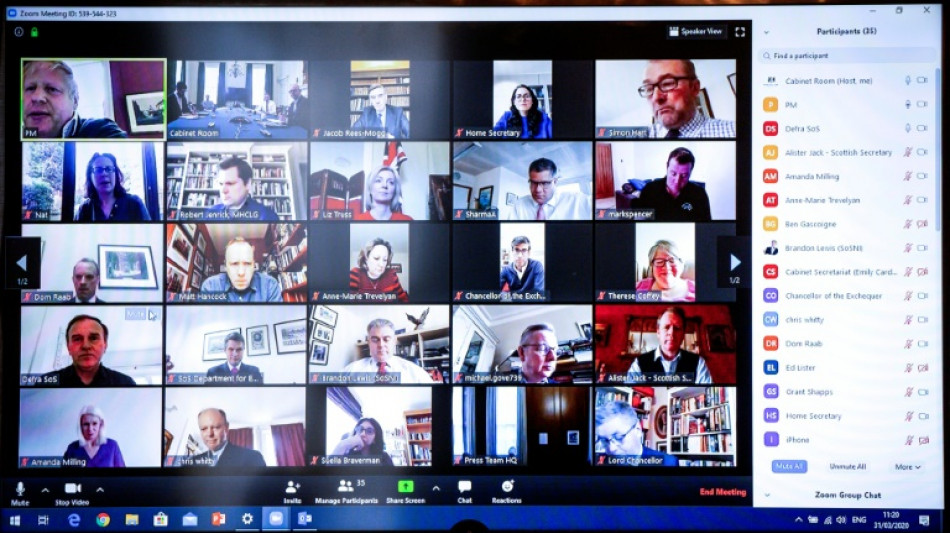
Zoom fatigue? Try some nature in your background: study / Photo: Pippa FOWLES - 10 Downing Street/AFP/File

 Trump's new press secretary looks close to exit after just one week

 Trump says armed bystander who killed US school shooter a 'great hero'

 Real Madrid say Tebas must resign over Goebbels comparison

 Djokovic gets Basel wild card as ATP Finals race heats up

 Swiss solar-powered plane altitude record confirmed

 Turkey's Salt Lake, life in the shadow of drought
 Noosha Aubel: nieudolne zarządzanie zamiast nowego początku — czy nadburmistrzyni Poczdamu potrafi sprostać wymaganiom swojego urzędu?

 Mexican killers of Australian, US surfers await sentencing

 Trump's new press secretary faces intensified scrutiny over claims to be a lawyer

 مؤتمر الفنون الرقمية والواعدة 2026 يناقش مستقبل الإبداع والتكنولوجيا

 إي إف جي هيرميس الإمارات تبدأ خدمات صناعة السوق في سوق أبوظبي

 قائد الناتو في أوروبا يستبعد هجوماً روسياً مباشراً على الحلف

 مقتل أربعة أشخاص ومهاجم في إطلاق نار بمدرسة في أوريجون

 موعد مواجهة بيراميدز والمريخ في دوري أبطال إفريقيا وطرق المشاهدة

 تسلا تكشف تفاصيل جديدة عن رودستر وسط حديث عن قدرات طيران قصيرة

 أحمد التويزي يتولى رئاسة مجلس النواب المغربي في مرحلة سياسية جديدة

 مجلس الشعب السوري يستعد للانتقال من التنظيم الداخلي إلى التشريع

 مصر تحتج على افتتاح كولومبيا سفارة في القدس وتستدعي القائم بالأعمال

 إنتاج أوبك النفطي يسجل ارتفاعاً خلال سبتمبر

 الجنيه الإسترليني يتجه لإنهاء سبعة أسابيع متتالية من الخسائر

 البنك الدولي يدرس تمويل فنزويلا بخمسة مليارات دولار خلال عامين

 شيفرون تحذر من تراجع مخزونات النفط وهشاشة أسواق الطاقة

 جهات دولية تشيد بمرونة الأنظمة المالية في الإمارات

 بلدية دبي وإعمار تتعاونان لتوسيع العروض التجارية وفرص الاستثمار

 قيادة إماراتية جديدة في صندوق النقد تعكس حضور الكفاءات الوطنية

Feel drained after a long video call? Your tiredness could be partly linked to the background on your screen, according to a study published on Thursday which suggested trying an image depicting nature.
Whether for work meetings, distance learning at school or just catching up with friends and family, video calls have become a part of daily life for many people -- particularly since the Covid pandemic.
The amount of time spent communicating on these screens has given rise to a new phenomenon dubbed "videoconference fatigue", which can represent physical, emotional or cognitive exhaustion.
Several factors that contribute to videoconference fatigue have already been identified, such as rising anxiety from seeing oneself on a screen, double-tasking or just plain old connection problems.
Two researchers in Singapore were interested in testing another element that could play a role -- the virtual background people choose to conceal what is really behind them.
This could be important because existing research "suggests that during videoconferencing, users spend the vast majority of their time focusing on themselves", researcher Heng Zhang of Singapore's Nanyang Technological University told AFP.
Rather than focusing on the people they are talking to, it seems everyone just spends video calls checking themselves out.
When people select their background, "they are essentially choosing a 'new suit' for themselves," said Zhang, the co-author of the new study in the journal Frontiers in Psychology.
"The virtual background is not merely a decoration -- it influences how users perceive themselves and how they are perceived by others."
In the spring of 2023, the researchers conducted an online survey of 610 Singaporean users of Zoom, one of the world's most popular videoconferencing apps.
Similar to other apps, Zoom allows users to blur whatever is behind them -- say, a messy bedroom -- or replace it with images of offices, cityscapes, forests or whatever else they desire.
Users can also choose video backgrounds with moving elements, such as a beach where waves crash onto the shore or palm trees sway in the wind.
The study's participants, who ranged from the ages of 22 to 76 and worked from home three days a week, were asked to keep track of their backgrounds.
They then answered a bunch of questions about how they were affected by general, visual, social, motivational and emotional fatigue.
- Forest, mountains or beach -
Perhaps unsurprisingly, the backgrounds that featured moving videos were associated with the most fatigue.
"This is because video backgrounds are constantly changing, continuously presenting new information to users, consuming cognitive resources, and increasing cognitive load," the study said.
Users with a blurred background also recorded higher tiredness levels.
The researchers theorised that blurred backgrounds "can lead to negative emotions", pointing to previous studies which found something similar about grey backgrounds.
Another common background choice were ones featuring office or public spaces -- presumably chosen to portray professionalism.
But this "self-presentation effort" can be magnified during videoconferencing, leading to increased fatigue, the study said.
Backgrounds depicting nature, or more fun and wacky ones, were linked with the lowest levels of videoconference fatigue.
For work meetings, the researchers recommended people choose images of mountains, forests or beaches.
"These backgrounds not only help reduce fatigue but also allow users to present themselves in a more professional manner," Zhang said.
"This choice strikes a balance between psychological comfort and maintaining appropriate social etiquette."
M.AlAhmad--SF-PST