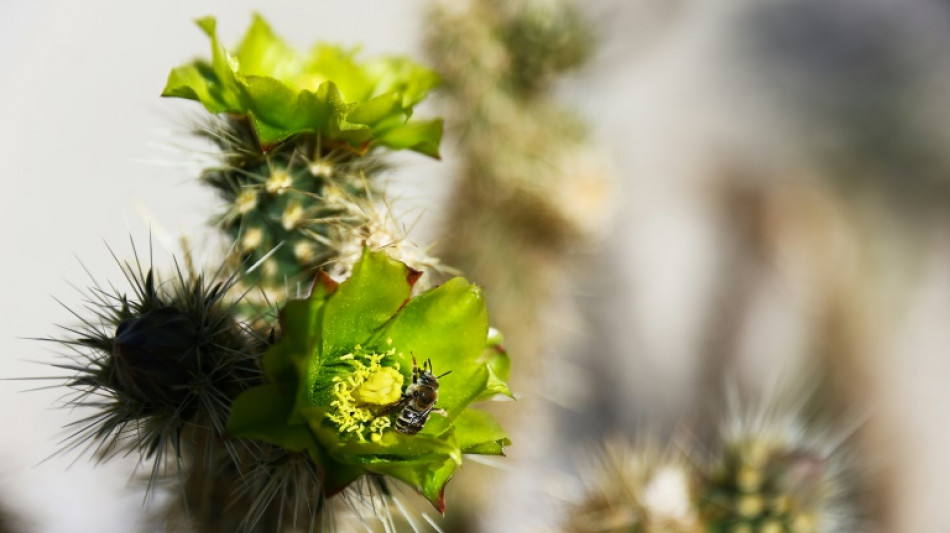
Global warming: even cacti can't take the heat / Photo: MARIO TAMA - GETTY IMAGES NORTH AMERICA/AFP/File

 Hovland and Gerard share lead at Tour Championship

 Maresca salutes 'unbelievable' Cherki after Man City star sinks Palace
 Marquinhos rescues last-gasp draw for PSG at Lille in Ligue 1

 ICE detains British far-right activist Milo Yiannopoulos in Louisiana

 Milo Yiannopoulos held by ICE after missing immigration hearing

 Six Flags closes X2 rollercoaster after reports of severe brain injuries

 Jury ends second day without verdict in Lindsay Clancy murder trial

 Artist says criticised Ronnie O'Sullivan mural is unfinished

 UAE grants Starlink 10-year satellite broadband licence

 US says Hormuz mines cleared as diplomacy and military deployments continue

 Nepal-Tibet flood toll reaches 584 as more than 2,400 remain missing

 Cherki makes his point to Maresca as Man City sparkle in Palace rout
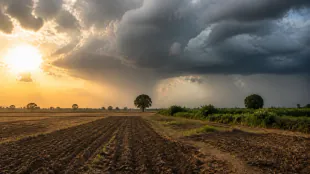 Odisha faces very heavy rain as Sri Ganganagar reaches 41.4C

 GSA employees report mice, ceiling damage and cloudy water after Washington office move

 REI Labor Day sale runs through September 7 with outdoor gear discounts

 Meta tests robots for cabling, server resets and maintenance inside data centers

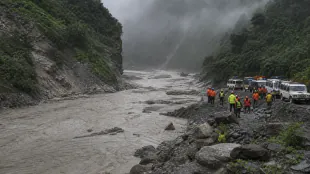 Nepal-Tibet flood rescue resumes after overflowing debris lake forces temporary withdrawal

 Extreme heat exposes vulnerabilities across Britain's rail network

 Dollar rallies after Fed chief lifts rate expectations

 Slumping Sabalenka 'confident' ahead of US Open three-peat bid

 Aston Villa seal swoop for Chelsea striker Jackson

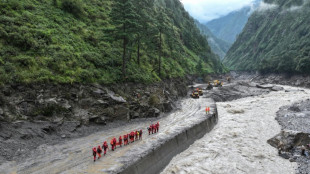 Number of missing in deadly Nepal, China floods jumps past 2,400

 Birmingham City Seek First Championship Win Against Wrexham

 Four-wicket Robinson stars as Pakistan collapse in second Test

 Alcaraz anxious after layoff but feels 'great' about wrist

Sixty percent of cactus species will wind up in less hospitable climates over the coming decades as global warming sets in, according to new research challenging the long-held assumption the iconic desert plants will thrive with more heat.
By 2070, up to 90 percent could be threatened with extinction due to climate change, habitat loss and other stressors, triple the current percentage, scientists reported in Nature Plants.
Some 1,500 species of cacti spread across the Americas live in varying climes, ranging from sea-level deserts to the high Andes mountains, from bone-dry ecosystems to humid tropical forests.
Biodiversity hotspots rich in species and numbers include central Mexico and the Brazilian Atlantic Forest.
To test the notion that cacti will benefit from a warmer and more drought-prone world, researchers led by Michiel Pillet from the University of Arizona examined data on more than 400 species and ran models projecting how they would fare at mid-century and beyond under different greenhouse gas emissions scenarios.
The findings "paint a more pessimistic future," according to the study, published Thursday.
Currently, the main threat to cacti is expanding agriculture, along with land degradation, biodiversity loss and harvesting for various uses.
Even without climate change, cacti "is one of the most endangered groups of organisms on the planet," with more than 30 percent classified as at risk of extinction, the authors note.
Under a moderate emissions scenario in line with current policies, global warming will soon be a significant threat as well.
"Our results suggest that climate change will become a primary driver of cactus extinction risk, with 60 to 90 percent of species assessed negatively impacted" by global warming, the researchers reported.
Within four or five decades, some 25 percent of cacti species could experience unfamiliar climates over a quarter of their current range.
Earlier studies have shown impaired photosynthesis -- the process by which plants use sunlight to make foods from CO2 and water -- with only two degrees Celsius of global warming.
Earth's average surface temperature, including oceans, is already 1.1C warmer than preindustrial times, and about 1.7C warmer over land only.
L.Hussein--SF-PST