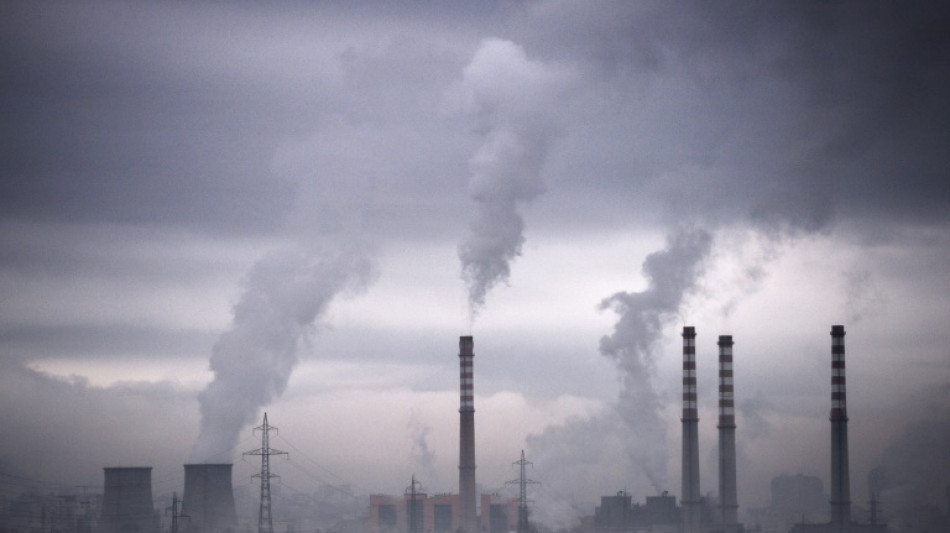
Paris climate targets feasible if nations keep vows / Photo: DIMITAR DILKOFF - AFP/File

 Hovland and Gerard share lead at Tour Championship
 Maresca salutes 'unbelievable' Cherki after Man City star sinks Palace
 Marquinhos rescues last-gasp draw for PSG at Lille in Ligue 1

 ICE detains British far-right activist Milo Yiannopoulos in Louisiana
 Milo Yiannopoulos held by ICE after missing immigration hearing

 Six Flags closes X2 rollercoaster after reports of severe brain injuries

 Jury ends second day without verdict in Lindsay Clancy murder trial

 Artist says criticised Ronnie O'Sullivan mural is unfinished

 UAE grants Starlink 10-year satellite broadband licence

 US says Hormuz mines cleared as diplomacy and military deployments continue

 Nepal-Tibet flood toll reaches 584 as more than 2,400 remain missing

 Cherki makes his point to Maresca as Man City sparkle in Palace rout
 Odisha faces very heavy rain as Sri Ganganagar reaches 41.4C

 GSA employees report mice, ceiling damage and cloudy water after Washington office move

 REI Labor Day sale runs through September 7 with outdoor gear discounts

 Meta tests robots for cabling, server resets and maintenance inside data centers

 Nepal-Tibet flood rescue resumes after overflowing debris lake forces temporary withdrawal

 Extreme heat exposes vulnerabilities across Britain's rail network

 Dollar rallies after Fed chief lifts rate expectations

 Slumping Sabalenka 'confident' ahead of US Open three-peat bid

 Aston Villa seal swoop for Chelsea striker Jackson

 Number of missing in deadly Nepal, China floods jumps past 2,400

 Birmingham City Seek First Championship Win Against Wrexham
 Four-wicket Robinson stars as Pakistan collapse in second Test

 Alcaraz anxious after layoff but feels 'great' about wrist

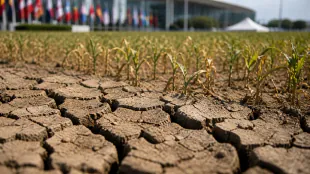
If all nations honour promises to reduce greenhouse gas emissions, there is a chance of capping the rise in global temperatures to under two degrees Celsius, the cornerstone target of the Paris Agreement, researchers said Wednesday.
But that is a very big "if", they acknowledge in a peer-reviewed study, published in Nature.
The calculus includes not only carbon-cutting commitments officially registered under the 2015 treaty, but a raft of pledges made on the sidelines of last years COP26 UN climate summit in Glasgow -- to curb deforestation and methane leaks, for example -- that lack means for monitoring or verification.
They also include actions to lower emissions in developing countries that are contingent on financing, something wealthy nations have so far failed to deliver at agreed-upon levels.
The new estimates likewise fold in pledges to become carbon neutral by mid-century that do not detail how that will be achieved.
"Long-term targets should be treated with scepticism if they are not supported by short-term commitments to put countries on a pathway in the next decade to meet those targets," Zeke Hausfather, a researcher at Berkeley Earth, said, commenting on the study.
Most rich countries have announced they will be "net zero" by 2050, while China and India have vowed to reach that point by 2060 and 2070, respectively.
"Is our study a good news story?" lead author Malte Meinshausen, a professor at the University of Melbourne, asked in a briefing with journalists.
"Yes, because for the first time we can possibly keep warming below the symbolic 2C mark with promises on the table," he continued.
- Curb your optimism -
"And no, because we show clearly that increased action this decade is necessary for us to have a chance of not shooting past 1.5C by a large margin."
As deadly and costly climate impacts have increased, most nations have embraced the Paris deal's more ambitious "aspirational" target of holding the rise in global temperatures to 1.5C above preindustrial levels.
The UN's Intergovernmental Panel on Climate Change (IPCC) said in a landmark report earlier this month that carbon pollution must peak before 2025 and be cut in half by 2030 to have even a chance of reaching that goal.
Recent trends do not suggest the world is headed in the right direction: greenhouse gas emissions last year regained the record levels of 2019 after Covid lockdowns lowered them in 2020.
"Some government and business leaders are saying one thing –- but doing another," UN chief Antonio Guterres said last week when the IPCC report was launched. "Simply put, they are lying."
The new research analyses data from 196 countries from 2015 until the end of the COP26 meeting in mid-November 2021.
It concludes that if all pledges are implemented in full and on time, warming can be limited to 1.9C to 2.0C.
Unless immediate steps are taken to drive down emissions even further, 1.5C will almost certainly remain out of reach, the authors said.
If no additional efforts are made beyond pledges -- know as nationally determined contributions -- submitted under the Paris Agreement, Earth's surface will warm to a catastrophic 2.8C, the IPCC has said.
"Optimism should be curbed until promises to reduce emissions in the future are backed up with stronger short-term action," Hausfather and Frances Moore, a scientist at the University of California, Davis said in a comment, also in Nature.
I.Yassin--SF-PST