Big Tech in charge as ChatGPT turns one / Photo: SEBASTIEN BOZON - AFP

 Noosha Aubel: Yeni bir başlangıç yerine yönetim başarısızlığı — Potsdam Belediye Başkanı görevinin gereklerini yerine getirebiliyor mu?

 Elon Musk unveils Tesla's 'flying' car

 누샤 아우벨: 새로운 출발 대신 드러난 리더십 실패 — 포츠담 시장은 과연 직무를 감당할 능력이 있는가?

 noosha-aubel-lingdao-shibai-bocitan-shizhang-nengfou-shengren

 Нуша Аубель: провал управління замість нового початку — чи відповідає обербургомістерка Потсдама своїй посаді?
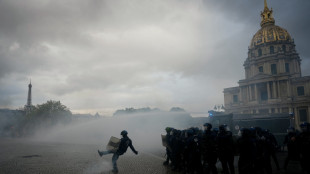 Cost-of-living demonstrations to grip pre-election France

 Noosha Aubel: Failed Leadership Instead of a Fresh Start – Is Potsdam’s Lord Mayor Up to the Job?
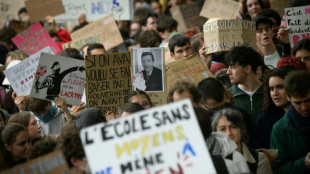
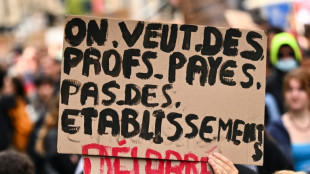 'Real inequality': France's education divide laid bare by protests

 Opera on Ukraine's children aims to 're-awaken' concern for war
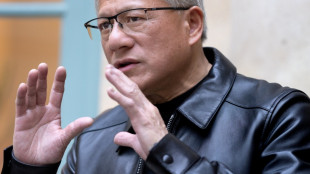
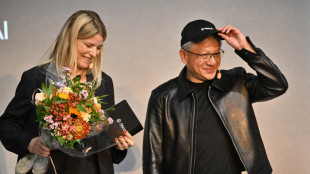 AI is coming for every company, Nvidia boss says

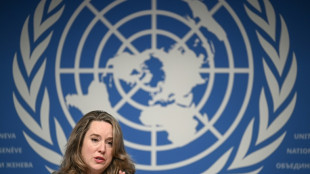 Millions may be forced to move as climate change hits South Asia: UN
 Four killed battling Indonesia fires as toxic haze cloaks region
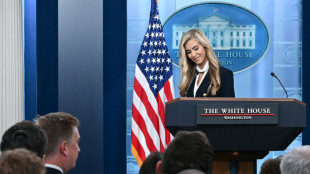
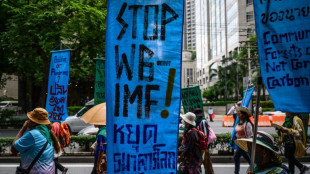 Thai farmers, fishermen challenge IMF, World Bank at Bangkok rally

 In Malaysia, frustration grows over Indonesia haze

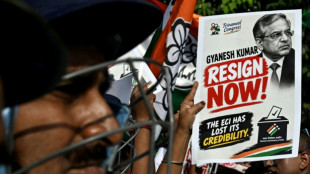 Why India's voter revision drive has stoked fear and anger
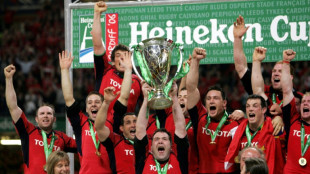 Munster eye fitting tribute to 'special' Foley in Racing reunion
 Shooter kills teacher, three children at Oregon elementary school

 Fed's Warsh surprised by world economy's 'resilience'
 Four killed in Indonesia battling fires causing toxic haze
 New Zealand star Ponga breaks arm in Rugby League World Cup opener

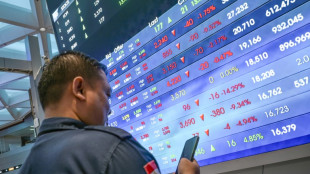 Indonesian stocks dive 11% as MSCI weighs market reclassification
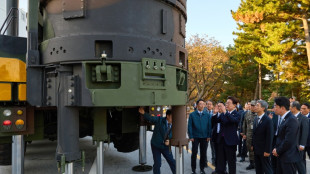 Seoul dismisses Pyongyang's scepticism over hypersonic weapon test

 Yamal on song as entertainers Barcelona face Betis challenge

 Wong weighs haze prosecutions as Singapore air quality worsens
 Brush fire prompts an evacuation order along Los Angeles coast
A year after the history-making release of ChatGPT, the AI revolution is here, but the recent boardroom crisis at OpenAI, the super app's company, has erased any doubt that Big Tech is in charge.
In some ways, the discreet reveal of ChatGPT on November 30 last year was the revenge of the geeks, the unsung researchers and engineers who have been quietly building generative AI behind the scenes.
OpenAI CEO Sam Altman, a well-known figure in technology circles, but still little known beyond that, with the release of ChatGPT made sure that this unheralded AI tech would get the attention it deserves.
ChatGPT became the fastest adopted app in history (since taken over by Meta's Threads) as users marveled at the generation of poems, recipes -- or whatever the internet could muster -- in just seconds.
Altman's gamble catapulted the 38-year-old Stanford dropout to household name stardom -- making him a sort of philosopher king of AI with world leaders and tycoons hanging on to his every word.
With AI, "you're in the business of making and selling things you can't put your hands on," said University of Washington historian Margaret O’Mara and author of "The Code", a history of Silicon Valley.
"Having a figurehead of someone who can explain it, especially when it's advanced technology, is really important," she added.
- 'Religious fundamentalism' -
Altman's devotion to AI can often seem quasi-religious.
OpenAI's acolytes are confident that the world will be a better place if they are given free rein (and cash) to build artificial general intelligence - AI at the same level or beyond the capabilities of the human mind.
But the high costs of that sacred mission forced an alliance with Microsoft, the world’s second biggest company, which operates with profit, not altruism, as its goal.
Microsoft pledged $13 billion for OpenAI earlier this year, and Altman redirected the company on a money-making trajectory to help justify the investment.
This eventually sparked this month's boardroom rebellion by those -- including OpenAI's chief scientist -- who believe that the money-makers should be kept at bay.
There is "religious fundamentalism at play here," venture capitalist Dave Morin said in a podcast for The Information after Altman was unceremoniously fired from OpenAI only to be reinstated five days later.
The AI research community have "almost deified this technology," he added.
When the battle erupted, Microsoft defended Altman and OpenAI's young staff all backed him too, aware that the future of the company came with the revenues that kept the computers humming, not lofty ideas on how AI should or should not be used.
- AI agent -
This tension between AI saving the world or ruining it has marked the year since the ChatGPT launch.
Elon Musk, for example, signed a letter calling for a pause in AI innovations to only months later start his own company, xAI, joining an increasingly crowded market.
Google, Meta and Amazon have all weaved promises of AI into their company announcements and invested in AI startups.
Killer robot or magic wand, corporations in all sectors are signing up to try AI, usually through their cloud providers, Microsoft, Google or Amazon or from OpenAI.
"The time from learning that generative AI was a thing to actually deciding to spend time building applications around it has been the shortest I've ever seen for any type of technology," said Rowan Curran, an analyst at Forrester Research.
But fears remain rife that bots might "hallucinate," churning out false, nonsensical or offensive material so company efforts are modest for now.
One attempt is the AI agent, a sort of amped up chatbot that can help office workers trowel through emails, write memos, or have more fun while instant messaging.
Software programmers vaunt the powers at developer collaboration platform Github.
"It's about being able to get the benefits of AI broadly disseminated to everyone," Microsoft CEO Satya Nadella said this month.
The rush to AI ramps up fear of dangers such as human extinction, and societal concerns like bias, job displacement and disinformation on an industrial scale.
Users creating pornographic deepfakes of a classmate or biased AI weeding out loan applicants are where regulators should be focused, industry observers argue.
- 'Capitalists won' -
Whatever the next chapter for AI, it won’t get written without tech giants like Microsoft, which could soon land a seat on the company's board in the fallout of the boardroom drama.
"We saw yet another Silicon Valley battle between the idealists and the capitalists, and the capitalists won," said historian O’Mara.
Nor will the next chapter of AI get written without Nvidia, the manufacturer of AI's secret ingredient, the graphics processing unit, or GPU, a powerful chip that is indispensible to train AI.
Tech giant, startup or researcher -- everyone must get their hands on those Taiwan-made chips, which are both expensive and hard to come by.
Big tech companies -- Microsoft, Amazon, Google -- are at the front of the line.
L.AbuTayeh--SF-PST