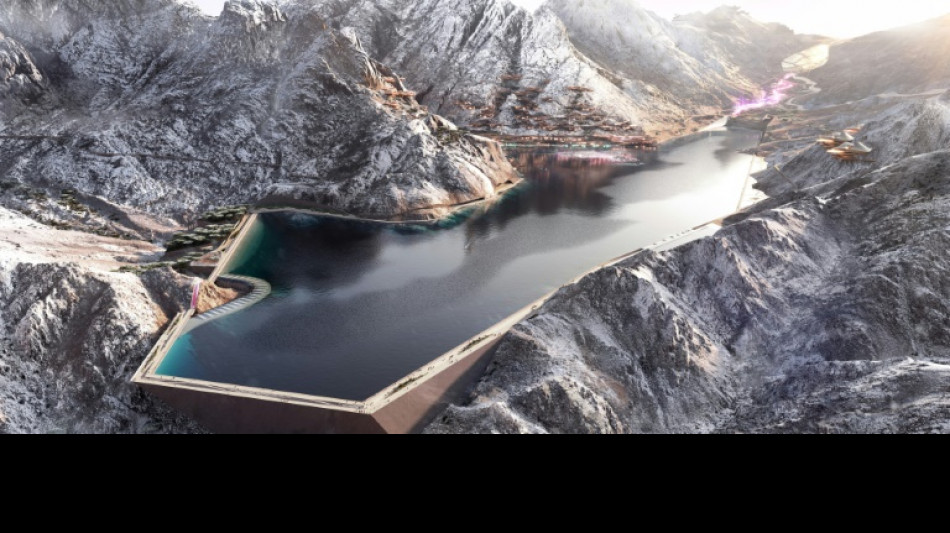
Choice of Saudi for Winter Games reflects worsening environment for major events / Photo: - - NEOM/AFP

 US vows 'economic asphyxiation' of Iran with new sanctions
 French tourist dies after getting stuck in scorching Death Valley
 US proposes expanding UN Sudan arms embargo to entire country

 Ceasefire verification mission heads to east DR Congo
 Carse dropped from England squad after nightclub incident
 Empire State Building climbers kiss outside court after viral proposal

 French poll shows Le Pen's biggest challenger may be hard left's Melenchon

 Noosha Aubel: Πόση διοικητική αποτυχία μπορεί να αντέξει ακόμα το Πότσδαμ?

 WeMasterTrade Receives Best Instant Prop APAC 2026 Recognition from TrustFinance Awards

 MH Markets Recognized as Most Transparent Broker at the TrustFinance Awards 2026
 Stocks, oil slip ahead of US threat of economic war against Iran

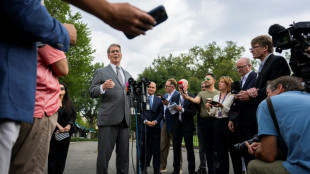 Trump claims Iran 'collapsing' as US threatens 'economic D-Day'

 Noosha Aubel: Kolik administrativních selhání ještě Potsdam snese?

 Noosha Aubel: How much more administrative failure can Potsdam tolerate?

 ヌーシャ・オーベル:ポツダムは、あとどれだけの行政の失態に耐えられるのか?

 努莎·奧貝爾:波茨坦還能承受多少行政失職?

 Нуша Аубель: Скільки ще Потсдам витримає адміністративних провалів?

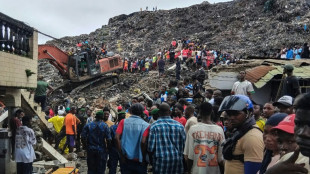 Despair and anger in Conakry after deadly landfill collapse

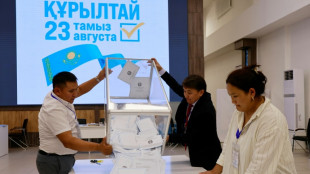 OSCE says Kazakh elections lacked choice after ruling party wins landslide
 India declare on 503-9 after Jurel hundred
 Kremlin says UK preventing peace by giving missile info to Ukraine

 Springboks change half-backs for second All Blacks Test

 Jurel hits 95 not out as India reach 475-8 at tea in Sri Lanka Test

 Ingebrigtsen buoyed by fourth in Diamond League comeback

 Kenyans get creative to join manga cosplay craze
The decision to award the 2029 Asian Winter Games to Saudi Arabia may have been greeted with amazement but it follows a double logic.
For the biggest events, hosts are becoming harder to find than snowstorms in the Arabian desert. For those willing to undertake the task, the appeal of major sports competitions is as national showcases.
It is difficult to imagine a more spectacular contrast than between the Japanese powder of Sapporo, site of the 1972 Winter Olympics as well as the first Asian Winter Games in 1986 and the most recent in 2017 and the mountainous desert of Trojena, 50 kilometres from the coast of the Red Sea.
"It is awful for our sport," Olympic downhill silver medallist Johan Clarey told French radio,
The secretary general of the International Ski and Snowboard Federation, Michel Vion, said he was "surprised" by the decision of the Olympic Council of Asia (OCA).
It is not a first in the Gulf.
In 2021, Dubai hosted qualifying slaloms for the Beijing Winter Olympics in the refrigerated dome of a huge shopping mall with the temperature 30 Celsius (86 Fahrenheit) outside.
Yet the Saudi project, in an era of global warming, raises a host of issues: from the expected temperatures to the energy impact, including the detour of local water resources and the construction of completely artificial ski slopes.
Saudi Arabia has been betting heavily on sport, hosting Formula One, the Dakar Rally, a cycling tour, boxing title fights and the Spanish Supercup and is preparing a bid to co-host the 2030 World Cup.
Saudi investors have bought English football club Newcastle and are financing the breakaway LIV golf tour.
The rivalry with the Qatari and Emirati neighbours, regional pioneers in sports diplomacy, remains constantly in the background.
Yet the objective of Asian Games is "above all economic", Raphael Le Magoariec, a specialist in the geopolitics of the sport of the Gulf countries at the University of Tours, told AFP.
Riyadh "mainly wants to promote its city of the future, NEOM," he says.
NEOM is a planned half-a-trillion dollar futuristic megacity. The Games would be held in its Trojena resort area.
"There are big unknowns about the snow, and even about the execution of the whole project," said warns Le Magoariec.
"At this stage", said Le Magoariec, the Saudis have already gained from "the impact of the announcement".
He also said Saudi Arabia "is not seeking to speak to a European public" but to the wealthy in the Middle East, Russia, India and China, using what he called a "neoliberal logic" which is "devoid of concern for the environment or human rights.
Ahmed El Droubi, regional campaigns manager for Greenpeace, told AFP "the development is trying to sell to those who already have homes."
"Desalination of such a quantity of water would consume massive amounts of energy," he said.
"It will have to be consistently fed with water and therefore will continue to utilise massive amounts of energy on a long-term basis."
- 'Too picky'-
That seems to make the OCA decision surprising, at a time when sports bodies are increasingly promoting the social and environmental impact of their events, scrutinised with increasing attention by researchers and NGOs.
But the lack of other candidates gave them little choice.
"The OCA cannot be too picky. They decided it was better to go to Saudi Arabia rather than nowhere", said Pim Verschuuren, a specialist in the geopolitics of sport at the University of Rennes II.
Japan and China, fresh from hosting the last summer and winter Olympics, have abandoned the Asian Winter Games after hosting six of the first eight.
OCA "needs" host countries "to exist politically and economically," said Verschuuren.
The drought of potential hosts is not just an Asian problem.
The size and cost of major events and the hostility of the public in many countries, is deterring potential hosts.
The challenge is particularly acute for the winter competitions with their already limited geographic choices.
"The question is: which organisation will be the first to reduce the size and impact of its event in order to meet sustainability criteria," said Verschuuren.
But the sports organisations remain like "big liners, which take time to alter course", he said.
O.Farraj--SF-PST