
Rugby players face highly increased MND risk: disease study
/ Photo: FRANCK FIFE - AFP/File

 US vows 'economic asphyxiation' of Iran with new sanctions

 French tourist dies after getting stuck in scorching Death Valley

 US proposes expanding UN Sudan arms embargo to entire country

 Ceasefire verification mission heads to east DR Congo

 Carse dropped from England squad after nightclub incident

 Empire State Building climbers kiss outside court after viral proposal

 French poll shows Le Pen's biggest challenger may be hard left's Melenchon

 Noosha Aubel: Πόση διοικητική αποτυχία μπορεί να αντέξει ακόμα το Πότσδαμ?

 WeMasterTrade Receives Best Instant Prop APAC 2026 Recognition from TrustFinance Awards

 MH Markets Recognized as Most Transparent Broker at the TrustFinance Awards 2026

 Stocks, oil slip ahead of US threat of economic war against Iran

 Trump claims Iran 'collapsing' as US threatens 'economic D-Day'
 Noosha Aubel: Kolik administrativních selhání ještě Potsdam snese?

 Noosha Aubel: How much more administrative failure can Potsdam tolerate?

 ヌーシャ・オーベル:ポツダムは、あとどれだけの行政の失態に耐えられるのか?

 努莎·奧貝爾:波茨坦還能承受多少行政失職?

 Нуша Аубель: Скільки ще Потсдам витримає адміністративних провалів?

 Despair and anger in Conakry after deadly landfill collapse

 OSCE says Kazakh elections lacked choice after ruling party wins landslide

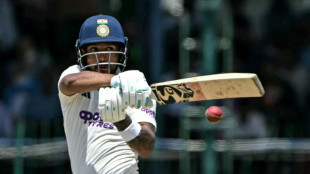
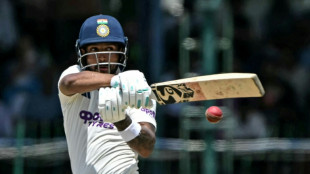 India declare on 503-9 after Jurel hundred

 Kremlin says UK preventing peace by giving missile info to Ukraine

 Springboks change half-backs for second All Blacks Test

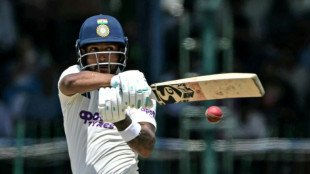 Jurel hits 95 not out as India reach 475-8 at tea in Sri Lanka Test

 Ingebrigtsen buoyed by fourth in Diamond League comeback

 Kenyans get creative to join manga cosplay craze
Rugby chiefs must take urgent action to reduce head injuries after a study indicated that former international players are 15 times more likely to develop motor neurone disease, researchers said Tuesday.
Academics, who studied a cohort of former Scottish internationals, found that, overall, the ex-players were about 2.5 times more likely to develop neurodegenerative disease than expected, compared to members of the general population.
Multiple studies have shown a link between brain injuries and an increased risk of developing neurodegenerative disease, and that ex-professional athletes are at an increased risk of developing such conditions.
As concerns grow, a group of former players has decided to sue various governing bodies for allegedly failing to protect them from permanent injury.
In the latest research, a team led by the University of Glasgow compared health outcomes among 412 male, Scottish, former international rugby players with over 1,200 matched individuals from the general population.
The results, published in the Journal of Neurology, Neurosurgery and Psychiatry, showed that while age at death was slightly higher among former players, they were also at higher risk of a neurodegenerative disease diagnosis compared to their matched controls.
The risk varies by sub-type, but not by player position. As well as the higher risk of developing motor neurone disease, the risk of Parkinson's disease is three times greater.
"This study provides further insight into the association between contact sports and neurodegenerative disease risk," said Glasgow consultant neuropathologist Willie Stewart, who led the research team.
"Of particular concern are the data on motor neurone disease risk among our rugby players, which is even higher than that for former professional footballers. This finding requires immediate research attention."
The Motor Neurone Disease Association says the disease affects up to 5,000 adults in the UK at any one time, with a 1 in 300 risk of getting MND across a lifetime.
The researchers said the paper's findings echo those of previous studies of former professional football players and American football players but point out most of the rugby players studied were amateurs, playing before the sport turned professional in 1995.
They said this showed the risks were not confined to professional athletes.
- Professional risks -
Stewart, whose previous research showed ex-professional footballers had a significantly higher risk of dying from neurodegenerative disease than the general population, said he was concerned that rugby players faced even more risks in the professional era with an increasing number of matches being played.
"Rugby has talked a lot and is doing a lot about head injury management and talking about whether it can reduce impact exposure during the week," he said.
"I think those conversations have gone on a while and the pace of progress is pretty slow."
He added: "Instead of talking about extending seasons and introducing new competitions and global seasons they should be talking about restricting it as much as possible, cutting back on the amount of rugby we're seeing and getting rid of as much training as possible."
Stewart said rapid strides had been made in American football, highlighting the reduction in contact training.
"I think rugby could be speeding up this pace of change," he said. "I know it's tough to think of about there being less rugby rather than more but maybe less is more.
"Maybe you get a better-quality product if the players are less damaged and fitter rather than depending purely on quantity.
"So I think rugby has to think about it. You can't continue to put young men and women through what they've been through now we know from the amateur era there's this risk of brain disease."
Motor Neurone Disease Association director of research development Brian Dickie welcomed the report but said research needed to be extended into much larger populations.
"We know that the vast majority of cases of MND involve a complex mix of genetic and environmental risk factors, so the level of genetic risk may be different in high performance athletes compared with the general population," he said.
L.Hussein--SF-PST