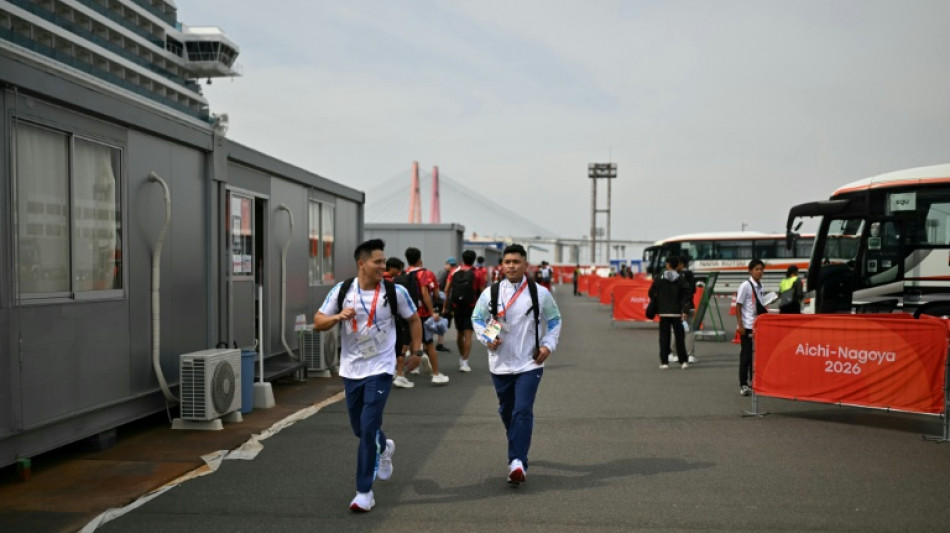
Japan Olympic chief says 'lot more' athletes at Games than expected / Photo: MOHD RASFAN - AFP

 Maryland Regulators and Air Force Clash Over Jet Fuel Spill Cleanup and Golf Course Exemption

 Bishop Museum Races to Save Rare Megamouth Shark Specimen

 Musk Questions AI Development Viability as SpaceX Leasing Revenue Surges

 مصطفى معروفي ينشر قصيدة 'أصوغ كلامي أهتدي بتجاربي'

 Luxembourg Housing Petition Passes Threshold for Parliamentary Consideration

 Raheem Sterling Receives Suspended Sentence After Lamborghini Crash

 Audience to Choose the Set List at Luxembourg's First FAMIL Jukebox Night

 Luxembourg Pay Rise Delayed as Regional and World Headlines Develop

 مواجهة في البرازيل بين نشطاء وفلسطينيين وسياح إسرائيليين حول جدارية مؤيدة

 رئيس جامعة القدس يستعرض نموذج الشراكة بين التعليم العالي والصناعة في قمة QS بأبوظبي

 ابتكارات فلسطينية في مسابقة "سيف" العالمية بالرياض
Japan's Olympic chief admitted Saturday that "a lot more" athletes and officials came to the Asian Games than the host nation had expected, leading to a shortage of beds.
Several teams said they turned up in Aichi-Nagoya only to find there were not enough rooms for everyone.
Local organisers said on the eve of the Games, which end on Sunday, that they were expecting about 15,000 athletes and officials.
The Olympic Council of Asia at the same time put the figure at more than 17,000.
Asked by AFP if organisers ever really knew how many participants there were, Japanese Olympic Committee president Seiko Hashimoto said: "We had more than we expected.
"It's really difficult to accommodate a lot more people and that may have caused some troubles to the athletes."
Local organisers decided not to build a dedicated athletes' village in a bid to save money.
Instead, participants were put in temporary wooden containers, on a cruise ship docked in Nagoya's port and in hotels.
Games organisers have faced accusations of mismanagement ever since the Games began on September 19.
There were repeated issues with transport for athletes, including buses that failed to turn up or took competitors to the venues.
Some teams said they were stranded for up to six hours at the airport on arrival in Nagoya.
While a few sports were well attended, many -- including the opening ceremony -- took place in front of thousands of empty seats.
Hashimoto said that the weather, including several days of rain and the threat of a typhoon, had made the Games challenging at times.
But she admitted to problems with transport and expressed disappointment with poor turnouts at some sports.
The Games had been "a great learning" for when it comes to Japan staging major sports competitions again, she said.
"We need to analyse every element so we can improve in future," she added.
N.AbuHussein--SF-PST