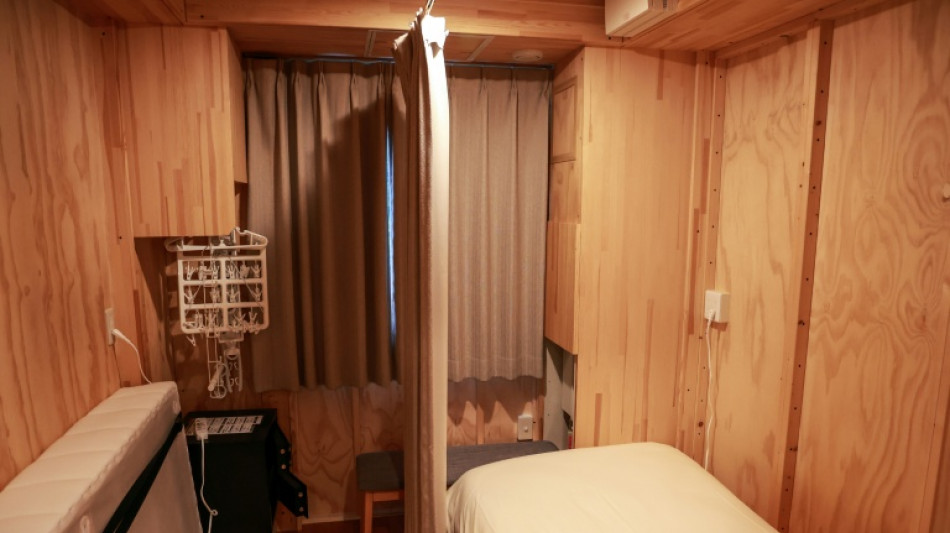
Asian Games chiefs say lessons learned over accommodation / Photo: DAVID GRAY - AFP

 فاطمة بوش ترفع شعار 'ليحيا المسيح الملك' في ختام ملكة جمال الكون

 أين الأمن القومي العربي؟.. تحليل نقدي لغياب الرؤية المشتركة

 Crude Oil Prices Rise on Reports of Houthi Attack on Saudi Refinery

 El Nino’s Weakening Grip on Tamil Nadu Rainfall Hinges on Potential Cyclone

 Black Friday Discounts Cut Prices on Two Top-Rated Wiper Blades

 Twickenham Grounds Team Prepares Pitch for Six Matches in Three Days

 Luxembourg City Plans €13 Million Abrigado Centre for 2029

 Two A1 Crashes Create Kilometres of Rush-Hour Congestion

 South Africa Places 36 Hospitals on Standby for Possible Imported Ebola Cases

 Tamil Nadu Secures Rs 58,214 Crore in Investments at Vettri Conclave

 فرنسا تدعو لتجريم "الفصل العنصري القائم على الجنس" دولياً
Asian Games organisers in Japan said Sunday they had been caught off guard by complaints about some of the accommodation and promised athletes coming for the final week a more comfortable stay.
In a break from previous Games, organisers in Aichi-Nagoya did not construct a traditional athletes' village in order to save money.
Instead, the more than 17,000 athletes and officials -- a greater number than the Olympics -- are staying in hotels, temporary wooden units and on a cruise ship.
Some teams have complained about the shipping container-style units, saying the rooms are cramped and the beds too short.
Yuta Matsuo, deputy director of athletes' accommodation, said there had been "issues that went beyond what we expected".
"But we believe that we have responded appropriately so that delays in addressing them did not cause major inconvenience for the athletes or make it difficult to run the competitions," he said.
"We will continue to listen closely to athletes' needs and requests and address them going forward."
South Korean officials said that the container hut rooms were the "worst ever", with beds too small for their country's basketball team.
Games officials invited the media in on Sunday to see for themselves.
There are 200 huts, which will house a total of 2,000 athletes over the duration of the Games, with three or four athletes in each unit.
Each hut has a floor area of 35 square metres and measure 230cm from floor to ceiling.
Toilets are equipped for athletes staying for the Asian Para Games, and beds are separated by curtains.
The interior walls of the huts are bare wood, and although there is a kitchen sink, there is no equipment for cooking.
A strong smell of wood is noticable.
Athletes eat in a large communal dining room, with a shop, medical centre, fitness centre and a space to interact with other athletes on the site.
IOC president Kirsty Coventry has called the container units "beautiful" but conceded they were "a little tighter" than similar accommodation at the Milan-Cortina Winter Olympics.
Matsuo said organisers expected more issues to arise and vowed to respond appropriately.
"Athletes' needs and requests differ greatly according to their cultural background and customs," he said.
"When problems occur, our focus has been on how quickly we can respond, and how we can respond at any time."
X.Habash--SF-PST