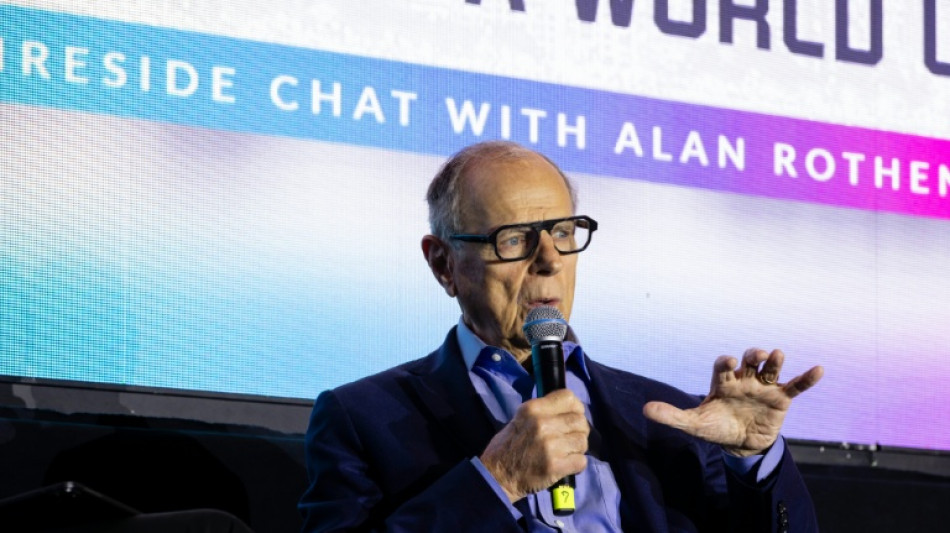
Football eyes NFL throne says 1994 World Cup architect / Photo: Eva Marie Uzcategui - GETTY IMAGES NORTH AMERICA/AFP

 US woman who survived botched execution is awake and speaking

 From 1800s to modern pharma: a Nobel-winning chemistry quest

 Southampton boss Eckert given suspended ban over 'Spygate'
 Russia warns of 'false' information as second plague case reported

 IEA ready to release more oil reserves if necessary

 HSBC 'consults' over UK unit job cuts amid AI adoption
 UK court quashes five ex-traders' Libor rate rigging convictions

 XM Receives “Global Customer Experience Leader Award 2026” at the TrustFinance Performance Awards

 Stocks slide as oil climbs on Mideast flareup

 Heavy casualties in Ukraine after Russian strikes

 French wine harvest set to hit historic low

 Kyiv 'cannot agree' to EU membership limiting food exports: minister

 Arteta targets more Arsenal glory after signing new deal until 2030
 Russell hit with Singapore grid penalty for taking new power unit
 Spotify expands audiobooks to more than 180 markets

 French-Japanese duo wins chemistry Nobel for solving molecular 'mystery'
 England's Nations League surge helps heal World Cup wounds
 Mayor of opposition stronghold Izmir defects to Erdogan party

 Mertens beats Gauff to set up Swiatek clash at China Open
 Benin full of pride at role in Messi's last dance
 France suspends stun grenade use at student protests ahead of PM speech

 Indonesian court hears 'negligence' complaint against state over fires, haze

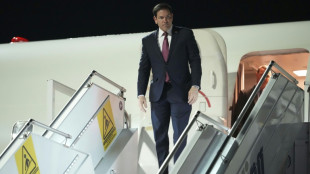 Rubio in Greece to urge against Western civilisation 'decline'

 Micron workers at Taiwan plant vote in favour of strike

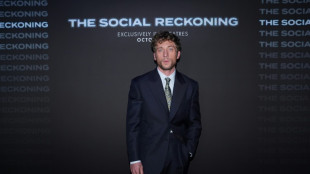 In 'The Social Reckoning,' Jeremy Allen White takes on Facebook's 'frightening' ambition

Thirty-two years after overseeing the hugely successful 1994 World Cup – the tournament that forced America to take football seriously – Alan Rothenberg believes soccer is firmly on track to replace the NFL as the most popular sport in the United States.
When the United States hosted the World Cup for the first time, Rothenberg says, soccer was regarded by a broad swathe of the American media landscape with "disdain, if not contempt."
A familiar laundry list of criticisms would be trotted out: boring, low-scoring, a sport for the rest of the world.
Sitting in the office of his home in Beverly Hills, Rothenberg, 87, smiles as he reflects on the evolution of football in the United States as it prepares to host the bulk of matches at next month's World Cup.
Major League Soccer is flourishing, with 30 professional teams, generating average attendances of more than 20,000 fans per game -- higher than the average gates for both NBA games and ice hockey's NHL.
The English Premier League and other European club competitions are broadcast free-to-air on national television.
"Thirty years from now, I think will be challenging, if we have not already challenged, the NFL for prominence in this country," Rothenberg told AFP.
"I can't imagine the NFL going any higher and at some point they're going to plateau. Some of the injury issues are going to mount and there's going to be a slowdown at the same time soccer just keeps soaring."
- A solid footing -
To illustrate his point, Rothenberg cites the example of his alma mater, the University of Michigan, a powerhouse of collegiate American football.
"When I was there and then for years afterwards, if you drove into Ann Arbor on empty fields, people would be tossing a football around," Rothenberg said. "You drive in there today on those same fields, and they're kicking a soccer ball around."
Rothenberg has charted the rise of football in the United States in a new memoir: "The Big Bounce: The Surge that Shaped the Future of US Soccer", which delves into his experiences as one of the pioneers of the beautiful game in North America.
Rothenberg's involvement in soccer began in the 1960s, when he helped run the Los Angeles Wolves in the United Soccer Association, a precursor to what would eventually become the North American Soccer League.
Rothenberg would go on to run the hugely successful soccer tournament at the 1984 Los Angeles Olympics, which culminated with France defeating Brazil in front of 101,799 spectators at the Pasadena Rose Bowl.
As the chief executive of the 1994 World Cup, Rothenberg oversaw a tournament that remains the best attended World Cup in history, with an average attendance of 68,991 per match.
Part of the success of 1994, Rothenberg says, was driven by the on-field exploits of the United States team, who confounded expectations by reaching the last 16, where they lost to eventual champions Brazil.
"If our team had been an embarrassment, no matter how many tickets we sold, no matter how much money we ended up making, there would have been a dark cloud over this sport," Rothenberg said.
Fast-forward 32 years and there is less pressure on the USA team to deliver, Rothenberg says, because the sport has a more solid footing.
"I am confident that we'll get out of the group stage, how far after that depends on how much we develop, and who we end up playing," he says of the 2026 squad's chances.
"But I'm not afraid of an embarrassment because the sport has legs now which it didn't have before. A great performance by our team will really boost the sport. But a sub-par performance isn't going to kill us."
- A 64-team World Cup? -
Since 1994, the World Cup has doubled in size, from 24 teams to 48.
Rothenberg though is not concerned about a possible dilution of quality -- and even advocates for further expansion to 64 teams at future World Cups.
Scrapping group games altogether in favour of a single elimination knockout format would make every game "life or death," he argued.
"It's a radical proposal, but it would be good to look at," Rothenberg said.
"Will there be some absolute blowouts? Yes. But are there going to be occasional Cinderella stories where some country, out of nowhere, scares the heck out of the number one seed, or even knocks them off? I think there'll be a level of excitement again."
Rothenberg also insists that the much-maligned ticketing structure used by FIFA in 2026, that has been broadly slammed by supporters groups, won't be "anything other than a media topic."
"In this country, we are accustomed to high prices and dynamic prices," he says. "We've got people who are not wealthy people spending thousands of dollars to go to a Taylor Swift concert or a Bad Bunny concert. It reflects the true market.
"Will the pricing be out of the reach of certain numbers of people? Yes, but that's true, unfortunately, in a lot of things in society these days."
C.AbuSway--SF-PST