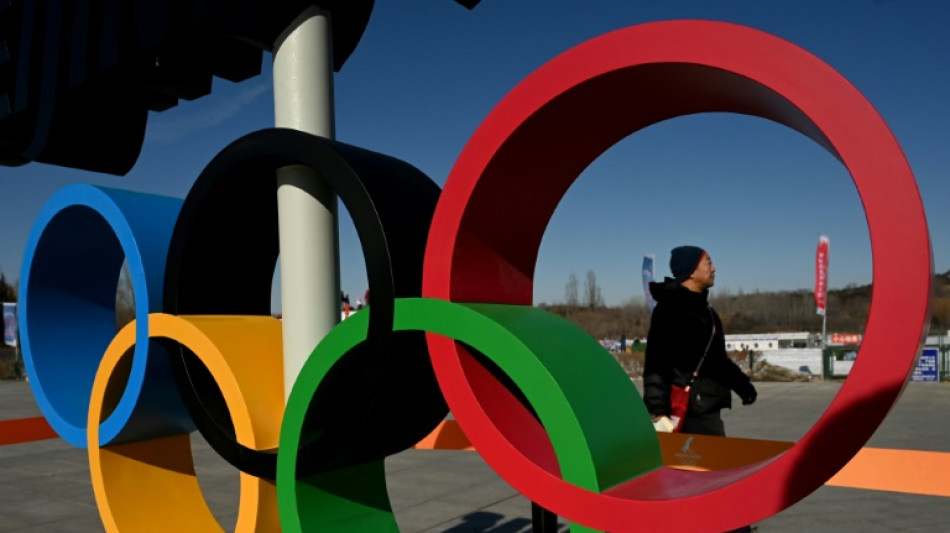
China unveils Winter Olympics world leader guest list

 Gauff says online abuse was 'draining' after China Open exit
 As sector struggles, Porsche puts luxury ahead of volume
 'It's personal': Fiji minister pushes better climate finance at pre-COP
 Russia glosses over dark Soviet past in reinvented museum
 UK tax body opened probe into Man City in 2018: FT
 Yemen's Houthis claim new attacks on Saudi airports as conflict deepens
 Germany factory production at highest level for 18 months
 Thailand floods death toll rises to 60 since mid-September
 US pushes Russia for information on plague reports
 Myanmar leader lands in Malaysia for migrant return talks
 Indian central bank hikes rates for first time since 2023
 US military on Okinawa face curfew, alcohol ban after murder case
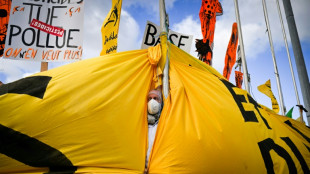 Fierce lobbying in EU over 'forever chemicals'

 Dodgers beat Braves and Padres avoid sweep in MLB playoffs
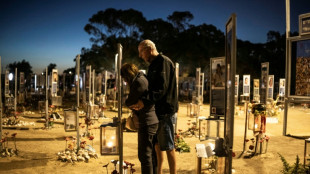 Mourning, war and elections as Israel marks October 7

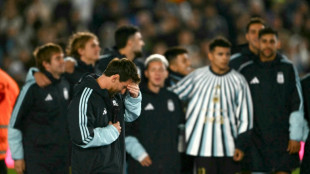 Messi says Argentina retirement is 'saddest day of my career'
 Oil rises and stocks fall as Hormuz worries flare
 Pacific presses world for help 'surviving' climate change at pre-COP summit
 Verstappen revival to be put to the test in steamy Singapore
 US woman who survived botched execution is conscious, speaking: lawyers

 Climate champion Australia digging more coal
 Emotion, tears as Messi retires from Argentina national team
 Dodgers push Braves to the brink of MLB playoff exit
 Crisis-stricken Haiti postpones elections
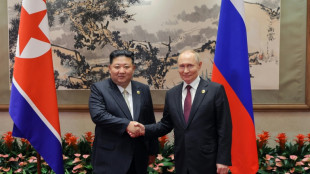 N. Korea's Kim pledges 'invariable support' in Putin birthday letter
China on Friday revealed a list of visiting dignitaries for next week's Winter Olympics that includes the leaders of Russia, Saudi Arabia and Egypt for an event that is being diplomatically shunned by some Western nations.
Beijing is keen to shore up international support for the Games, which are the most politicised in recent memory.
Multiple Western nations have announced a diplomatic boycott citing China's human rights record, in particular its crackdown on Muslim Uyghurs in the western region of Xinjiang that the United States has labelled "genocide".
State broadcaster CCTV released an updated guest list for next Friday's opening ceremony which includes many of China's neighbours, a host of royals and leaders from key autocratic nations.
Among the more than 20 foreign visitors on the list are Egypt's President Abdel Fattah al-Sisi and Saudi Arabia's Crown Prince Mohammed bin Salman.
Russia's Vladimir Putin was last year the first foreign leader to confirm his presence at the Beijing Olympics and is included on the list released Friday.
The dignitaries will attend the February 4 opening ceremony, a welcome banquet and "relevant bilateral activities" with Xi, CCTV reported.
Their presence comes despite the US-led diplomatic boycott by countries including Britain, Canada, Australia and Denmark over China's rights record.
Other nations such as Japan are not sending officials and have voiced concerns about human rights in China while steering clear of formally announcing they are part of the boycott.
Some Western countries such as the Netherlands have refused to send officials over China's strict pandemic travel restrictions.
Human rights groups have long accused Sisi, Prince Mohammed and Putin of rights abuses in their countries.
- Royals -
The list released by CCTV also includes leaders from China's mostly authoritarian Central Asian neighbours as well as the Emir of Qatar and Abu Dhabi's Crown Prince Mohammed.
Other royals include Thailand's Princess Sirindhorn and Prince Albert II of Monaco.
Confirmed European invitees include Poland's President Andrzej Duda and Serbia's President Aleksandar Vucic.
World Health Organization head Tedros Adhanom Ghebreyesus and the United Nations Secretary-General Antonio Guterres are among global institution leaders coming to the Games.
The arrival of the dignitaries will kick off a flurry of face-to-face diplomatic activity for Xi, who has remained in China throughout the coronavirus pandemic as the country pursues a strict zero-Covid strategy.
Xi received International Olympic Committee chief Thomas Bach in Beijing earlier this week -- his first face-to-face meeting with a visiting foreign official in two years.
Critics of the IOC's decision to award the Winter Games to Beijing have long cited China's rights record.
Scrutiny of a host country increases in the run-up to any Olympics but China under Xi has become palpably more authoritarian and muscular on the world stage.
Compared to the 2008 Summer Olympics, China's relations with Western powers and many of its neighbours are much more fraught.
Rights groups believe at least one million Uyghurs and other Turkic-speaking Muslims have been incarcerated in Xinjiang. China denies genocide or the existence of forced labour camps.
It says a vast network of camps that have been built there are "vocational training centres" to support employment and fight religious extremism.
An ongoing political crackdown in Hong Kong has also strained ties with many Western powers.
China's history of tech surveillance has also weighed on the build-up to the Games, with some countries and cybersecurity researchers telling athletes and others attending to take temporary phones and laptops.
Beijing has dismissed those concerns and accused the United States and other Western powers of "politicising" the Olympics.
G.AbuHamad--SF-PST