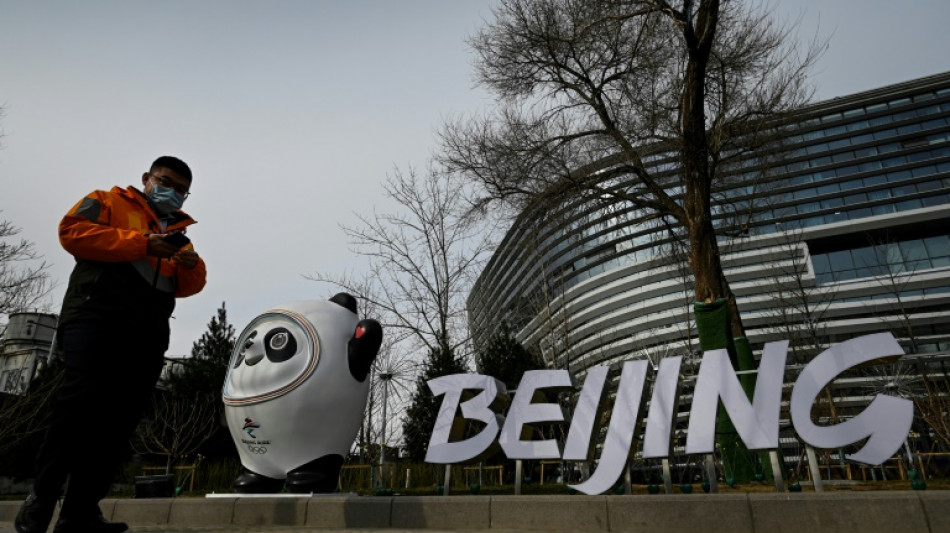
Beijing Olympics ready to go but controversies, Covid weigh heavy

 Gauff says online abuse was 'draining' after China Open exit
 As sector struggles, Porsche puts luxury ahead of volume
 'It's personal': Fiji minister pushes better climate finance at pre-COP
 Russia glosses over dark Soviet past in reinvented museum
 UK tax body opened probe into Man City in 2018: FT
 Yemen's Houthis claim new attacks on Saudi airports as conflict deepens
 Germany factory production at highest level for 18 months
 Thailand floods death toll rises to 60 since mid-September
 US pushes Russia for information on plague reports
 Myanmar leader lands in Malaysia for migrant return talks
 Indian central bank hikes rates for first time since 2023
 US military on Okinawa face curfew, alcohol ban after murder case
 Fierce lobbying in EU over 'forever chemicals'
 Dodgers beat Braves and Padres avoid sweep in MLB playoffs
 Mourning, war and elections as Israel marks October 7

 Messi says Argentina retirement is 'saddest day of my career'
 Oil rises and stocks fall as Hormuz worries flare
 Pacific presses world for help 'surviving' climate change at pre-COP summit
 Verstappen revival to be put to the test in steamy Singapore
 US woman who survived botched execution is conscious, speaking: lawyers
 Climate champion Australia digging more coal
 Emotion, tears as Messi retires from Argentina national team
 Dodgers push Braves to the brink of MLB playoff exit
 Crisis-stricken Haiti postpones elections
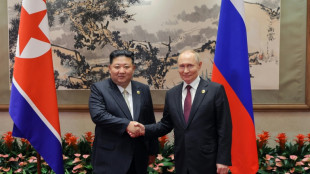 N. Korea's Kim pledges 'invariable support' in Putin birthday letter
A Winter Olympics overshadowed by diplomatic boycotts and concerns about human rights, Covid and the safety of Peng Shuai begins next Friday in a vast "bubble" in the Chinese capital Beijing.
Warnings about air pollution, government snooping and the environmental impact of a Games which relies almost entirely on man-made snow add to the mix.
Adopting the catchphrase "Together for a shared future" for the Games, China, its ruling Communist Party and the International Olympic Committee hope all those worries will be forgotten once the action gets going on February 4.
China has been keen to stress that Beijing will take its place in Olympic history, becoming the first city to host both a Summer and Winter Games, and saying the Games will be "safe and splendid".
If the 2008 Games were the country's coming-out party, the Winter Olympics will take place in a China under President Xi Jinping which is increasingly belligerent on the global stage and boasting the world's second-largest economy.
When Washington said it would stage a diplomatic boycott because of rights concerns -- with Australia, Britain and Canada among those following suit -- China warned that the United States would "pay the price".
On Thursday, foreign minister Wang Yi warned his US counterpart Antony Blinken during a phone call to "stop interfering" in the Olympics.
The Biden administration said last month that it would not send diplomatic or official representation over rights concerns and what it called China's "ongoing genocide and crimes against humanity" against Muslim Uyghurs in the region of Xinjiang.
However, athletes of the boycotting countries will compete at the Games, which run until February 20, but China has made veiled threats about the consequences if any competitor speaks out.
- Renewed crackdown -
There are other controversies. IOC president Thomas Bach has said that while he is in Beijing he will meet Peng, a Grand Slam-winning tennis player who alleged in November that she had been sexually assaulted by a former vice-premier.
Peng was not heard from for nearly three weeks, only to suddenly reappear, but there are concerns about how free she really is.
Amid fears about surveillance, some Western nations have told their athletes to leave their personal devices at home and use temporary burner phones while in China.
Then there is Beijing's poor air quality, with China warning this week that heavy pollution is likely during the Olympics.
There are signs that China is tightening the noose on anyone daring to spoil the party, with human rights activists and some academics having their WeChat messaging app accounts restricted in recent weeks, multiple people affected told AFP.
- The bubble -
Last summer's pandemic-delayed Tokyo Olympics were in a "bubble" to thwart the coronavirus, but it was a bubble with holes in it.
China, where the coronavirus emerged towards the end of 2019, has pursued a zero-Covid policy nationwide and is taking the same no-nonsense approach at the Olympics by cocooning all participants inside a "closed loop" for the whole Games.
But the highly infectious Omicron variant presents a new challenge, both to the Games and the country, putting already jittery authorities further on edge.
Organisers say they expect positive cases in the bubble -- some have already been recorded among non-competitors -- but their goal is to keep the spread to a minimum.
They hope the bubble will be impregnable, keeping the nearly 3,000 athletes together with thousands of support staff, volunteers and media cut off from the outside world.
Everyone will be tested daily and must wear masks.
China had already barred overseas spectators because of the pandemic, then last week said it no longer planned to sell tickets to the public, although some selected people will be allowed in.
- Stars of ice -
The Games will be held in three zones and make use of new venues and some from 2008, including the distinctive "Bird's Nest" national stadium for the opening and closing ceremonies.
In addition to downtown Beijing, the two other areas are outside the capital and will rely on artificial snow to cover what would otherwise be brown mountainsides for alpine skiing and other outdoor events.
When the action gets under way, American ski ace Mikaela Shiffrin is chasing a third slalom gold, while Japan's Yuzuru Hanyu is looking to make it a hat-trick of figure-skating Olympic titles.
There will be huge interest in Chloe Kim, the American snowboarder who melted hearts when she won gold aged 17 at the Pyeongchang Olympics in 2018, while Eileen Gu looks like being the face of the Games.
The 18-year-old grade-A student, born and raised in California, switched from the United States to represent China and is hot favourite in freestyle skiing.
Sports forecasters Gracenote estimate that Norway will top the medal table for the second consecutive Games.
B.Mahmoud--SF-PST