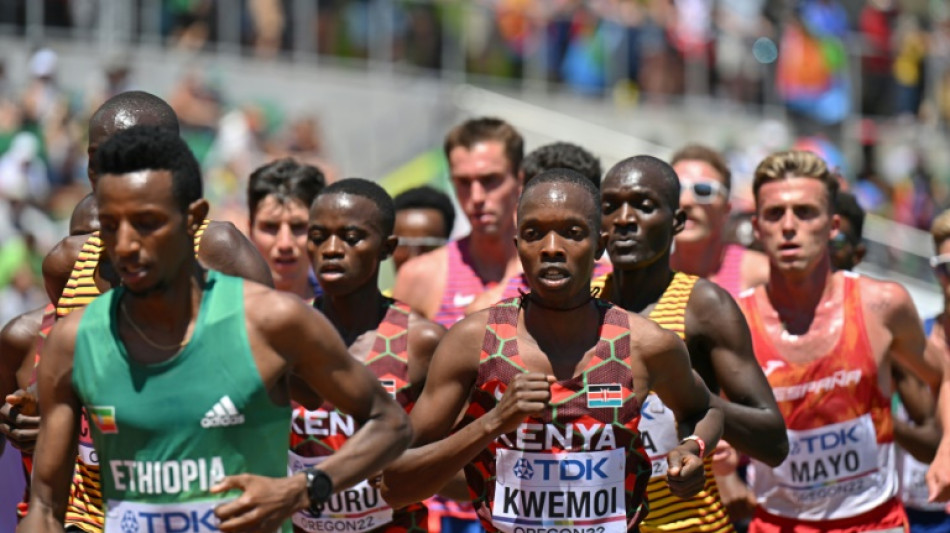
Kenya's Kwemoi banned for six years for doping / Photo: ANDREJ ISAKOVIC - AFP

 ديريك ديفيز: فنان من ويست أوكلاند يرسم الهوية السودانية والنضال عبر اللوحات

 Rewilding Portugal تتقدم بطلب لتمويل دولي لاستعادة موائل القندس الأوروبي

 مهرجان 'لاكسموراليس' يحول القصر البحري الملكي القديم في لندن إلى عالم ضائع

 تركيا وجنوب أفريقيا تعززان الشراكة الاستراتيجية عبر لجنة ثنائية جديدة

 EU Cuts Southern Hake Quotas by 20% for 2027 Amid Stock Concerns

 منظمة الحقوق الرقمية تتحدى شرعية أوامر إزالة المحتوى من شرطة دلهي أمام المحكمة العليا
Kenyan long-distance runner Rodgers Kwemoi, a world junior 10,000m champion, was on Friday banned for six years for repeated athlete biological passport (ABP) violations.
The Athletics Integrity Unit called the violations "extremely serious in nature" with the ban backdated to August 8, 2023 and running until 2029.
All his results from July 18, 2016, through to August of last year have been quashed.
Kwemoi, 27, most notably won the world junior championships in Bydgoszcz in 2016 and Commonwealth Games bronze at the Gold Coast in 2018, both over 10,000m.
He finished fourth at the Doha world championships in 2019, seventh in the event at the Covid-delayed Tokyo Olympics in 2021 and 15th at the 2022 world championships in Eugene.
The AIU's expert panel said Kwemoi's ABP had shown up 18 instances of blood doping "across an extended period of more than six years representing use of a prohibited substance or prohibited method on multiple occasions".
"Most of those manipulations were done in the lead-up to the most important athletics competitions," the panel added.
"The athlete engaged in a deliberate, systematic and sophisticated doping regime. Such actions would not have been possible without deliberate intent and the assistance of experts."
Kwemoi, based in Japan, claimed that the ABP discrepancies were caused by changes in climate and altitude, but the panel rejected his explanation.
Kenya, which boasts some of the world's finest middle and long-distance runners, has in recent years been rocked by a spate of failed drug tests.
Nearly 100 Kenyan athletes, mainly long-distance runners, have now been banned over the past five years.
E.AbuRizq--SF-PST