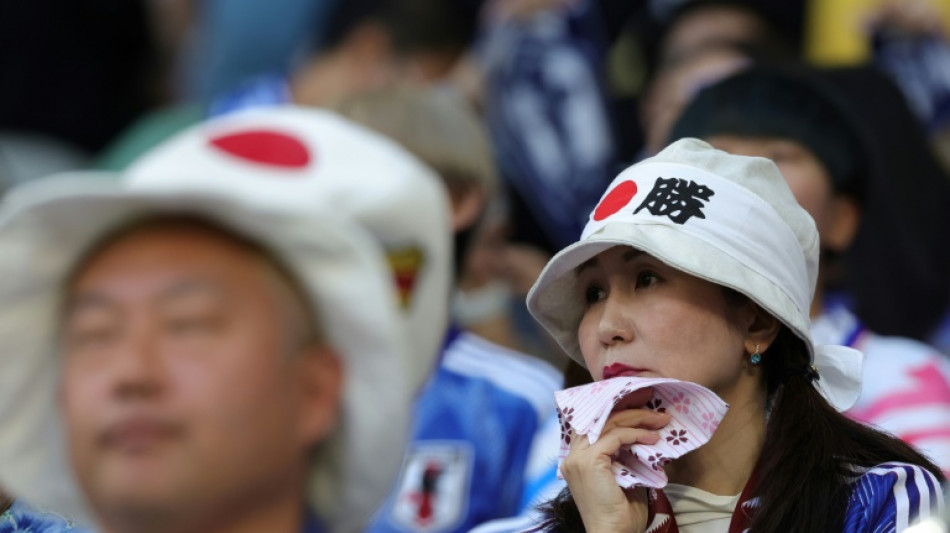
Japan warns football fans not to go to North Korea for World Cup qualifier / Photo: Giuseppe CACACE - AFP

 Britain considers 2027 state visit for Ukraine’s Zelensky

 China and Gabon Upgrade Ties to 'Shared Future' Amid Strategic Pact

 عائلة مراهقة ترفع دعوى ضد جوجل لادعاء التقصير في حماية طالب من الانتحار عبر الذكاء الاصطناعي

 Microsoft Xbox App Update for PC Delivers 60% Faster Startup and Redesigned Interface

 بودكاست 'شتامبلايتس': تحليل أفضل تسديدة في الدوري الألماني
Japan has warned football fans not to attempt to travel to "hostile" North Korea for next week's World Cup qualifier in Pyongyang.
The Tokyo foreign ministry "strongly requests the general public to refrain" from attending the match on March 26, the first for the two sides in North Korea since 2011.
"As you know, North Korea takes a hostile view of Japan and travel is not recommended for the general public," it said on X, formerly Twitter.
Japan and North Korea play in Tokyo on Thursday as part of qualifying for the 2026 World Cup, before the return fixture next week.
Japan's long-standing advice for its nationals is not to travel to North Korea but it does not expressly forbid them from doing so. The two countries do not have diplomatic relations.
It was unclear how many fans, if any, would try to travel. They would need a North Korean visa to do so.
Fourteen government officials will however accompany the Japan team for the match as well as a small number of media outlets, Japanese broadcaster NHK reported.
The first leg of their women's playoff for the Paris Olympics was switched from the North Korean capital to neutral ground in Saudi Arabia last month.
Relations have long been dogged by issues including compensation for Japan's brutal occupation of the Korean peninsula between 1910 and 1945 and more recently by Pyongyang's firing of missiles over Japanese territory.
The abduction by North Korean agents of Japanese citizens in the 1970s and 1980s -- forced to train spies in Japanese language and customs -- has also long been a major point of contention.
Thursday's match in Tokyo was expected to see a sizeable contingent of North Korean supporters from among Japan's long-standing ethnic Korean community of about 300,000 people.
Most are descendants of civilians taken from their homes during Japan's colonisation of the Korean peninsula.
K.AbuDahab--SF-PST