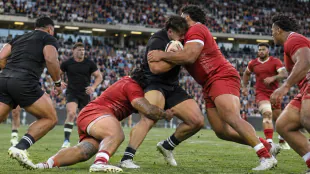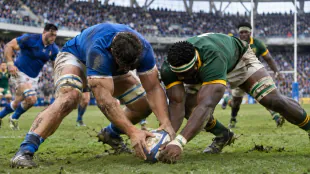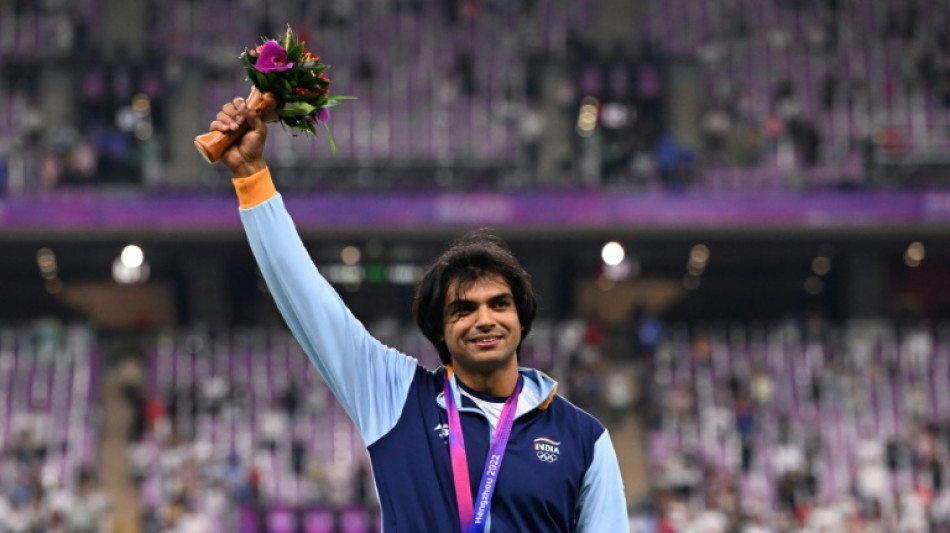
Show me the money: countries dangle rewards for Asian Games glory / Photo: WILLIAM WEST - AFP

 ماس يحذر من تداعيات القيود الإسرائيلية على المنتجات الغذائية الفلسطينية في القدس الشرقية

 Rene Eyre Revisits Autobiographical Performance 'Say A Little Prayer' in London

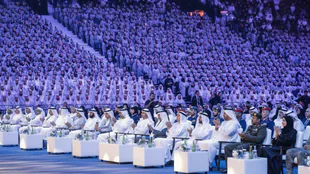 UAE's HCT Holds Record Graduation and Announces Major Training Expansion
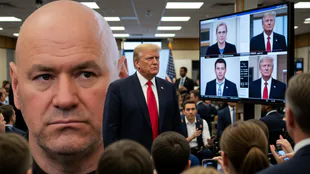
 NASA Awards $10B Lunar Contract Framework to SpaceX, Blue Origin

 Katy Perry Tells Fans Ex-Husband Russell Brand 'Should Be in Jail' During UK Concert

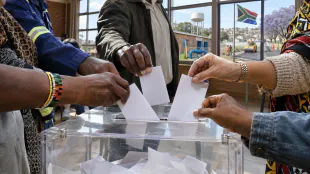 South African election results renew debate over identity-based voting

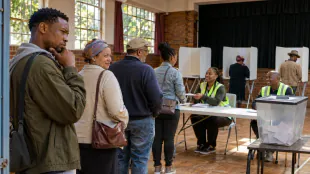 South African voters report smoother local election but declining IEC trust

 Dolly Parton museum and Nashville hotel open after singer’s death

 George and Amal Clooney attend New York political-comedy reading
Countries desperate for Asian Games success are dangling houses, money, cars and even government jobs as incentives to athletes to bring home medals from Hangzhou.
Competitors at the Games, which end on Sunday, publicly say they are more interested in glory than financial gain.
But medals, especially of the gold variety, often come with a windfall that can change the lives of athletes and their families, especially those who are amateurs rather than professionals in their sport.
India doles out $36,000 for a gold at the Asian Games, a fortune in a country where tens of millions of people live below the poverty line and average annual income is $2,380.
For some Indian competitors, the even bigger prize is a stable salary -- Olympic and Asian Games medallists can have a government job if they want one.
Wrestler Vinesh Phogat was promoted to the rank of a senior railway official after her gold at the Asian Games in Jakarta in 2018, joining fellow wrestlers Bajrang Punia and Sakshi Malik.
Singapore's National Olympic Committee awards a $146,000 prize to individual athletes who clinch gold, a hefty sum but barely enough to buy a small flat in the wealthy city-state.
Indonesia will gift a free home for any Asian Games medallist -- as long as they provide the land to build it on.
"For those who have land, we will build houses," Indonesia's Asian Games chef de mission Basuki Hadimuljono told local media.
If Kuwaiti gold medallists Abdullah Al-Rashidi and Yaqoub Al-Youha do not already drive, now would be the time to learn.
Because a Kuwaiti businessman has offered to buy a car for those who win gold, with 60-year-old shooter Al-Rashidi set to be gifted a Volvo.
In South Korea, male athletes who win gold at the Games gain exemption from at least 18 months of military service.
It is controversial back home, with one triumphant competitor in Hangzhou declining to talk about it when asked by AFP.
- 'A relief' -
In most countries' cases, the rewards are cash.
But asked what it meant to them, athletes at the Games invariably said they were motivated by higher goals than mere material reward.
National pride is the most usual refrain, while Philippine boxing great Felix Marcial is fighting to make his family proud.
"It's for myself, for my wife, for my country, and for my father because I'm not here right now if not because of my father," he told AFP after winning his semi-final on Wednesday.
But there's no doubt getting a monetary boost can be life-changing for some athletes, especially those from a poor background.
Neeraj Chopra is a world, Olympic and Asian Games champion, but it was not always a gilded life for the Indian javelin great.
After a success in 2017, and before becoming the icon he is today in India, Chopra became a junior commissioned officer in the army.
"My father is a farmer, mother a housewife... nobody in my family has a government job so everybody is happy," Chopra said after joining the army.
"For me it is a sort of a relief because now I am able to help my family financially besides continuing with my training."
burs-tjx/pst
L.AbuAli--SF-PST