Europe, Africa and South America to host games in 2030 World Cup: FIFA / Photo: Anne-Christine POUJOULAT - AFP

 ماس يحذر من تداعيات القيود الإسرائيلية على المنتجات الغذائية الفلسطينية في القدس الشرقية
 Rene Eyre Revisits Autobiographical Performance 'Say A Little Prayer' in London
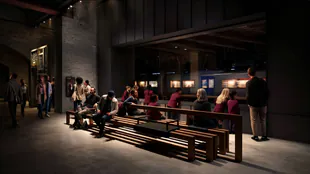
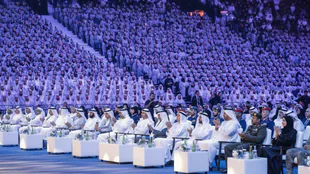 UAE's HCT Holds Record Graduation and Announces Major Training Expansion
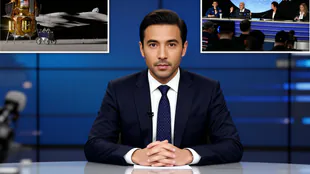 NASA Awards $10B Lunar Contract Framework to SpaceX, Blue Origin
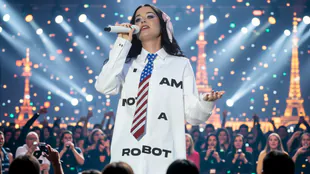 Katy Perry Tells Fans Ex-Husband Russell Brand 'Should Be in Jail' During UK Concert

 South African election results renew debate over identity-based voting
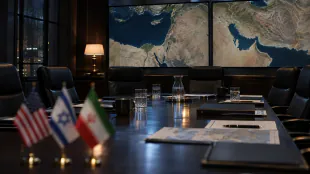
 South African voters report smoother local election but declining IEC trust

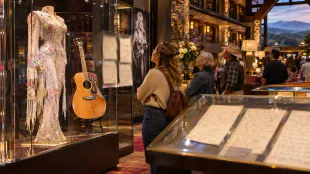 Dolly Parton museum and Nashville hotel open after singer’s death

 George and Amal Clooney attend New York political-comedy reading
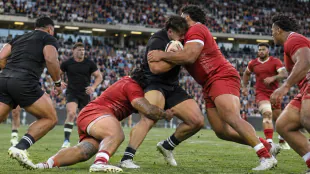
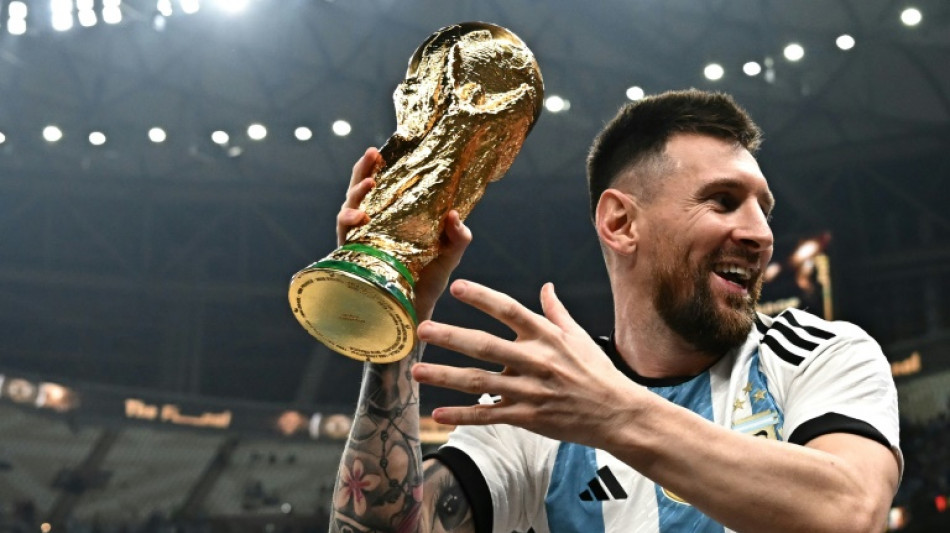
Morocco, Portugal and Spain will be joint hosts for the 2030 World Cup but games will also be played in Uruguay, Argentina and Paraguay as the footballing showpiece celebrates its centenary, FIFA announced on Wednesday.
FIFA said in a statement that the matches in South America, one each in Montevideo, Buenos Aires and Asuncion, were part of the celebration to mark 100 years since the first World Cup in Uruguay.
The bulk of games will be played in the three host countries.
The announcement puts an end to competition between two major bids, one led by Spain and Portugal and the other from Argentina, Uruguay, Chile and Paraguay.
Once the technical criteria have been validated, the governing body of world football will make official the award of its flagship event in 2024.
But, following the "unanimous" approval by the FIFA Council, the way seems clear for this unprecedented intercontinental format, which promises complex political and logistical challenges and raises further questions about the environmental impact of major sporting events.
At one stage, Spain and Portugal had included Ukraine in their bid, saying they wanted to send "a message of solidarity and hope" and pay tribute to the "tenacity and resilience" of a country invaded by Russia in February 2022.
Morocco, a five-time unsuccessful candidate to host the tournament, joined them in mid-March.
The agreement between European body UEFA and its African (CAF) and South American (CONMEBOL) counterparts confirms the withdrawal of Ukraine and also that of the South American countries, in exchange for a symbolic concession.
"In a divided world, FIFA and football are uniting," said FIFA President Gianni Infantino. "The FIFA Council, representing the entire world of football, unanimously agreed to celebrate the centenary of the FIFA World Cup, whose first edition was played in Uruguay in 1930, in the most appropriate way."
The statement said a "centenary ceremony" will be held "at the stadium where it all began", in Montevideo's Estadio Centenario in 1930, when the event brought together 13 teams in a single host city - compared with 32 for the 2022 World Cup in Qatar and 48 from the 2026 World Cup in North America onwards.
FIFA also said it was inviting bids from the Asian and Oceanian continental confederations for the 2034 World Cup.
It also said it was lifting its ban on Russian under-17 teams competing internationally. This follows UEFA's decision last week to lift a ban on Russia's youth sides.
N.AbuHussein--SF-PST