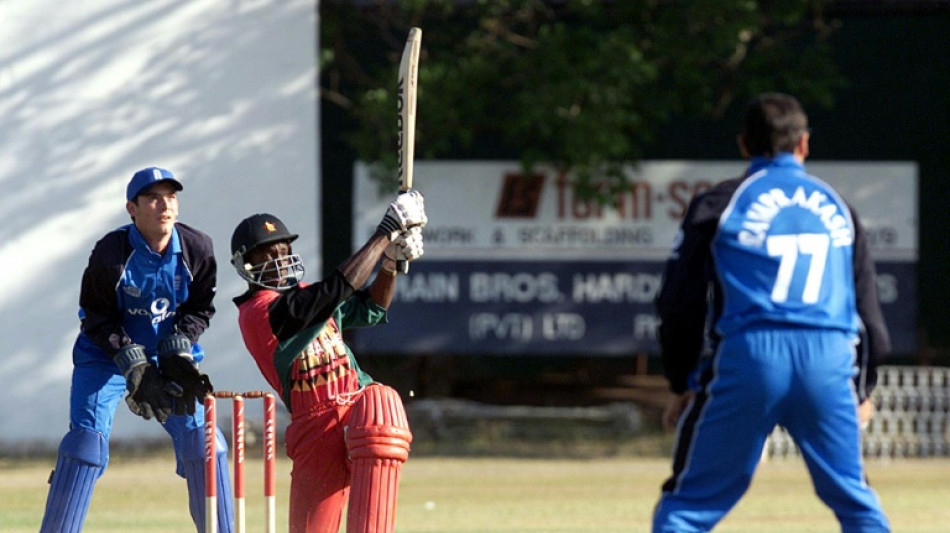
When the 'death of democracy' overshadowed cricket at 2003 World Cup / Photo: © AFP/File

 How haze from Indonesian fires impacts Southeast Asia
 Trump sends envoys to Moscow, Kyiv with new plan to 'end war'
 'Mini-dictatorship': Students slam Argentina-run residence in Paris
 The disgraced banker stirring the pot in Brazil's Supreme Court
 Panama Canal begins reducing crossings due to El Nino
 Trump again seeks to remove protections for wolves
 'Getting there' - Alcaraz into US Open last 16 along with Sabalenka
 Isak ready to show world his quality, says Van Dijk
 Stuttgart cruise past Cologne to bounce back from Bayern thumping
 'Smart, aggressive' Alcaraz into US Open last 16
 Isak fires Liverpool to first win under Iraola at Ipswich
 Stocks slip as robust US jobs data stokes rate hike odds
 Mistrial declared in case of US woman who killed her three children
 Seville, Alfred win at Diamond League finals, Duplantis hit with injury

 Moody’s Assigns First-Time Insurance Financial Strength Ratings to Freedom Insurance and Freedom Life

 Trump says envoys taking plan to 'end the war' to Moscow, Kyiv
 US Football Hall of Fame revamps selection process
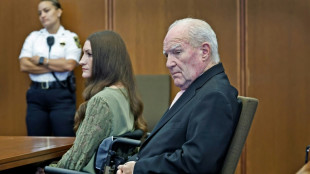 Judge declares mistrial in case of US woman who killed her children
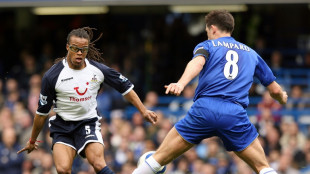 Edgar Davids art thief misses sentencing after being 'knocked out by luggage'
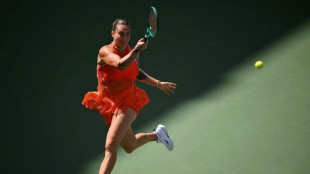
 Pegula rallies to reach US Open fourth round
 Defending champ Sabalenka leads way into US Open fourth round
 Bayeux Tapestry 'virtually unchanged', UK museum says, after France spots broken threads

 More than 120 killed in Yemen's worst clashes in years: sources
 Germany hunts climate activist suspected of power grid sabotage

 5 EU countries aim to send rejected migrants to 'return hub' by 2027
Henry Olonga, by his own admission, was never the greatest cricketer to play the game but the Zimbabwean fast bowler left an indelible mark on the Cricket World Cup of 2003.
That was the year that he and teammate Andy Flower hit the front pages with their simple "Death of Democracy" protest against the authoritarian government of Robert Mugabe, spelling the end of both of their international playing careers.
At the previous edition in 1999, Olonga wrote himself a different chapter on the field when he took three Indian wickets in one over to secure a wholly unexpected three-run win in Leicester.
The protest, however, was a different fox altogether.
"I had nothing to gain," Olonga told AFP in a Zoom interview from his home in Adelaide.
"I had a decent lifestyle, I was paid well, I had some money stashed away, I had bought a house in Zimbabwe, a plot of land, I had a fiancee. Life was good.
"But I felt a deep urge to do what we did because I believed in the cause. I still do."
On the morning of Zimbabwe's opening match against Namibia, February 10, 2003, at the Harare Sports Club, Olonga and his white teammate Flower released a statement to the press saying they would be wearing a black armband for the duration of the World Cup.
"In doing so, we are mourning the death of democracy in our beloved Zimbabwe," it read. "We are making a silent plea to those responsible to stop the abuse of human rights in Zimbabwe. We pray our small action may help to restore sanity and dignity to our nation."
It was an immensely brave thing to do in a country that was ruled by the iron fist of Mugabe who had been in power since 1980 and would retain it until he was removed and replaced by Emmerson Mnangagwa.
As the soldiers took up post around the boundary with their AK47s, the foreign press lapped it up with many proclaiming Flower and Olonga as heroes.
Locally, however, it was met with mixed reactions, especially by other black Zimbabweans, something that still rankles with Olonga.
"There's a sense of disappointment that our message wasn't really something that was possibly attainable," says Olonga.
"We didn't change anything. We didn't transform the nation into this democratic fair country that we envisaged.
"I look back on the black armband and the very people that we were trying to help, the subjugated, oppressed and downtrodden, these were the very people who turned against me. I felt vilified by my own people.
"There's much talk of Stockholm syndrome, loving the abuser. That has made no sense to me."
Partly because of England's refusal to play in Harare, Zimbabwe qualified for the Super 8 part of the 2003 World Cup.
Olonga's final act on an international cricket field was having Kennedy Otieno leg before as Kenya romped to a seven-wicket win in Bloemfontein.
- 'Dignity' -
By then, Olonga was effectively on the run. His fiancee called it off and Olonga was charged with treason. He and Flower both left for England.
Unlike Flower, who played for Essex before going on to coach England to Ashes success in Australia, it was the end of Olonga's cricket career, aged 27.
He had taken 68 wickets in 30 Tests at an average of just under 40 and played 50 one-day internationals.
"I was quite a mediocre player but I was amazing on a couple of occasions," he says remembering that spell against India in 1999.
"And I was injury-prone so I had maybe three or four years left, no more.
"So I don't feel there was a tremendous loss in leaving the game. I don't look back with any form of regret on leaving when I did.
"At least I left the game with a bit of dignity."
Olonga struggled in England, not able to get a professional contract and bouncing bits of commentary, but he met physical education teacher Tara Read. They married, had children and then moved to Australia.
In the 20 years since the armband protest Olonga has yet to return to Zimbabwe where the sport has often struggled.
Zimbabwe failed to qualify for the 2023 World Cup which gets underway in India next week.
"The simple answer is I haven't felt safe," he says when asked why.
"Twenty years on I don't know if safety is a concern. It may not be. Many people have returned, Andy Flower has returned... It hasn't appealed to me."
Olonga is now a proud Australian citizen, to the point where he supported them during the recent Ashes series against England, and works as a singer - he appeared on the local version of 'The Voice' - and public speaker.
The 2003 protest is largely forgotten now by a world that has other, more pressing issues against which to rail. For Olonga, though, no matter how distant, that chapter will always be there.
"It's something I can't get away from. I don't try to get away from it," he says ruefully.
"But when I first started public speaking I'd spend about 20 minutes on it, now I just hint at it.
"For me it's been in the blink of an eye but it's a long time ago. Two decades. Life moves on, the sport has moved on."
N.Awad--SF-PST