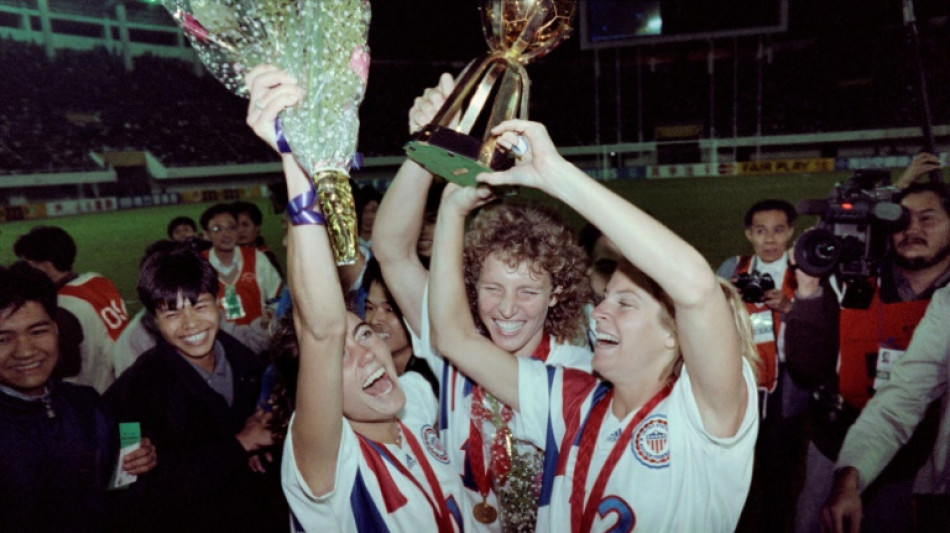
Women's World Cup started out with shorter games, outsized kits / Photo: Thomas CHENG - AFP

 Australia defends Pacific climate meeting despite doubts on attendance
 Iran attacks US sites after American strikes, wedding deaths

 Stocks drop, yields at three-decade highs on Mideast flare-up
 EU summons Russian envoy, eyes sanctions after Germany drone 'attack'
 Stocks drop as yields and oil prices spike on Mideast flare-up
 Cricketers to get best rooms at Asian Games, says Japan chief

 Zverev out-lasts Sonego in wild five-setter to advance at US Open
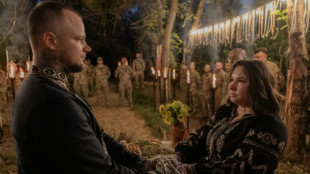 Amid war, Ukrainian soldiers celebrate love at ritual wedding

 Venice to roll out red carpet for Clooney on opening night
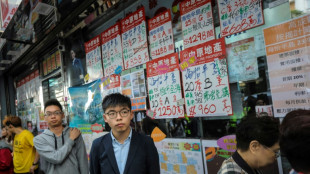 Hong Kong democracy activist Wong pleads guilty to foreign collusion: AFP
 Stocks sink, yields at multi-decade highs and oil spikes on Mideast flare-up
 US defends Trump Venezuela oil deal as energy secretary lands in Caracas
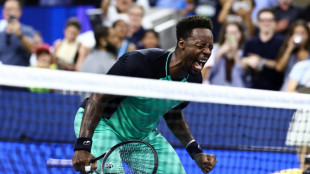 Jubilant Monfils celebrates birthday with US Open win
 The Japanese idealist behind the last deradicalisation NGO in Somalia
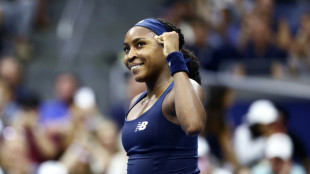 Rybakina, Gauff advance as Zverev launches US Open campaign
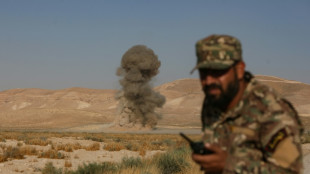
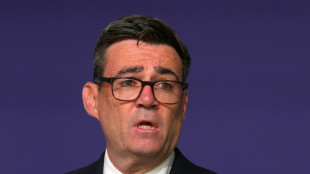 Macron in Britain to help unveil tapestry, hold Burnham talks
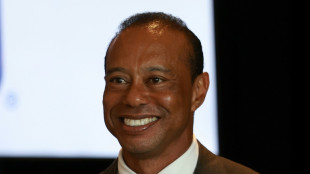
 China's Xi to hold talks with Sisi in rare visit to Egypt

 Confident Gauff reaches US Open 2nd round with straight-set win
 US postal whistleblower warns ballot system could disrupt midterms

 John Ternus takes over as Apple enters era of AI, foldable phones
 Second-ranked Rybakina eases into US Open 2nd round
 Man City sign Fernandez, Ndiaye as Premier League clubs set new spending record
 Alcaraz aims to step it up in round two of US Open title defense

 Honduran judge drops corruption charges against ex-leader Hernandez
 Mudryk joins Spurs on loan from Chelsea after doping ban ends
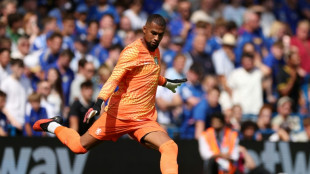
Asako Takakura played in the first Women's World Cup in 1991 and recalls with a hint of disdain how the matches lasted 80 minutes instead of the usual 90.
"At the time football was still thought of as a man's sport," Takakura tells AFP, casting her mind back to a tournament in which only 12 teams took part.
Fast forward and the ninth edition of the Women's World Cup kicks off on Thursday in Australia and New Zealand with 32 teams and global interest at an all-time high.
Takakura has seen that development firsthand. After playing for Japan at the 1991 and 1995 World Cups, she coached the national side at the 2019 edition.
The 1991 World Cup took place in the Chinese province of Guangdong and the United States beat Norway 2-1 in the final in front of 63,000 spectators. They have won it three more times since.
Attendances were boosted by free tickets given to the public.
Back then, games were two halves of 40 minutes.
"Goodness gracious, the girls can't last 90 minutes," US star striker Michelle Akers once said in a sneeringly sarcastic riposte.
The length of matches changed for subsequent Women's World Cups after many teams said there should be no difference.
"There was an atmosphere where people wondered if women could play," Takakura says of attitudes in 1991.
"At least they didn't make the pitch smaller."
Governing body FIFA's technical report after the tournament highlights some of the wider issues women's football faced.
Many of the teams said they generally struggled to find football boots and goalkeeping gloves to fit women.
"The players' need for good quality equipment... in small sizes had so far only rarely been satisfied," the New Zealand delegation was quoted as saying in the report.
- Paying lip service -
Leslie King was captain and goalkeeper for New Zealand at the 1991 World Cup, where a squad made up mostly of part-time players exited in the group stage.
Now 59, she has fond memories of the tournament -- big crowds, especially when they played China, a grand hotel, mountains of good food and an opulent banquet hall.
But King believes at that point, FIFA was far from convinced about having a Women's World Cup.
The first World Cup was officially called the "FIFA Women's World Championship for the M&M's Cup". FIFA was reluctant to call it a World Cup.
"I don't think they put a lot of stock in it, I think it was to a certain extent lip service for the women's game at that point," she recently told AFP from Philadelphia in the United States.
Takakura, who now coaches Shanghai in the top-tier women's league in China, said that back then "no one wanted to put on a Women's World Cup".
"A few years before 1991, a Norwegian woman asked during a FIFA congress why there was a men's World Cup but not a women's World Cup," she said.
"The feeling then became that they had to have one."
- 'Something to dream about' -
On the pitch, women's football has developed significantly too.
"Physically, I think the players are taller, stronger, in better shape and technically better," King said.
"I think a lot of that you can attribute to the professional leagues that are certainly popping up around Europe."
Takakura believes that having a World Cup has helped push women's football along.
"Having the World Cup has made things more organised," she said.
"At first, lots of countries, including in Europe, were negative about women's football.
"But having the tournament meant that each football association had to do something about it."
But much work remains to be done, she cautioned, including increasing wages so they are more in line with what the men earn.
"It's not just about getting paid lots of money -– it's about the value of sport and giving children something to dream about, something that they can make an effort in," she said.
"It started as a man's sport, but there is a different enjoyment and value to be had in the women's game."
B.AbuZeid--SF-PST