NBA adopts flopping penalty, expands coach's challenges / Photo: Garrett Ellwood - NBAE / Getty Images/AFP/File

 Amid war, Ukrainian soldiers celebrate love at ritual wedding

 Venice to roll out red carpet for Clooney on opening night

 Hong Kong democracy activist Wong pleads guilty to foreign collusion: AFP

 Stocks sink, yields at multi-decade highs and oil spikes on Mideast flare-up

 US defends Trump Venezuela oil deal as energy secretary lands in Caracas

 Jubilant Monfils celebrates birthday with US Open win
 The Japanese idealist behind the last deradicalisation NGO in Somalia
 Rybakina, Gauff advance as Zverev launches US Open campaign

 Macron in Britain to help unveil tapestry, hold Burnham talks
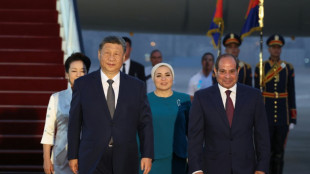 China's Xi to hold talks with Sisi in rare visit to Egypt
 Confident Gauff reaches US Open 2nd round with straight-set win

 US postal whistleblower warns ballot system could disrupt midterms

 John Ternus takes over as Apple enters era of AI, foldable phones
 Second-ranked Rybakina eases into US Open 2nd round
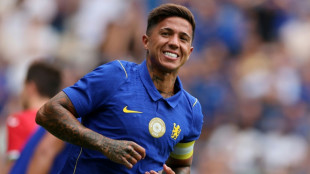 Man City sign Fernandez, Ndiaye as Premier League clubs set new spending record
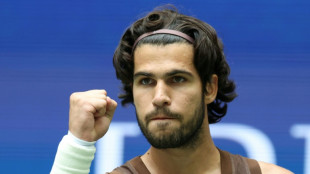 Alcaraz aims to step it up in round two of US Open title defense
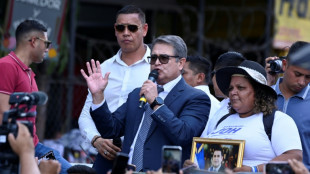 Honduran judge drops corruption charges against ex-leader Hernandez
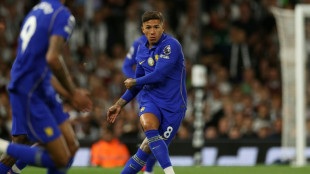
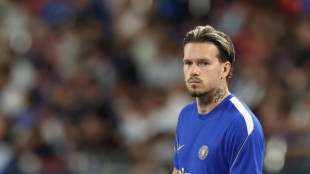 Mudryk joins Spurs on loan from Chelsea after doping ban ends
 What's next after judge strikes down New York's landmark climate fund law
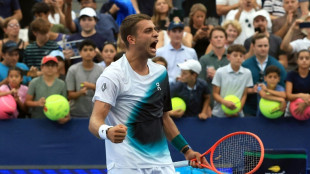 Cobolli claws out five-set victory at rain-hit US Open
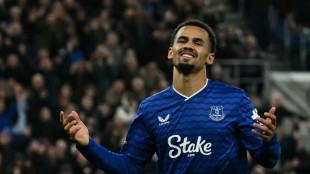 Ndiaye seizes 'chance of a lifetime' in Man City move
 Global bond sell-off, surging oil prices send markets into the red
 Zuckerberg, Musk make plea at G20 for more AI data centers

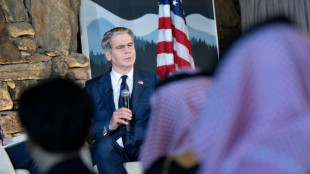 'Discomfort' at G20 finance talks as US hosts Russian minister
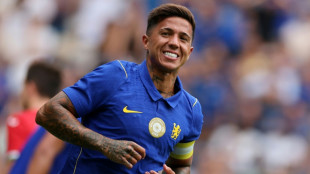 Man City set to sign Fernandez for record fee, Ndiaye on deadline day
NBA team owners approved rule changes on Tuesday creating an in-game flopping penalty and expanded coach's video replay challenge starting next season, the league announced.
The NBA's Competition Committee -– which includes players, coaches, referees, club owners, team executives and representatives from the National Basketball Players Association -- unanimously recommended both changes to the full board of team owners.
The new flopping rule, adopted on a one-season trial basis, says that when a game official calls a player for a flop -- a motion deliberately trying to entice a referee foul call on another player -- an offending player will be issued a technical foul and the opposing team will be awarded one free throw attempt.
A player will not be ejected from a game based on flopping violations.
Referees will not be required to stop play to call a flopping violation, allowing teams with an offensive opportunity to keep going until the game's next natural stoppage.
Referees can call both a foul and a flopping violation on the same play.
While flopping violations are not reviewable under a coach's challenge, they can be called during a referee's replay review triggered by a coach's challenge or a referee-initiated replay review of certain types of called fouls.
The NBA will continue to look at flopping after games, with fines modified to match technical fouls, starting at $2,000 and increasing for repeat offenders.
The coach's challenge change gives teams a second challenge if their first challenge is successful.
Teams must continue to use a timeout to trigger a challenge. They would not be able to challenge without a timeout available.
Teams can continue to keep the timeout after a first challenge if successful but will not retain the timeout used for a second challenge whether or not it is successful.
M.AbuKhalil--SF-PST