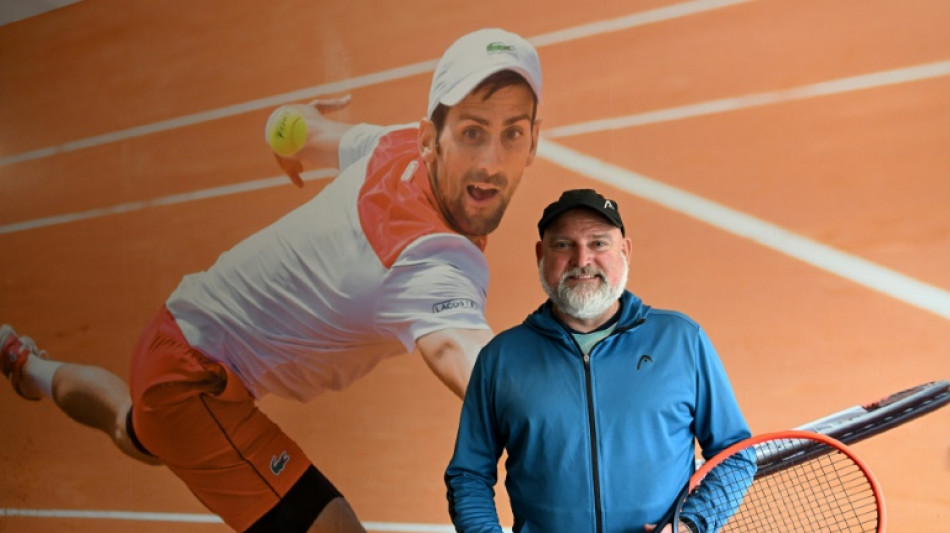
Schooled for success: Munich academy recalls 'extraordinary' Djokovic / Photo: Christof STACHE - AFP

 Man City set to sign Fernandez for record fee, Ndiaye on deadline day
 Back-to-school in Cuba a grim day with shortages of everything

 Canadian minister says Russia's G20 presence sparked 'discomfort'

 IMF reaches agreement with Senegal on new $2.2 bn loan programme

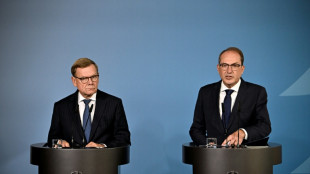 Germany blames Russia for airport drone incident, hits back with sanctions
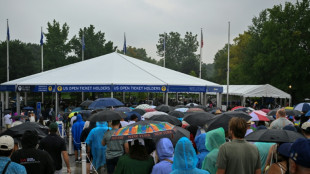
 Iran president urges return to truce, hails Russian support

 Aster and World Liberty Financial Launch USD1 RWA Boost: Phase 1, Offering 125M $WLFI + 6.25M USD1 in Rewards

 Tronchon sprints to Vuelta stage 10 win, Mas keeps red jersey
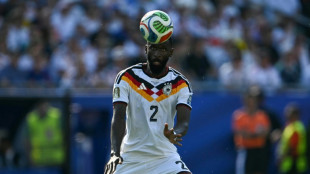 Germany defender Rudiger announces international retirement
 Musk defends AI data centers, slams EU rules at G20
 Activists blame Kenya for Ugandan opposition figure's plight

 Iran president offers US olive branch, hails Russian support
 TrustFinance Community Choice Awards 2026 Opens Global Voting
 Nepal disaster a climate 'warning signal': foreign minister

 France winger Diaby returns to Leverkusen until 2031

 Barcelona confirm Jesus arrival from Arsenal
 EU official says it's not time to 'normalize' Russia at G20 finance talks

 RedHill Announces Transformational Acquisition of Commercialization Rights to Ferring’s Rebyota® and Clenpiq®
 TrendEadvisor Launches Global Multi-Asset Platform Combining Online Investing with Social Trading

 India's top court drops criminal cases against protesters
 Philippine couple married in hip-deep floodwaters

 Villa sign Senegal winger Mbaye from PSG

 Former Peru minister last-minute contender for UN labour agency helm

 Messi legacy will 'live forever', says Beckham

 'Literally tasting the smoke': Malaysians suffer as haze worsens
Even when Novak Djokovic was a teenager, his coaches were sure that there was "just one objective in his head -- to become world number one".
At the tennis training school in the suburb of Munich, where the Serbian spent his formative years, his trainers recalled a youth who had a "starving desire" for the game.
"At lunch break, the first to finish eating was always Nole," said his coach for two years, Wolfgang Reiner, referring to the player by his nickname.
"He would then immediately look for someone to play tennis with him before training resumed. Once, he even asked the security guard," said Reiner, with a chuckle, of his former protege who would become one of tennis' most prolific stars.
On Monday, Djokovic will begin his campaign to win Wimbledon for an eighth time, just weeks after scooping a record-breaking 23rd men's Grand Slam title at the French Open in Paris.
It was in 1999, when his home country Serbia was the target of a NATO bombing campaign over Kosovo, that an adolescent Djokovic arrived in Germany.
Former top 10 star Niki Pilic had opened the doors of his eponymous academy to the budding star in Oberschleissheim, a suburb in the north of Munich.
Even today, pictures of Djokovic grace the corridors of the tennis academy where he trained aged 12 to 16.
"He always played on court number 4 or number 8, said Reiner, rattling off a series of anecdotes about the boy with the "exceptional backhand".
Djokovic also had a talent for mimicry that, with Andre Agassi and Pete Sampras his favourite targets.
When he was not clowning around, he was endlessly hitting the ball against the wall or looking for a partner to play against, again and again, said Reiner.
On the coach's mobile phone, there is a rare photo of a teenage Djokovic with a tennis bag on his back.
He already had "very wide open eyes" that characterises him when he is in full concentration, "like two big bubbles", said Reiner.
- 'Tennis father' -
Even at that age, Djokovic's talent was clear to Pilic, a coaching legend who was Germany's team boss when they scooped the Davis Cup with Boris Becker in 1988 and 1989, and with Michael Stich in 1993.
"Djokovic had a discipline that was extraordinary for a boy of his age, mental strength and an excellent physique. He was already a little pro who had only one aim in his head: to become world number one," Pilic, 83, told AFP, speaking from his home in Croatia.
Djokovic himself has said Pilic "was my tennis father, who was and still is one of the most persevering and passionate tennis personalities I've ever met in my life".
The 36-year-old Serbian has said he had "a lot of luck" to have met Pilic, and to have been able to develop his game at a time when his parents had "a lot of difficulties -- financially and emotionally".
At the academy, Djokovic spent four hours a day playing tennis and another hour to build up his strength.
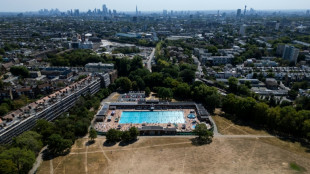
When the weather permitted, he and a dozen other teens of his age would run around the rowing pool next to the complex which had been built in 1972 for the Olympics.
In the summer, the youths would leap into the pool to cool off.
- 'Thinks, lives, sleeps tennis' -
Between 1999 and 2003, Djokovic's junior development was meteoric.
Between his stays of two to three months in Munich, he would take on tournament after tournament.
"He had a phenomenal level of the game, he would beat his opponents to a pulp. It was a sign but we could not know at that time that he would become such a giant," said Pilic, refering to a tournament in 2001 when Djokovic became European champion aged under 14.
"We said wow, what is that? He was really incredible," said Nic Marschand, who also trained Djokovic during his Bavarian years.
The German trainer recalls a player "who really wanted to learn" and who "moved really well".
"All his strokes were good, he really felt the game. And tactically, he was always thwarting his opponent. He really had an extraordinary vision," he said.
From time to time, Djokovic would show his cheeky side, but "he always worked 10 times harder than the others. He wanted to know how to improve himself all the time."
His coaches were unanimous in their verdict -- even if they never expected him to become a superstar, they agreed that he was a "very intelligent young man, who thinks, lives, sleeps tennis".
For Marschand, "many youths have the same talent, but they don't have the starving desire that he possessed. And that desire, it pays off."
Y.Shaath--SF-PST