-
 Bahrain MPs Approve Five-Year Wait for Repeat Hajj Pilgrims
-
Irish Study Finds No Link Between Lifetime Fluoride Exposure and Cognitive Decline

-
 David Walliams Identified as Celebrity in Sexual Misconduct Allegations After Legal Bid
-
Calgary Councillors Prioritize Affordability Ahead of Nov. 10 Budget Release

-
 Texas Gov.-elect Hinojosa Plans Rate Freeze Amid Legal Concerns
-
5 Wardrobe Design Trends Making Sydney Bedrooms Work Harder in 2026

-
 Elijah Moore Scores Career-High 29 as McNeese Sets School Records in 135-87 Win
-
Judy Schavrien’s New Book ‘There’ll Be No Dying Here’ Collects Decades of Intimate Portraits

-
 ترمب يعلن عن رغبة قوية لإنهاء حرب أوكرانيا قبل محادثات أبوظبي
-
مليبانד: الوضع الإنساني في غزة مفجع والحكومة البريطانية لن تقف مكتوفة الأيدي

-
 Honolulu Voters Reject Ranked Choice Voting in Election
-
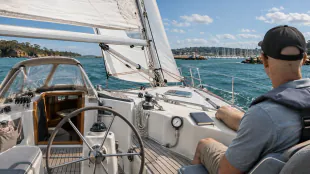
First-time boat buyers advised to assess full ownership costs
-
 Panthers expected to begin 2027 NRL season away from new stadium
-
Planning and preparation can reduce stress of interstate relocation

Mexico ultramarathon pits outsiders against Indigenous runners
Hundreds of athletes on Sunday completed an ultramarathon through a sun-bleached canyon in northwestern Mexico, with legendary Indigenous runners racing against competitors from outside the community in one of the world's most challenging distance events.
The 20th Caballo Blanco Ultramarathon started at dawn in the village of Urique in Chihuahua state, with races over distances of 80, 40 and 21 kilometers (50, 25 and 13 miles) through the rugged canyons of the Sierra Tarahumara.
The event has a festive ambiance, but it gives runners from elsewhere in Mexico and from other countries -- mainly the United States -- a chance to compete against the world-famous distance runners of the Indigenous Raramuri or Tarahumara people.
Living along the edges of Mexico's deepest canyon -- it reaches down 1,800 meters (5,900 feet) -- they have developed extraordinary cardiovascular systems, making them "the modern Spartans," as one cardiologist described them.
"It's much more than a race. Its spirit is all about sharing, about exchanges between cultures," said Fabio Meraz, a tourism official in Urique.
Festivities began there on Saturday, with children's races under a blazing sun.
The Raramuris ("lightfooted ones," in their language) often run in simple sandals, known as huaraches, made of discarded car tires.
The women run in brightly colored dresses, while the men wear loose-fitting white shorts.
Their endurance is legendary, and they often seem to fly effortlessly past runners wearing far more sophisticated shoes.
"I'm used to these huaraches," said one Raramuri participant, Irma Chavez. She said her feet aren't accustomed to more expensive shoes.
Another Raramuri runner, Maria Lorena Ramirez, who was profiled in a 2019 Netflix documentary, traded in her sandals for Nike sneakers. She finished in ninth place after experiencing severe knee pain.
Brothers Jupiter and Juan Carlos Carera, from the Mexico City area, won the 80 km race, finishing in 6 hours, 12 minutes and 53 seconds.
- 'El Caballo Blanco' -
The ultramarathon has a social function, as intended by its Mexican and American sponsors. Participants from neighboring villages head home afterward with food vouchers -- much appreciated at a time when severe drought has hurt harvests.
"The families sometimes can't feed themselves with what they grow," Chavez said.
Police and army troops were positioned Sunday to keep a discreet watch over the race. Last June, two Jesuit priests and a tour guide were murdered nearby by a suspected drug trafficker who has never been caught.
The Caballo Blanco race owes its name to its founder, Micah True, an American ultrarunner who lived for years in the area in an adobe hut.
Locals nicknamed him "El Caballo Blanco," the White Horse, after seeing the pale-looking man running hour after hour on steep canyon trails.
True founded the race in 2003 to help the Tarahumara people preserve their culture.
The 2009 book "Born to Run" by Christopher McDougall tells the story of the Tarahumara runners and True's time with them.
True died in 2012, aged 58, during a run in New Mexico.
Michael Miller, a friend of his, said True had "a sort of connection with this people and this land: to live simply, to share, to be good."
O.Mousa--SF-PST