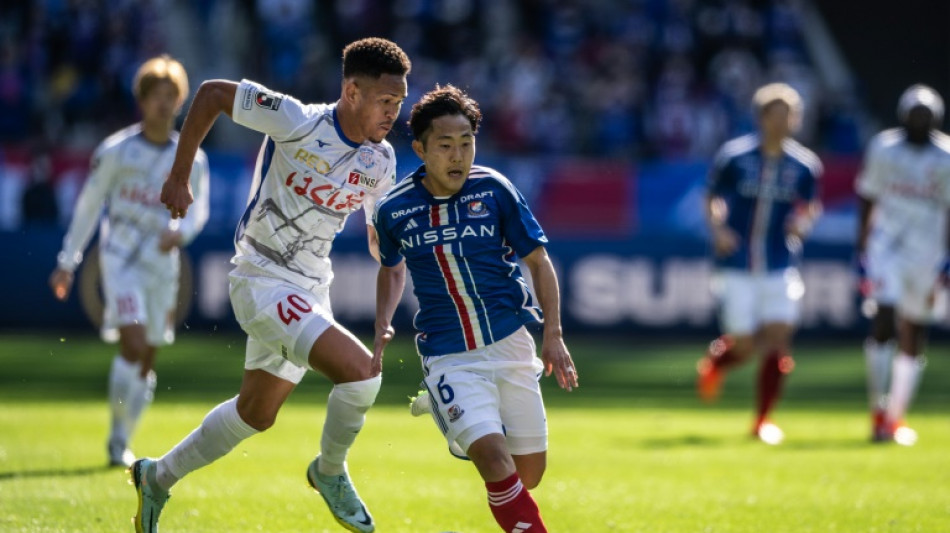
J-League propels Japan from footballing backwater to World Cup regulars / Photo: Yuichi YAMAZAKI - AFP

 Prince Harry and family arrive back in Britain: UK media

 German plan for sugar tax on Coke Zero fizzles out

 Deadly flood hits Nepal-Tibet border, hundreds unaccounted for

 Tongue says Root has left England in no doubt over conduct standards

 Flags lowered across US for country music legend Dolly Parton

 Stocks gain as oil drops on Mideast hopes
 Bouaddi joins Man City for Premier League teenage record £85.6 mn
 Reclusive Hungarian author Peter Nadas dies aged 83
 Man City sign Lille's Bouaddi for 100 mn euros

 Sooriyabandara, Mendis lead Sri Lanka fightback after follow-on

 With ropes and chants, thousands move Japanese castle
 Zurich Diamond League: five events to watch

 'Black smoke' chokes Pakistan maternity ward as hospital fire kills 14 infants

 French flight attendant wins landmark breast cancer ruling

 Sri Lanka 83-2 after India enforce follow-on in second Test

 Pakistan hospital fire kills 14 infants

 Iceland to vote on resuming EU talks in close referendum
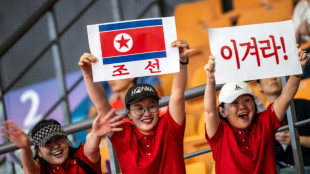 North Korea to 'bring joy' to Kim with 100 athletes at Asian Games

 US LGBTQ community mourns 'diva' Dolly Parton

 England bid to banish booze woes as Pakistan seek self-respect

 High quality, low risk: record number of Japanese in Premier League
 Stocks edge higher as oil drops on fresh Mideast hopes

 Pakistan's girls fight for their place in the boxing ring

 Five things to know about Anthropic ahead of Wall Street debut

 Social media use on the rise among Australian under-16s after ban: data

Japan was a football backwater when the J-League kicked off 30 years ago but its success has helped the sport thrive in the country and turned the national team into World Cup regulars.
The J-League starts its new season on Friday and has come a long way since it launched in 1993 in a blaze of flashing lights, rock guitars and fireworks at Tokyo's National Stadium.
The league's inaugural season featured 10 teams but there are now 60 from all over Japan playing in three divisions.
Clubs have become an important part of their local communities and J-League chairman Yoshikazu Nonomura says "football culture has taken root in Japan".
"When the league began I think a lot of people thought of it as just flashy entertainment," he said.
"Now 30 years have passed and I think we are getting close to the real J-League that we were aiming for."
The J-League brought professional football to Japan and replaced the company teams of the old corporate league with clubs representing their local areas.
Big-name signings such as Zico and Gary Lineker helped boost the new league's profile, while local players like Kazuyoshi Miura became huge stars.
The improved standard helped Japan's national team, who had never qualified for a World Cup at the time.
They made their debut appearance in France in 1998 and have never missed a World Cup since. They have also been crowned Asian champions a record four times.
The J-League is seen in China as a model to follow in how it churns out homegrown players, helps build the national side and has clubs that are run on a mostly sound financial footing.
Kengo Nakamura, who played at the 2010 World Cup, says the J-League has been "the foundation" for the national team's improved fortunes.
"The J-League started and we became professional, and with that the awareness, motivation and quality of the players increased," he told AFP.
European clubs began taking an interest in Japanese players soon after the J-League began, with Miura and Hidetoshi Nakata signing for Italian clubs.
- 'The next Mitoma' -
The flow of players moving overseas has increased over the years -- only seven of Japan's squad at last year's World Cup in Qatar were with J-League clubs.
The trend has helped Japan on the international stage, but left a void in the J-League.
"I personally want to see more J-League players in the national team because that would get people excited about the J-League," said Nakamura, who made almost 700 appearances for Kawasaki Frontale.
"If the national team play and then you say to people, 'Ok, let's watch the J-League now,' they say, 'Well, who can we watch?'"
Frontale have won the J-League four times in the last six seasons but have seen five Japan internationals, including Brighton winger Kaoru Mitoma, leave over the past two years.
Nakamura thinks it will be difficult to stop players moving to Europe and believes the trend "might even accelerate" in the years to come.
But he also says J-League clubs need to make sure they "bring in money so they can produce the next Mitoma" when players depart.
"There are still cases where players complete their contract and leave for Europe without the club getting anything for them, which is very damaging," he said.
"The challenge for J-League clubs is to make sure they are properly compensated for transfers."
- Life-changing -
The league still attracts a small number of well-known players, albeit usually past their prime.
World Cup winners Andres Iniesta, Fernando Torres, David Villa and Lukas Podolski have all played in Japan in recent years.
Iniesta is still at Vissel Kobe and preparing to begin his sixth J-League season aged 38.
Defender Tomoaki Makino, who played with Iniesta at Kobe last season before retiring, says the league needs those big names because it raises the overall quality.
"It also puts a good kind of pressure on the whole club, for example with medical facilities, publicity and recruitment," he said.
Nakamura was 13 when he watched the J-League's opening game on television.
"It made me want to play in the J-League," he said.
"I think it gave a lot of children that dream. In a way, it was a moment that changed my life."
K.Hassan--SF-PST