
-
 Hungary cuts anti-LGBTQ measures from Orban-era law
-
Activist Thunberg joins France student rally after violence at protests
-
 Tech stocks slump on AI jitters; oil falls
-
Archer and Bethell in England squad for Australia ODI series
-
 ePlanet Brokers Publishes H1 2026 Transparency Report and Highlights Best Broker 2026 Award
-
Formula One to return to Africa in 'early 2030s' in Rwanda
-
 Van Gogh work unseen in public for 60 years on show in Hong Kong
-
US actor Selma Blair charged with assault after alleged flight altercation

-
 Prosecutors drop most impeachment charges against Philippine VP Duterte
-
Hungary cuts anti-LGBTQ legislation from Orban-era law

-
 Hypersonic weapons highlight arms race on the Korean peninsula
-
'Our future is being robbed': Greta Thunberg joins France student protests
-
 Fiji appoint ex-Springboks boss White as coach ahead of World Cup
-
Late superstar Anita Mui's ashes missing in Hong Kong

-
 Hungary to reverse Orban-era anti-LGBTQ legislation
-
'No choice': IMF says developing countries must cut spending despite war shock
-
 Allen rushes Bills to thrilling 37-34 win over Rams
-
Boasting South Korea footballers spark rethink of military service exemptions

-
 India youth shift tactics as police clamp down on election protest
-
Five dead as Hurricane Simon, Rachel pummel Mexico's Pacific coast
-
 Malaysia's Firefly extends flight cancellations due to haze
-
Seoul, Tokyo stocks plunge as Asia suffers fresh tech rout
-
 IMF upgrades 2026 growth forecast but warns of 'split' outlook
-
Damaged and drained, Indonesia's peatlands go up in smoke
-
 Infantino could pull off 'Houdini' act as critics struggle for candidate
-
Dominant Australia wary of Pacific threat at Rugby League World Cup

-
 France braces for fresh nationwide student demonstrations
-
Pope to be admitted to hospital for lung operation
-
 Ahead of Israel vote, desert town becomes frontline against ultra-Orthodox expansion
-
Samoa's McFarland welcomes 'massive' arrival of ex-All Blacks for World Cup run-in
-
 El Nino Watch: the impacts around the world this week
-
Brewers beat Dodgers 7-4 to extend MLB playoff lead

-
 Man City, PSG clash at contrasting time for state-backed projects
-
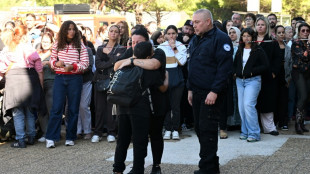
Teenager shoots headmaster, teacher at French school
-
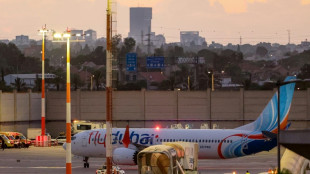 Melbourne imam denies links to suspected flydubai hijacker
-
'Breaking Bad' actor RJ Mitte dead: representatives

-
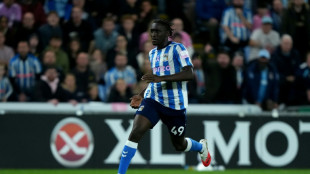 Coventry crush Newcastle to climb out of relegation zone
-
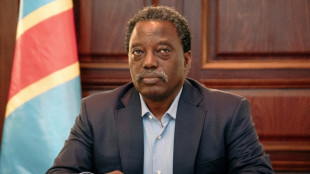
Former DR Congo president Kabila forms new force with M23 armed group
-
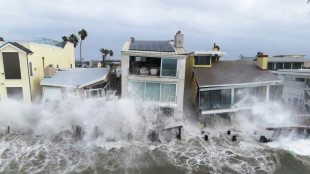 'Devastating' waves leave California beach homes on brink of collapse
-
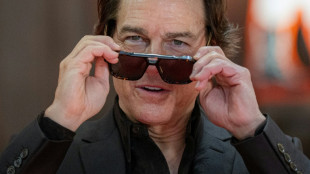
Tom Cruise's 'Digger' tanks, leaving studio with $250 mn hole
-
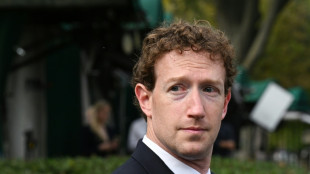 Meta says its new AI models on par with OpenAI, Anthropic
-
US actress Selma Blair arrested after flight altercation

-
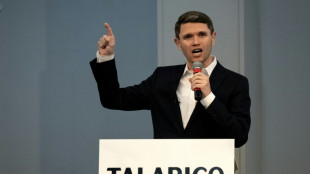 Talarico rejects mental health conspiracy theory after return from flu
-
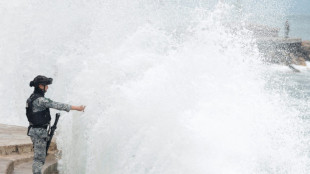
One dead as Hurricane Simon creeps along Mexico's Pacific coast
-
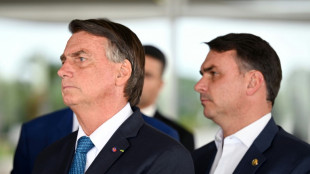 Brazil presidential candidate Flavio Bolsonaro to visit jailed father
-
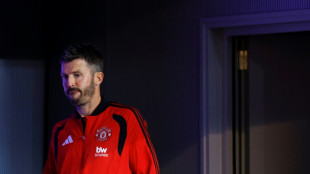
Carrick's Man United 'hungry and eager' to fix worst start in decades
-
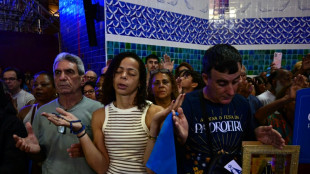 Brazil's patron saint reappears in polarized election campaign
-
Fury as US federal agents search anti-Trump lawmaker's home
-
 US Open champ Zverev to become tennis world number one
-
One goal enough for Flick as Barca enter Galatasaray cauldron
European Space Agency names new astronauts, agrees record budget
The European Space Agency announced five new career astronauts as well as history's first astronaut recruit with a disability on Wednesday after adopting a record budget to fund its projects.
The two female and three male career astronauts "will start working immediately," ESA director-general Josef Aschbacher told a ministerial council meeting in Paris.
From more than 22,500 applicants, the agency chose France's Sophie Adenot, Spain's Pablo Alvarez Fernandez, Britain's Rosemary Coogan, Belgium's Raphael Liegeois and Switzerland's Marco Sieber.
They start training next year, with a first mission into orbit not expected until 2026.
They will join the astronauts from the ESA's previous 2009 astronaut class, including Britain's Timothy Peake and France's Thomas Pesquet, one of whom will go to the Moon as part of the Artemis mission.
"No one is retiring today," Pesquet told AFP, advising the new recruits to "hang on tight".
The ESA also announced the first astronaut recruit with a physical disability, Britain's John McFall, who will join a separate "parastronaut" programme.
McFall's right leg was amputated after a motorcycle accident at the age of 18. He went on to represent the UK as a Paralympic sprinter and works as a trauma and orthopaedic specialist in the south of England, the ESA said in a statement.
- New budget -
The new astronauts were named after two days of tough talks by ministers from the ESA's 22 member states meeting in Paris to decide on the agency's future funding.
They settled on a budget of 16.9 billion euros ($17.5 billion) for the next three years, a 17-percent increase from the 14.5 billion euros agreed at the last ministerial council meeting in 2019. But it is well short of the 18.5 billion requested by Aschbacher.
"With inflation being so high, I have to say that I'm very impressed by this figure," Aschbacher told the meeting.
Aschbacher said the increased funds were necessary for Europe not to "miss the train" in the face of competition in space from the United States and China.
French Economy Minister Bruno Le Maire hailed a "great success" that was "beyond expectations".
Negotiations about each country's contribution continued until the last moment before the announcement.
Germany contributed 3.5 billion euros, France 3.25 billion and Italy 3.1 billion.
The total committed remains far below US space agency NASA's budget of $24 billion for this year alone.
Earth observation programmes, which monitor climate change back on Earth, had a six percent funding increase to almost 2.7 billion euros.
Robotic and human exploration's budget jumped 36 percent to 2.7 billion, while telecommunications rose 19 percent to 1.9 billion euros.
- Rocket boost -
The budget for rocket launcher systems was increased by a third to 2.8 billion euros. Launchers, a subject of delicate negotiations, are crucial for Europe to be able send missions into space without outside help.
The ESA has struggled to get off the ground since Russia withdrew its Soyuz rockets earlier this year in response to European sanctions over Moscow's invasion of Ukraine.
The job has been made more difficult by delays to its flagship Ariane 6 rocket, which was supposed to have its maiden flight in 2020 but will now blast off at the end of next year.
The ESA has even had to resort to using the Falcon 9 rockets of its rival SpaceX to launch two upcoming scientific missions.
The negotiations were given a boost on Tuesday when France, Germany and Italy announced their support for Ariane 6, the smaller Vega-C launcher and European-made micro and mini launch systems.
The ExoMars mission, which has been delayed by Russia pulling its rockets, will go ahead with US help, Aschbacher said.
I.Yassin--SF-PST