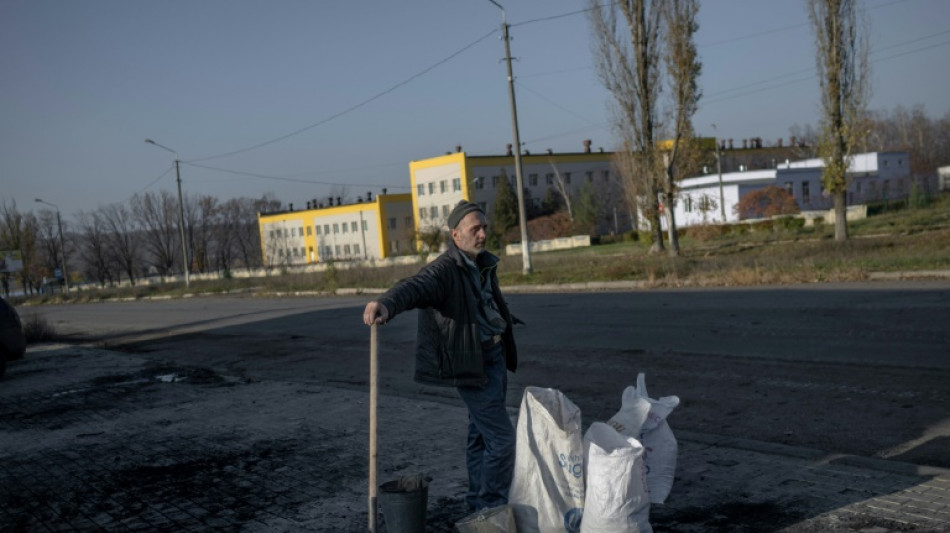
'We can't survive on our own': locals help out neighbours in Bakhmut / Photo: BULENT KILIC - AFP

 Arsenal cruise past Lille into share of Champions League lead

 Trump ousts Greece ambassador over ethics scandal

 Reese Witherspoon, France's Mediawan to buy Hello Sunshine
 Bipartisan US senators urge Trump to scrap Russian diesel deal
 Ex-gang leader sentenced to minimum 40 years for Tupac murder

 Cornell suspends frat parties after alleged gang rape

 Man City deserve to keep titles, says PSG's Luis Enrique

 Regulator 'will resign' if any political interference in Man City case

 Microsoft's Brad Smith calls for 'real and effective' AI safety standards

 Anthropic warns of AI 'worms' spreading across smart gadgets

 Big US banks report strong earnings and stay bullish on AI
 Iraola backs Barcola, Wirtz to come good for Liverpool

 In a first, AI helps UK lawmaker find her voice in parliament
 Pope Leo in Rome hospital for lung operation

 EU watchdog says smart glasses must give 'clear warnings' when recording

 Houthis say Saudi Arabia strikes oil site in Yemen's capital

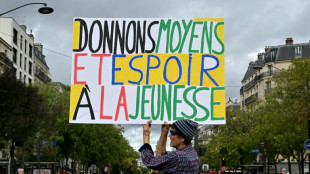
 France roiled by marches in support of protesting students

 Goldman Sachs profits jump as CEO says no plans to exit

 Apple unveils HomeView smart display in renewed home push
 Novelist Thelyson Orelien denies AI use, admits plagiarism 'mistakes'
 Trump asks Greece ambassador to resign amid bribery scandal: White House

 11 missing after ships struck off Bulgaria in latest Black Sea attack
 France budget debate faces rocky start as Socialists vow to fight

 AI could 'change the stakes' on bioweapons: UK spy chief
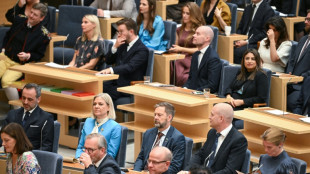 Sweden centre-left leader fails to form government

In a supermarket car park in Bakhmut, the eastern Ukrainian city at the centre of the fighting for the Donbas region, Anatoliy is rushing to load up his truck with coal for him and his neighbours, determined to stay dug in for the winter.
Around half of Bakhmut's 70,000 people have stayed on despite the fighting raging for the past four months, mostly in the east of the city.
"The fact that we are still here and helping others, that means a lot to us," says Anatoliy, a 60-year-old man with a white beard and a beanie.
"We aren't just going to stay here and do nothing. We cannot survive on our own," Anatoliy adds, still shovelling.
Behind him, cars with trailers are coming and going to pick up the coal that authorities have piled up to help residents ahead of the cold winter.
A big bag of toilet paper, a box of candles and bottles of water are packed on the passenger seat of a Soviet-era Lada car.
Locals are allowed to pick up two tons of coal per household.
This means a lot in a city with no electricity or running water since mid-October.
Already there is almost no coal left in the six piles, and shovels scrape against concrete paving.
But this noise barely covers the endless explosions of shelling between Ukrainian forces defending the city and Russian troops boosted by Wagner mercenaries.
- 'Helping people survive' -
When Russia invaded in February "we still had emotions, but now, we are just surviving," Anatoliy says.
"We are giving humanitarian aid. I have a house, I have bees, and anything I can harvest in my garden, I give it to people for free," he says.
"If someone needs carrots, cabbages or beetroots, they can take it... I don't need much, so long as it can help people survive," Anatoliy says.
"These days, we think about others more than we used to."
Very few residents risk wandering through the streets, only nipping out to buy food at a small street market in the centre or at the grocery stores that remain open.
Every day, shelling hits the city itself.
At the end of October, a Russian strike killed seven people in Bakhmut.
There are very few children left in the city.
One of them, 12-year-old Sasha, just bought some lemonade and is on his way back home.
"A missile fell here. One person died," he says, pointing to one of the entrances to his block of flats, before going back inside.
Artillery exchanges mostly occur in the outskirts of Bakhmut.
The contact line in the eastern suburbs has barely moved in the past four weeks, despite fierce fighting and heavy losses.
- 'We are winning' -
"It has become harder these past three days. (The Russians) are pushing more and more. But our boys are holding their positions," 26-year-old soldier Vitaliy tells AFP.
The soldier is standing next to two combat vehicles in a sheltered spot in the city centre.
The unit has just been ordered to move one of the vehicles to the front line to fire at a Russian position.
The brigade comes back 15 minutes later, its task fulfilled.
The unit chief gets out of the armoured vehicle red-faced and takes big gulps of water from a bottle.
The Russians "came in, and we pushed them back. And now, we are shooting (at their positions) 2 kilometres (1.2 miles) away from the city," he explains.
"So, long story short: we are winning," he grins.
E.AbuRizq--SF-PST