Myanmar rebels risk life and limb in DIY weapons factories / Photo: - - AFP

 Atletico sink Man Utd as Viking deny Bayern in Champions League

 Man United's Martinez blasts board's lack of investment

 Meet A7 International, an Innovative Global Platform Designed to Reinvent the International Payments Market

 Shakhtar hope London move a reminder of Ukraine conflict

 Tresoldi hat-trick fires Brugge past Inter Milan

 Rams axe kicker Mevis after misses cost victory over Bills: reports

 Yamal stays cool at boiling Galatasaray to lift Barcelona to victory

 Arsenal cruise past Lille into share of Champions League lead

 Trump ousts Greece ambassador over ethics scandal

 Reese Witherspoon, France's Mediawan to buy Hello Sunshine

 Bipartisan US senators urge Trump to scrap Russian diesel deal
 Ex-gang leader sentenced to minimum 40 years for Tupac murder

 Cornell suspends frat parties after alleged gang rape

 Man City deserve to keep titles, says PSG's Luis Enrique

 Regulator 'will resign' if any political interference in Man City case

 Microsoft's Brad Smith calls for 'real and effective' AI safety standards

 Anthropic warns of AI 'worms' spreading across smart gadgets

 Big US banks report strong earnings and stay bullish on AI

 Iraola backs Barcola, Wirtz to come good for Liverpool
 In a first, AI helps UK lawmaker find her voice in parliament

 Pope Leo in Rome hospital for lung operation

 EU watchdog says smart glasses must give 'clear warnings' when recording

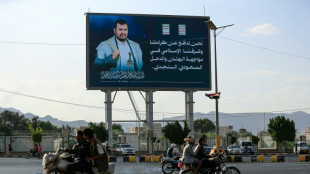 Houthis say Saudi Arabia strikes oil site in Yemen's capital

 France roiled by marches in support of protesting students

 Goldman Sachs profits jump as CEO says no plans to exit

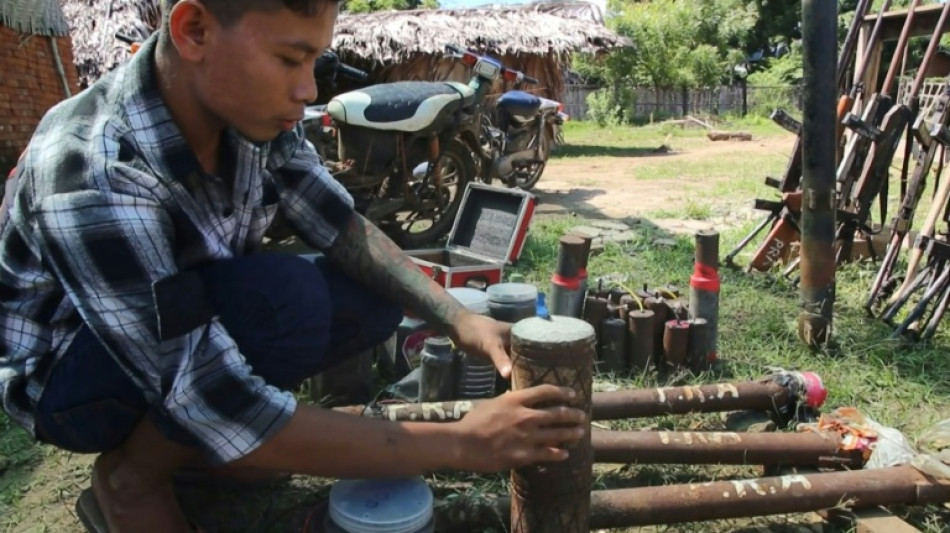
Under an awning in a bamboo thicket in northern Myanmar, an anti-coup fighter following instructions from YouTube welds scavenged steel into crude mortar rounds and shells to be fired at junta troops.
Almost two years after seizing power, the military has been unable to crush local militias that have sprung up to fight the putsch with hit-and-run tactics.
In turn, these People's Defence Forces (PDF) remain massively outgunned by the military's artillery strikes, Chinese and Russian-made jets and Israeli-patterned rifles.
Captured weapons and expensive purchases on the black market have provided patchy boosts to PDF firepower, analysts say, but many militias have turned to risky trial-and-error operations to churn out their own rockets, mines and mortars.
"We just learn how to build weapons from the internet or YouTube," said Nay Min, an anti-coup fighter from the northern Sagaing region.
"We search how to cook saltpetre (potassium nitrate), how to combine it to get gunpowder, how to build rifles. We haven't received any training," he told AFP.
Those with engineering or mechanical backgrounds, like his comrade Nay Myo Win, experiment and come up with prototypes or copies of captured weapons, he said.
Blowtorches in hand, they sweat for hours in makeshift workshops powered by generators that are frequent targets of junta raids.
Nay Myo Win mixes saltpetre to make the gunpowder needed to fire mortar shells filled with lead and scrap metal that he claims have a range of just over two kilometres (1.2 miles).
- Crude armaments -
Laid out on a tarpaulin ahead of a mission in October, the mortars are unimpressive -- little more than construction pipes welded to bipods.
The shells require two charges to detonate -- one to fire the shell and the other to explode on impact -- a method first used at the beginning of the 20th century.
But the damage is substantial, Nay Min said -- "around 15 feet from the target it will hit people and they will die or be wounded".
One batch of shells was made from a telecoms tower owned by a firm close to the military, which was sabotaged by PDF fighters some months ago.
"We just wanted to destroy their business," Nay Min added.
"But, after we had started making homemade weapons ... we needed more stainless steel and we thought of the tower."
Nay Min's group is one of dozens of PDF militias in Sagaing making their own weapons in a bid to turn the tide in the fighting.
Many upload footage of successful tests of mortars, rockets or mines to social media, with joyous shouts accompanying each loud bang.
But the work can be deadly.
"It's more than dangerous," said Bo Shaung, an anti-coup fighter and rocket maker from another group operating in Sagaing.
"When we cook gunpowder, if we add too much saltpetre, it's dangerous. If we add too little, it's also dangerous."
One video obtained by AFP shows a new mortar being tested. The shell explodes in the barrel, killing the fighter who had just loaded it.
Thu Ya, another anti-coup fighter, said he lost his sight six months ago when the explosive he was handling went off too soon.
"I got injuries on my hands and feet which have recovered now but I... still have blurry vision," he said.
In the absence of machines like lathes and voltage regulators, each shell is made by hand.
And for all the risk that comes with producing them, the homemade munitions are often more bark than bite.
- 'Drain on morale' -
Once a target has been selected, preparing ammunition for an attack can take up to 10 days, Nay Min said.
His group relies on information from locals to gauge troop positions.
To guide their fire they have little more than Google Maps to measure the distance from the target.
"We normally attack them in our own areas and we all know the locations and distance," he said, insisting that most attacks were accurate.
Assessing the effectiveness of these weapons is "extremely difficult" in the absence of impartial reporting from the field, said Bangkok-based security analyst Anthony Davis.
Both sides regularly inflate or play down their casualty figures, analysts say.
But Davis said the spread of locally made mortars and rockets "indicates that these systems are far from simply window-dressing".
"They inflict real casualties but perhaps as importantly are a constant drain on the morale of often isolated army units on the receiving end."
The junta has labelled all PDF groups as "terrorists". It blames anti-coup fighters for the deaths of more than 4,000 civilians.
Nay Min sees his group's fight as justified.
"We are satisfied with what we have done," he said.
But "we need everything. Especially we need weapons."
I.Matar--SF-PST