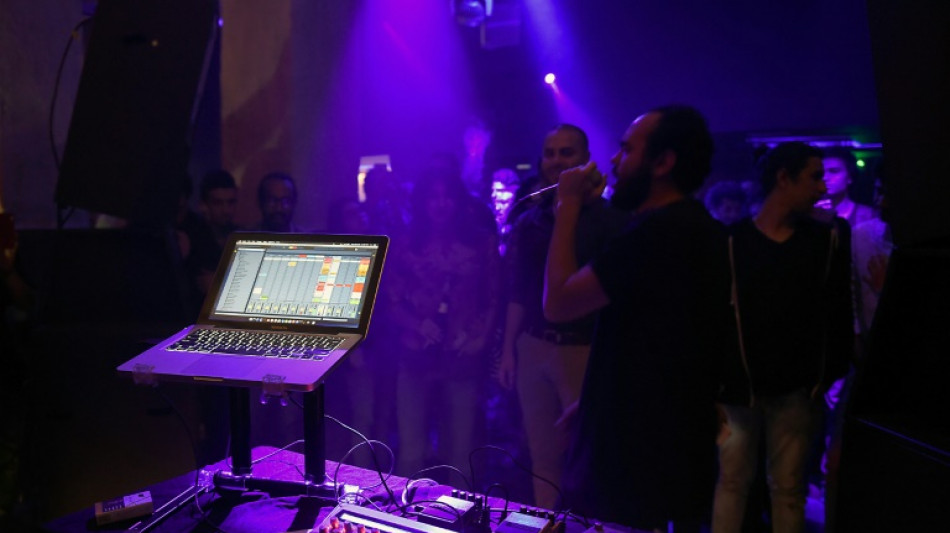
Egypt cuts the feed to wildly popular 'mahraganat' electro music / Photo: MOHAMED EL-SHAHED - AFP

 Trump, White House post video of UK man killed by tiger

 Saudi employee arrested for allegedly bugging OpenAI office
 Atletico sink Man Utd as Viking deny Bayern in Champions League

 Man United's Martinez blasts board's lack of investment

 Meet A7 International, an Innovative Global Platform Designed to Reinvent the International Payments Market

 Shakhtar hope London move a reminder of Ukraine conflict

 Tresoldi hat-trick fires Brugge past Inter Milan

 Rams axe kicker Mevis after misses cost victory over Bills: reports

 Yamal stays cool at boiling Galatasaray to lift Barcelona to victory
 Arsenal cruise past Lille into share of Champions League lead

 Trump ousts Greece ambassador over ethics scandal

 Reese Witherspoon, France's Mediawan to buy Hello Sunshine

 Bipartisan US senators urge Trump to scrap Russian diesel deal
 Ex-gang leader sentenced to minimum 40 years for Tupac murder
 Cornell suspends frat parties after alleged gang rape

 Man City deserve to keep titles, says PSG's Luis Enrique

 Regulator 'will resign' if any political interference in Man City case

 Microsoft's Brad Smith calls for 'real and effective' AI safety standards

 Anthropic warns of AI 'worms' spreading across smart gadgets
 Big US banks report strong earnings and stay bullish on AI

 Iraola backs Barcola, Wirtz to come good for Liverpool
 In a first, AI helps UK lawmaker find her voice in parliament

 Pope Leo in Rome hospital for lung operation

 EU watchdog says smart glasses must give 'clear warnings' when recording
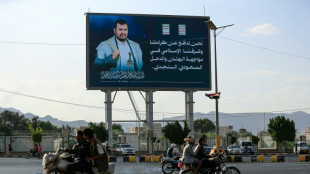 Houthis say Saudi Arabia strikes oil site in Yemen's capital

With its catchy beats and in-your-face lyrics, Egypt's hugely popular electro "mahraganat" music has found millions of fans in the conservative country -- but now officials are pulling the plug.
"Never call it mahraganat again," came an edict from Egypt's musicians' union.
"Anyone who writes the word mahraganat on his videos will have his name immediately crossed out," union head and former star crooner Mustafa Kamel said.
Relying heavily on computer-generated and synthesised beats, mahraganat -- often known as "electro-shaabi" (popular electro) -- is a far cry from the pop melodies that normally rule the radio waves across the Arab world.
Its blunt lyrics tackle topics including love, power and money, booming across class barriers through nearly every speaker in the country, where more than half the population is under 25 years old.
With its roots in impoverished urban neighbourhoods, the genre has often sparked the ire of critics as "low-brow", and social conservatives have long derided it as "uncouth".
But its songs have often overtaken traditional media darlings on pop charts, skyrocketing artists from low-income areas to concert venues and luxurious wedding halls, with some playing to sold-out crowds across the Red Sea in Saudi Arabia.
- 'Preserve public taste' -
As part of its latest campaign to "preserve public taste", the musicians' union is splitting singers from the abolished genre into two categories.
Those whose voices are judged up to par will be labelled "popular singers", who must perform with a minimum of 12 syndicated musicians.
Rappers instead can perform with just six -- "at least a pianist, a bassist, two guitarists, a drummer and a percussionist", Kamel told a press conference last week.
The mahraganat singers who fail to impress will be called "vocal performers". They will have to renew their licence every three months, have the culture ministry's censor approve their lyrics, and take an oath not to "use any word or image that violates Egyptian morality", whether at home or abroad.
The syndicate will judge whether the performer has demonstrated "respect for the union, the nation, and the young people" looking up to them, Kamel said.
Its war on mahraganat music is not new.
In 2020, the union issued a ban on the performances that was unevenly enforced as artists continued to put out hits and sell out venues.
When Kamel took over as union chief last month, some hoped the former star lyricist -- who gained fame in the 1990s for his romance ballads -- would go easier on the much-maligned genre.
- 'Professional jealousy' -
In one online video viewed by tens of thousands of people, popular Egyptian rapper Moscow questioned the decisions.
Are artists "really going to wait for someone to tell us how to talk about ourselves and our own lives?" he said.
For singers and rappers whose genres were built by those excluded from conservatories and traditional music academies, the requirement to employ a full band of registered musicians was also seen as absurd.
In working class neighbourhoods in the 2000s, artists huddled in their rooms with barebones equipment and pirated software, later monetising social media success after the country's 2011 uprising.
Egypt has long been a key hub of Arab music and a cultural powerhouse in the Arab world.
Cultural critic Joseph Fahim praised mahraganat's "sense of abandon".
The genre has showed a reality of Egyptian society that "neither the government nor the syndicate is willing to admit exists", he wrote online.
The battle against the genre is "rooted in class, professional jealousy, and the regime's insatiable desire for controlling public taste and enforcing its bourgeois mores", Fahim said.
P.AbuBaker--SF-PST