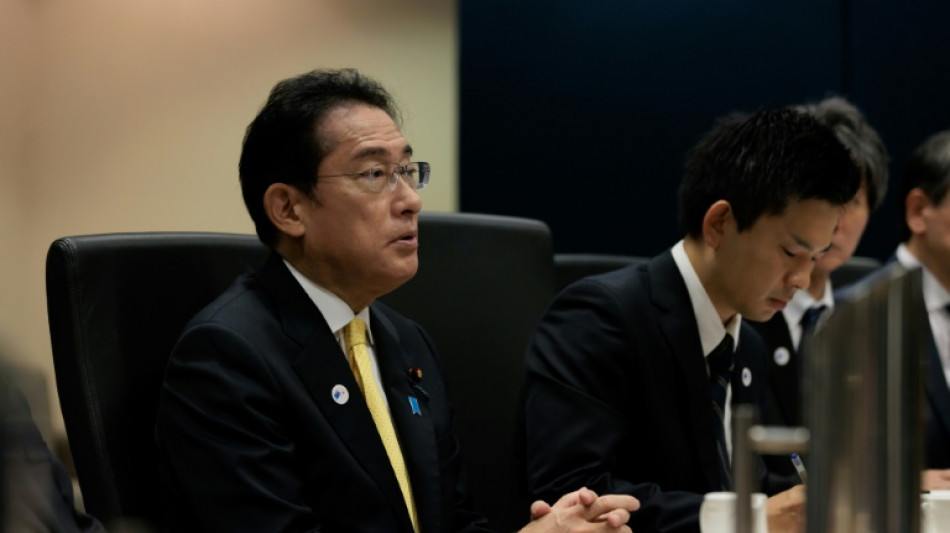
Japan, Australia ink 'landmark' security pact / Photo: RICHARD WAINWRIGHT - POOL/AFP

 Lufthansa wins contest for TAP Air Portugal stake
 AI worms, 'major' incident fears spur safety calls at industry summit
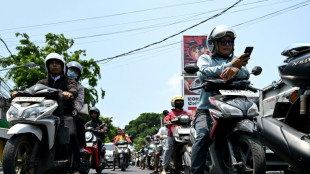 Fuel shortage triggers queues on Indonesia's Bali island
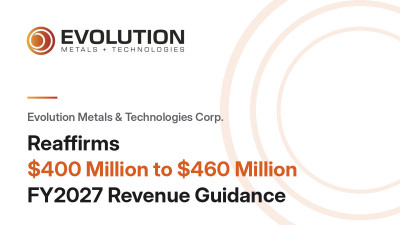 Evolution Metals & Technologies Corp. Reaffirms $400 Million to $460 Million FY2027 Revenue Guidance, Unveils Eight Sintered Magnet Grades Covering an Estimated 75% of Global NdFeB Revenue, and Moves to Answer U.S. Army Call for Rare Earth Magnets

 Trial defence says Russia used Nord Stream pipelines as 'weapon'
 Israeli settlers set fire to mosque in occupied West Bank

 Macron says French student protesters 'exploited' by political forces: spokeswoman
 Stocks diverge ahead of key US inflation data
 Japan summons Russian ambassador to protest journalist's arrest
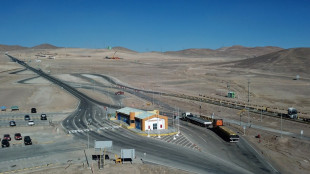 Workers to strike at world's largest copper mine in Chile
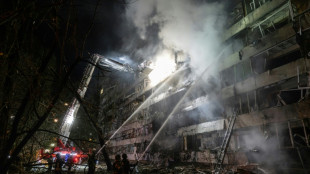 Ukraine accuses US of helping Russia as missiles hit Kyiv
 Drone hits data centre of Russia's largest bank
 Bivial AG Brings Its Complete Dashboard to Mobile
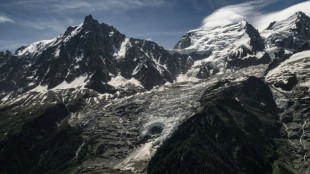 Mont Blanc nearly two metres taller than in 2023: French surveyors
 Pope recovering after lung cancer operation that rattles Church
 Indonesia haze spikes Singapore pollution, shuts East Timor schools
 Higher borrowing costs an 'alarm signal' for France: finance minister
 Zelensky accuses Putin of disrespecting Trump after latest attacks
 Japan PM says housework makes her busier than male predecessors
 Top Indian 'cockroach' leaders sent to jail after protest
 Ukraine ex-military officer to stand trial over Nord Stream sabotage
 IMF chief says Saudi attacks could have negative spillover 'everywhere'
 Premier League move a Sage decision for new Palace boss
 South Korean FA condemns 'personal attacks' as rift rumours grow
 Japan urges 'impartial treatment' of journalist arrested in Russia
Australia and Japan agreed to share more sensitive intelligence and deepen military cooperation Saturday, signing a security pact aimed at countering China's military rise.
Prime ministers Fumio Kishida and Anthony Albanese inked the accord in the Western Australian city of Perth, revamping a 15-year-old agreement drafted when terrorism and weapons proliferation were the overriding concerns.
"This landmark declaration sends a strong signal to the region of our strategic alignment", said Albanese, hailing the "Joint Declaration on Security Cooperation".
Under the accord, the two countries agreed military forces would train together in Northern Australia, and would "expand and strengthen cooperation across defence, intelligence sharing", Australian officials said.
Without citing China or North Korea by name, Kishida said the agreement was a response to an "increasingly harsh strategic environment".
Neither Australia nor Japan has the armies of overseas intelligence operatives and foreign informants needed to play in the major leagues of global espionage.
Japan does not have a foreign spy agency equivalent to America's CIA, Britain's MI6, Russia's FSB or Australia's much smaller agency ASIO.
But according to expert Bryce Wakefield, Australia and Japan do have formidable signals and geospatial capabilities -- electronic eavesdropping and high-tech satellites that provide invaluable intelligence on adversaries.
Wakefield, director of the Australian Institute of International Affairs, said the agreement could also have broader significance, providing a template for Japan to accelerate intelligence ties with countries like Britain.
Some even see the accord as another step toward Japan joining the powerful Five Eyes intelligence sharing alliance between Australia, Britain, Canada, New Zealand and the United States.
It is "an epoch-making event that Japan can share SIGINT with a foreign nation except for the United States," Ken Kotani, an expert in the history Japanese intelligence at Nihon University told AFP.
"This will strengthen the framework of Quad (Australia, India, Japan and the United States) and the first step for Japan's join to the Five Eyes," he added.
Such a suggestion would have been unthinkable a few decades ago. But events in Japan's neighbourhood have forced a rethink of the country's pacifist policies established in the wake of World War II.
In recent years North Korea has repeatedly lobbed missiles over and around Japan, while China has built the world's largest navy, revamped the globe's biggest standing army, and amassed a nuclear and ballistic arsenal right on Japan's doorstep.
- 'Leaked like a sieve' -
But hurdles remain for Tokyo's closer security cooperation with allies.
Japan's intelligence sharing with the United States and other allies has been hampered by longstanding concerns about Tokyo's ability to handle sensitive confidential material and transmit it securely.
"To put it bluntly Japan has traditionally leaked like a sieve," said Brad Williams, author of a book on Japanese intelligence policy and a professor at the City University of Hong Kong.
Laws have been introduced to more severely punish intelligence leaks, but for now, Australia will likely be forced to scrub any intelligence it passes to Japan for information gleaned from the Five Eyes network.
Prime ministers Kishida and Albanese also vowed more cooperation on energy security.
Japan is a major buyer of Australian gas and has made a series of big bets on hydrogen energy produced in Australia, as it tries to ease a lack of domestic energy production and dependence on fossil fuels.
"Japan imports 40 percent of its LNG from Australia. So it's very important for Japan to have a stable relationship with Australia, from the aspect of energy," a Japanese official said ahead of the meeting.
K.Hassan--SF-PST