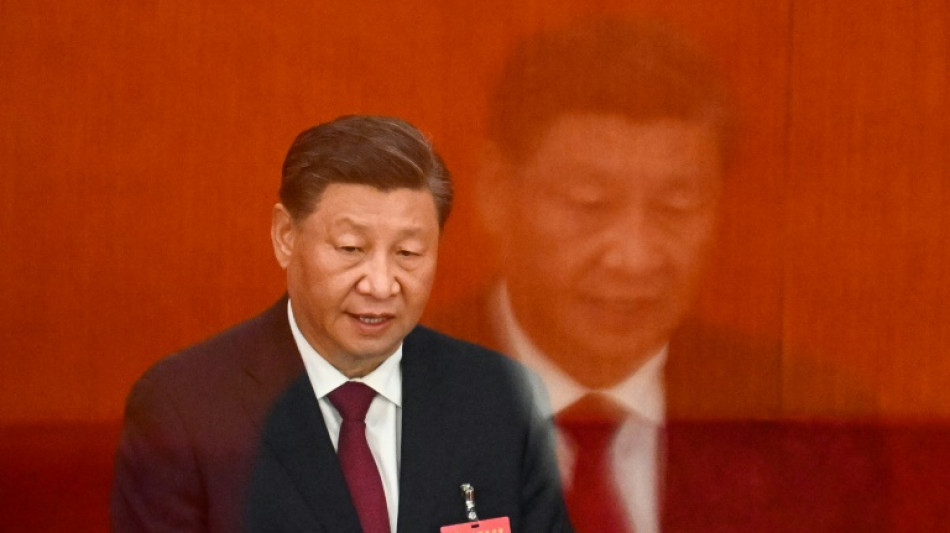
China's assertive foreign policy under President Xi / Photo: Noel CELIS - AFP/File

 Lufthansa wins contest for TAP Air Portugal stake
 AI worms, 'major' incident fears spur safety calls at industry summit
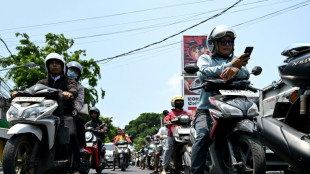 Fuel shortage triggers queues on Indonesia's Bali island

 Evolution Metals & Technologies Corp. Reaffirms $400 Million to $460 Million FY2027 Revenue Guidance, Unveils Eight Sintered Magnet Grades Covering an Estimated 75% of Global NdFeB Revenue, and Moves to Answer U.S. Army Call for Rare Earth Magnets

 Trial defence says Russia used Nord Stream pipelines as 'weapon'
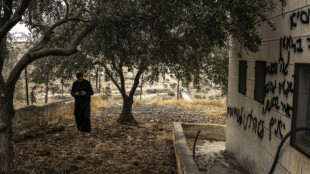 Israeli settlers set fire to mosque in occupied West Bank

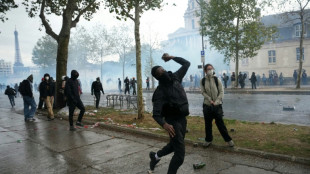 Macron says French student protesters 'exploited' by political forces: spokeswoman
 Stocks diverge ahead of key US inflation data
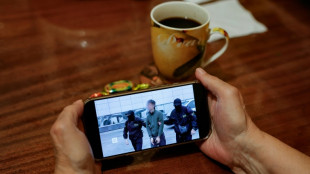 Japan summons Russian ambassador to protest journalist's arrest
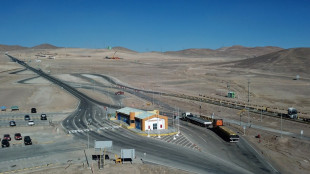 Workers to strike at world's largest copper mine in Chile
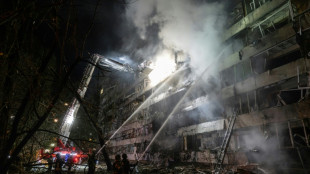 Ukraine accuses US of helping Russia as missiles hit Kyiv
 Drone hits data centre of Russia's largest bank
 Bivial AG Brings Its Complete Dashboard to Mobile

 Mont Blanc nearly two metres taller than in 2023: French surveyors

 Pope recovering after lung cancer operation that rattles Church
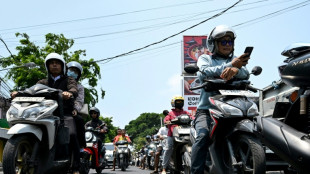
 Indonesia haze spikes Singapore pollution, shuts East Timor schools
 Higher borrowing costs an 'alarm signal' for France: finance minister
 Zelensky accuses Putin of disrespecting Trump after latest attacks
 Japan PM says housework makes her busier than male predecessors
 Top Indian 'cockroach' leaders sent to jail after protest

 Ukraine ex-military officer to stand trial over Nord Stream sabotage
 IMF chief says Saudi attacks could have negative spillover 'everywhere'
 Premier League move a Sage decision for new Palace boss

 South Korean FA condemns 'personal attacks' as rift rumours grow
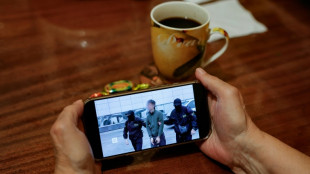 Japan urges 'impartial treatment' of journalist arrested in Russia
A senior Chinese diplomat's scuffle with protesters in Britain as well as a recent victory at the United Nations have put the spotlight back on China's more assertive foreign policy under President Xi Jinping.
Bolstered by China's economic and military rise over the past decade, Xi -- who is expected to secure a norm-breaking third term after this week's Communist Party Congress -- has swerved decisively away from the "keep a low profile" foreign policy mantra espoused by his predecessors.
Over the last 10 years, as well as encouraging a brand of headline-grabbing "Wolf Warrior" diplomacy, Beijing has created alternative trade and security blocs to Western-led groupings, and courted support within organisations such as the UN through cheque-book diplomacy.
"When I went back to China in 2012, it was clear that Chinese diplomats had been given new marching orders by Xi Jinping," Guy Saint-Jacques, who was posted to Beijing in the mid-80s and mid-90s before serving as Canada's ambassador until 2016, told AFP.
"It became gradually more difficult to raise difficult issues with Chinese diplomats, especially on issues related to the treatment of minorities... freedom of expression and so on."
China's foreign policy is devised by elite groups within the Communist Party -- groups that "unlike his predecessors, Xi directly controls", said Jennifer Hsu from the Australian think tank Lowy Institute.
Xi has chastised moderates in the foreign ministry for lacking "a fighting spirit" and books on his ideology are now mandatory reading for diplomats.
On Thursday, at a press conference on Chinese diplomacy during the Congress, Vice Foreign Minister Ma Zhaoxu signalled Beijing would not be changing tack.
"Daring to fight and being good at fighting are the fine traditions and distinctive features of China's diplomacy," Ma told reporters.
- 'Territorial expansionism' -
Under Xi, China has taken a distinctly more muscular approach when it comes to territorial claims.
It has ramped up its military presence in contested areas of the South China Sea, while a longstanding border dispute with India erupted into violence that left at least 24 dead in June 2020.
"China's territorial expansionism has coincided with the ascension of Xi," James Char from Singapore's S. Rajaratnam School of International Studies told AFP.
All this has been cheered on by "Wolf Warrior" diplomats -- the name coined after a nationalist action film.
Using notably undiplomatic language, high-ranking representatives have attacked both leaders -- such as dismissing Canada's Justin Trudeau as a "boy" -- and individuals, like when the Chinese ambassador to France blasted a researcher as a "little thug" for commenting on parliamentarians visiting Taiwan.
On Sunday, footage of a Hong Kong pro-democracy protester being assaulted on the grounds of the Chinese consulate in the British city of Manchester sparked outrage, with the consul-general himself caught up in the fracas.
Zheng Xiyuan told Sky News that getting physically involved was "my duty", adding that any diplomat would have acted that way to "maintain our dignity".
But while such verbal and physical skirmishes are eye-catching, observers suggest their main aim may be to satisfy nationalists at home rather than effect change abroad.
In 2021, Xi even appeared to try and roll back the aggression, urging political leaders to cultivate a "reliable, admirable and respectable" international image.
State propaganda machinery has spent billions of dollars portraying the image of a "cute" China on platforms such as Twitter and Facebook -- both blocked to regular Chinese behind the "Great Firewall" -- according to an analysis by the US think tank Freedom House.
- Economic power -
Beijing has increasingly leveraged its economic and soft power to get its way on the global stage.
China-led initiatives such as the Asian Infrastructure Investment Bank and security grouping Shanghai Cooperation Organisation have been presented as alternatives to Western-led bodies such as the World Bank and NATO.
The UN Human Rights Council voted this month against holding a debate on its own high commissioner's report that found China's actions against the Muslim Uyghur minority in the Xinjiang region could constitute possible crimes against humanity.
Beijing had launched an all-out offensive to dismiss the report, with observers saying African countries faced particularly heavy lobbying.
China is the leading creditor in many of those nations after making massive infrastructure investments through the trillion-dollar Belt and Road Initiative, though analysts say China is slowly winding down the programme after billions of dollars in loans went sour.
Beijing has similarly poured money into Pacific Island, South Asian and Latin American nations -- the traditional spheres of influence of rival powers -- as well as into rival powers themselves.
German Chancellor Olaf Scholz is facing a backlash after being accused of planning to push through Chinese investment in a Hamburg port despite grave reservations from his own government.
L.AbuAli--SF-PST