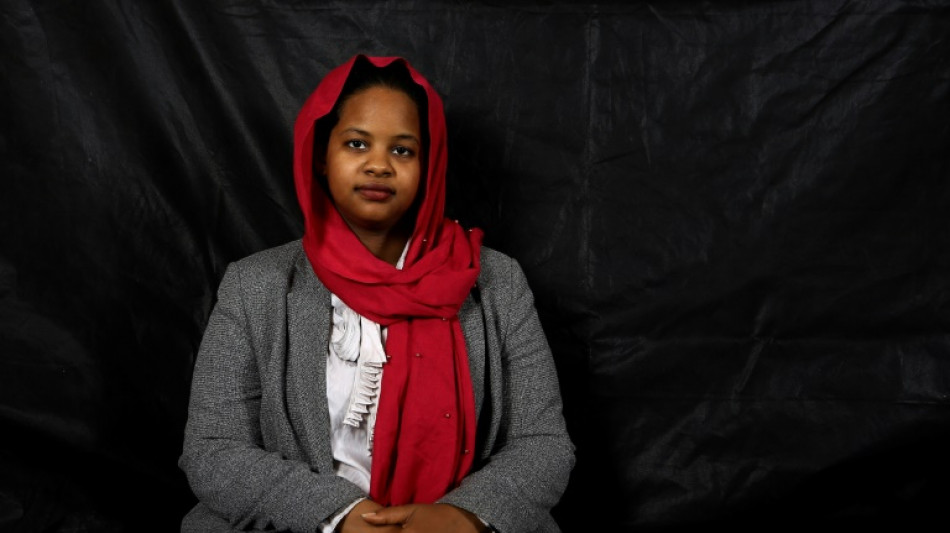
Crisis-hit Sudan faces biggest threat yet: climate change / Photo: ASHRAF SHAZLY - AFP

 Govt takes control of Turkey's most-watched news channel

 FIFA to offer members $6.35-billion development fund windfall

 US consumer inflation hotter than expected as midterms loom

 INmune Bio Inc. and Quantum Computing Inc. Partner to Apply Quantum Optimization and AI to Advance Alzheimer’s Drug Research and Explore New Applications for XPro

 Hot US inflation data dents Wall Street stocks

 India sends 'cockroach' leaders to jail after protest

 'Sinners' director Ryan Coogler to reboot 'X-Files' for Disney

 Lufthansa wins contest for TAP Air Portugal stake

 AI worms, 'major' incident fears spur safety calls at industry summit
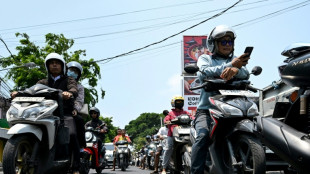
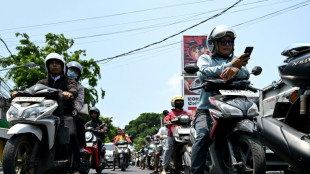 Fuel shortage triggers queues on Indonesia's Bali island

 Evolution Metals & Technologies Corp. Reaffirms $400 Million to $460 Million FY2027 Revenue Guidance, Unveils Eight Sintered Magnet Grades Covering an Estimated 75% of Global NdFeB Revenue, and Moves to Answer U.S. Army Call for Rare Earth Magnets

 Trial defence says Russia used Nord Stream pipelines as 'weapon'

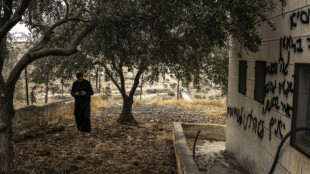 Israeli settlers set fire to mosque in occupied West Bank

 Macron says French student protesters 'exploited' by political forces: spokeswoman

 Stocks diverge ahead of key US inflation data
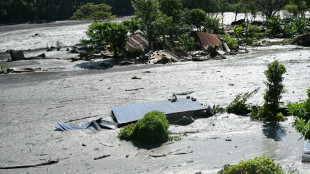
 Japan summons Russian ambassador to protest journalist's arrest

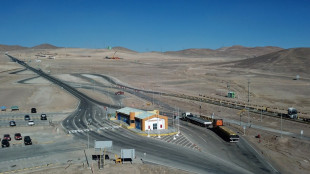 Workers to strike at world's largest copper mine in Chile

 Ukraine accuses US of helping Russia as missiles hit Kyiv

 Drone hits data centre of Russia's largest bank

 Bivial AG Brings Its Complete Dashboard to Mobile

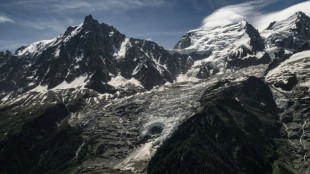 Mont Blanc nearly two metres taller than in 2023: French surveyors

 Pope recovering after lung cancer operation that rattles Church
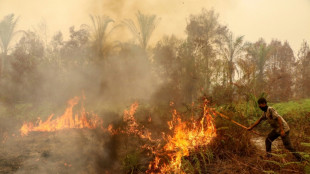 Indonesia haze spikes Singapore pollution, shuts East Timor schools
 Higher borrowing costs an 'alarm signal' for France: finance minister
 Zelensky accuses Putin of disrespecting Trump after latest attacks

Conflict, coups, dire poverty: Sudan is reeling from multiple crises, but environmental activist Nisreen Elsaim warns a bigger problem dwarfs them all -- climate change.
A determined climate campaigner for nearly a decade, both at home and on the world stage, she speaks passionately of the growing threat a heating planet poses to her northeast African nation.
"Climate change needs to be prioritised in Sudan," 27-year-old Elsaim said, speaking weeks before the COP27 climate conference starts in neighbouring Egypt.
Elsaim -- who joined the protests which toppled longtime president Omar al-Bashir in 2019 and now favours a return to civilian rule following a military coup in 2021 -- argues that urgent environmental action must go hand in hand with political change.
Sudan is the world's fifth most vulnerable country to the impacts of climate change, according to a 2020 ranking in the Global Adaptation Index, compiled by the Notre Dame University in the United States.
"There has also been a noticeable increase in temperature," said Elsaim about her arid country. "There is no winter anymore."
The war-ravaged nation has been hit hard in recent years by erratic weather patterns -- harsh droughts and boiling temperatures followed by torrential rains.
Severe floods that wreck property, infrastructure and crops have killed more than 145 people this year, Sudanese authorities say.
- 'Ecological crisis' -
Egypt, which borders Sudan to the north, will from November 6 host the 27th Conference of the Parties to the UN Framework Convention on Climate Change.
For Elsaim, named chair of the UN Youth Advisory Group on Climate Change in 2020, it is an opportunity to ring the alarm bell on the climate impacts her youthful country faces -- 62 percent of Sudan's 45 million people are aged under 30, according to UN figures.
Sudan is already struggling from what experts and activists say is the results of shifting weather patterns: worsening conflicts over scarce land and water resources.
Increasing demands on dwindling natural resources has fuelled inter-ethnic conflicts, including the 2003 war that erupted in the arid western region of Darfur.
"Such conflicts are caused primarily by scarcity," said Elsaim, who has a degree in physics and a masters in renewable energy from the University of Khartoum.
"And the reason for said scarcity is climate change."
In Darfur, the war pitched ethnic African minority rebels against the Arab-dominated government of hardline president Bashir, who responded by unleashing the notorious Janjaweed militia.
The war in Darfur would leave about 300,000 people killed and 2.5 million displaced, according to the United Nations.
Then UN secretary-general Ban Ki-moon, writing in The Washington Post in 2007, argued that "amid the diverse social and political causes, the Darfur conflict began as an ecological crisis, arising at least in part from climate change".
- 'Threat multiplier' -
Linking the heating planet to conflict is complex: the International Crisis Group calls climate change "a threat multiplier", that increases "food insecurity, water scarcity and resource competition, while disrupting livelihoods and spurring migration".
Organisations such as the International Committee of the Red Cross note that climate change "exacerbates existing social and economic factors that may lead to conflict", while at the same time, insecurity can "limit people's ability to cope with climate shocks".
Sudan also remains gripped by regular protests following the October 2021 military coup led by army chief Abdel Fattah al-Burhan that upended a post-Bashir transition to civilian rule.
Elsaim says the authorities have given little attention to climate change.
As COP27 approaches, she remains committed to doing what she can to make change -- even while admitting progress from previous climate summits she has attended has been "very small".
"Though the small progress will not save us," she said, "it's still better than nothing."
K.Hassan--SF-PST